- Aave has launched V4 on Avalanche to support tokenized-asset-backed lending.
- The move strengthens its role as tokenized finance continues to expand.
Aave has expanded its latest lending infrastructure to Avalanche, marking the first deployment of Aave V4 outside Ethereum. The move introduces a more flexible lending system designed to support tokenized real-world assets and could help accelerate blockchain-based credit markets.
The launch also reflects the growing demand for decentralized finance (DeFi) platforms that can connect digital assets with traditional financial products.
Aave V4 Introduces Flexible Lending on Avalanche
Aave’s deployment on Avalanche brings its new Hub & Spoke architecture to the network. The system allows multiple lending markets to operate independently while sharing liquidity across the wider Aave protocol.
Each market can set its own collateral rules and risk parameters. This gives developers and institutions greater flexibility when creating lending products for different types of assets.
One of the first planned lending markets on Avalanche will allow users to borrow against tokenized assets. The new architecture also supports a wider range of collateral than previous versions of Aave.
Future markets could accept tokenized US Treasurys, money market funds, private credit, and corporate bonds. Each asset class can have customized lending rules based on its risk profile.
Aave Strengthens Its Position in DeFi
Aave remains the largest decentralized lending protocol by total value locked (TVL). According to DeFiLlama, the protocol currently secures nearly $14 billion in assets across 23 blockchain networks.
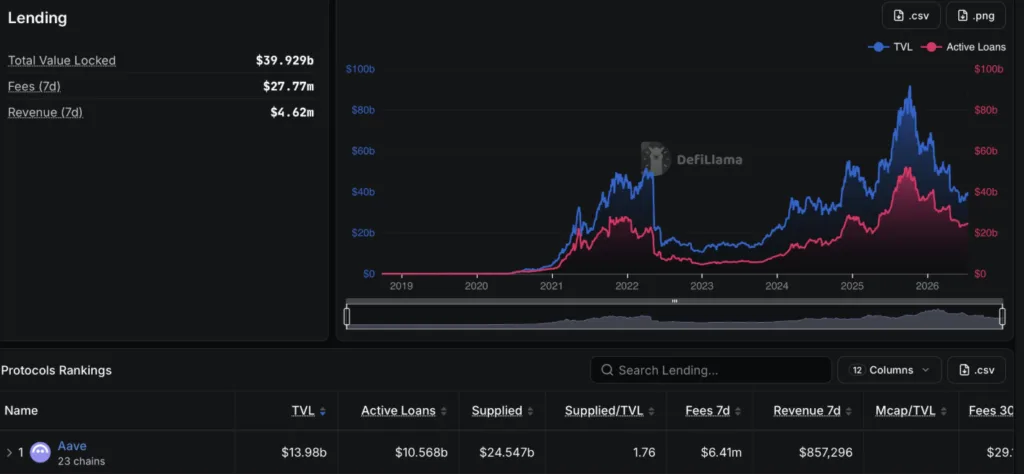
The expansion to Avalanche extends Aave’s reach while creating infrastructure that could attract more institutional participants to decentralized lending.
The upgrade also highlights how DeFi platforms are evolving beyond crypto-only lending by supporting tokenized versions of traditional financial assets.
Tokenized Assets Gain Real Utility
The launch comes as tokenized real-world assets move beyond simple issuance and become usable as collateral across financial markets.
Earlier this year, Franklin Templeton partnered with Binance to allow institutions to use tokenized money market fund shares as off-exchange collateral while keeping the assets in regulated custody.
Nasdaq also announced plans to integrate its collateral management platform with Talos to improve institutional management of tokenized collateral.
Meanwhile, DTCC revealed plans to use Chainlink technology to support near-real-time movement, valuation, and settlement of tokenized collateral ahead of its expected platform launch.
Institutional lending is also expanding. This week, Grove announced a $500 million warehouse lending facility with Galaxy Digital to finance institutional crypto-backed loans using blockchain infrastructure.
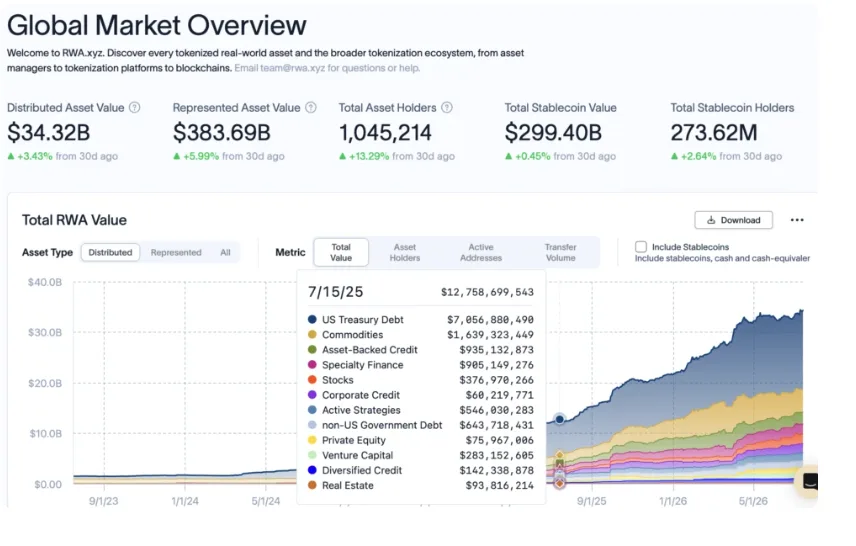
According to RWA.xyz, more than $34 billion in real-world assets are now tokenized on public blockchains, compared with approximately $12.8 billion one year ago. The rapid growth highlights rising institutional interest in tokenized finance and creates new opportunities for platforms such as Aave to support the next generation of blockchain-based lending.
ALSO READ: Morgan Stanley Files New Ethereum and Solana ETF Amendments Before SEC Decision
DISCLAIMER:
The views and opinions expressed herein are solely those of the author and do not necessarily reflect the views of the publisher. The publisher does not endorse or guarantee the accuracy of any information presented in this article. Readers are encouraged to conduct further research and consult additional sources before making any decisions based on the content provided.
About the Author