



- Bitcoin’s hashrate has fallen below 1000 EH/s for the first time in four months as miners face profitability pressure.
- Many operators are redirecting power and infrastructure to AI, raising concerns about long-term network security.
Bitcoin’s network power has slipped to its weakest point in four months, raising fresh questions about miner profitability and long-term security. Data from the Hashrate Index shows the network’s computational strength falling below the psychological 1000 EH/s mark for the first time since mid-September. Over the past 24 hours alone, hashrate dropped from 1002 EH/s to around 992 EH/s, confirming a clear slowdown across the mining sector.

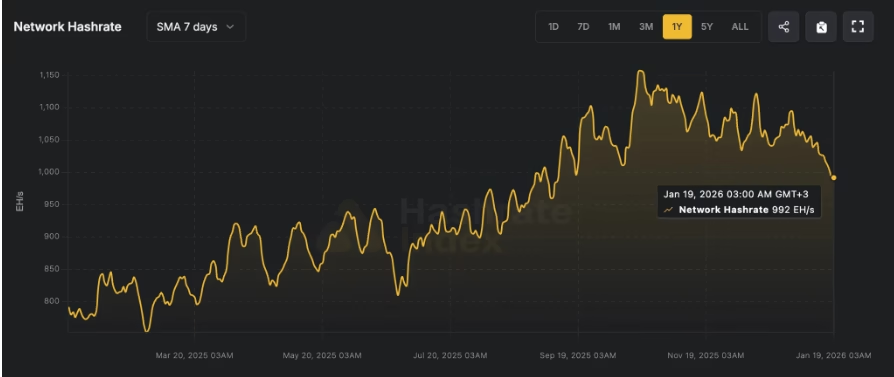
At its mid-October peak, Bitcoin’s hashrate stood near 1157 EH/s. Since then, it has declined by roughly 15%. While such fluctuations are not unusual, the scale and persistence of the current drop point to deeper structural shifts within the industry rather than short-term technical adjustments.
Mining Difficulty Eases as Profit Signals Improve
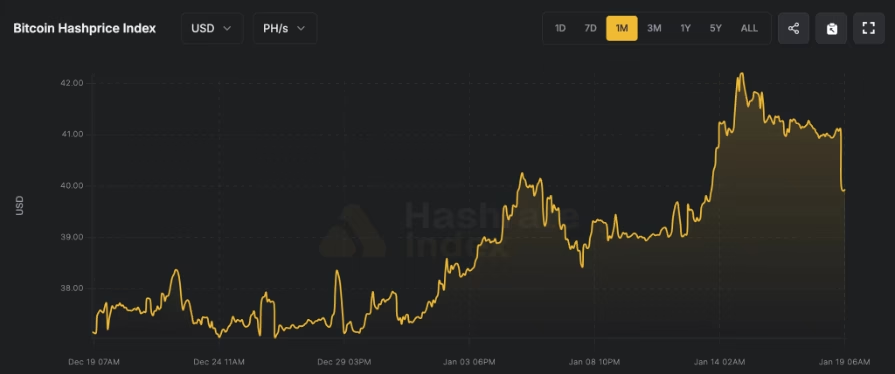
Alongside the hashrate decline, Bitcoin’s mining difficulty has continued to fall. Lower difficulty reduces the computational effort required to mine new blocks, offering some relief to miners facing tighter margins. At the same time, hashprice has increased over the past month, rising from about $37.15 to $40 per PH/s per day. This improvement suggests that, despite reduced participation, remaining miners are seeing better revenue per unit of computing power.

However, these positive signals have not been enough to reverse the broader trend. Analysts argue that the sector is still under pressure from rising operational costs and accumulated debt, even among firms with efficient hardware and access to cheap electricity.
Why Miners Are Redirecting Power to AI
According to Leon Lyu, founder of StandardHash, the decline in hashrate reflects a major shift in how mining infrastructure is being utilized. Large-scale miners are increasingly redirecting energy and computing resources toward artificial intelligence workloads, which currently offer higher and more stable margins than Bitcoin mining.
Bitcoin Hashrate Alert: A Shift in the Mining Landscape 📉
For the first time since Sept 2025, BTC's 7-day average hashrate has fallen below 1 ZH/s. A -4.34% difficulty adjustment is expected in ~3 days.
What’s driving the exodus? 🧵
1️⃣ The AI Pivot: Major mining firms are… pic.twitter.com/hg8O8xBIkx
— Leon Lyu (@LeonLyuLv) January 19, 2026
Modern mining facilities already have access to strong power grids, advanced cooling systems, and industrial-scale infrastructure. These features make them well-suited for high-performance computing tasks. As a result, some operators are moving away from the SHA-256 algorithm and leasing their capacity to AI-focused companies instead.
Lyu also noted that equipment manufacturers, including Bitmain, may be deploying excess machines through indirect channels. This could mean publicly reported hashrate figures underestimate actual installed capacity, even as net outflows confirm sustained pressure on miner profitability.
Long-Term Concerns for Network Security
Beyond near-term economics, some observers are sounding alarms about Bitcoin’s future security. Cyber Capital founder Justin Bons has warned that a prolonged mining downturn could shrink the network’s security budget over time. In his view, this could increase risks such as double-spending attacks and blockchain reorganizations in the long run.
While such outcomes remain speculative, the current decline in hashrate highlights a critical reality: Bitcoin mining is no longer competing only within the cryptocurrency space. It is now contending directly with AI for power, capital, and infrastructure, reshaping the landscape of network participation.
DISCLAIMER:
The views and opinions expressed herein are solely those of the author and do not necessarily reflect the views of the publisher. The publisher does not endorse or guarantee the accuracy of any information presented in this article. Readers are encouraged to conduct further research and consult additional sources before making any decisions based on the content provided.