


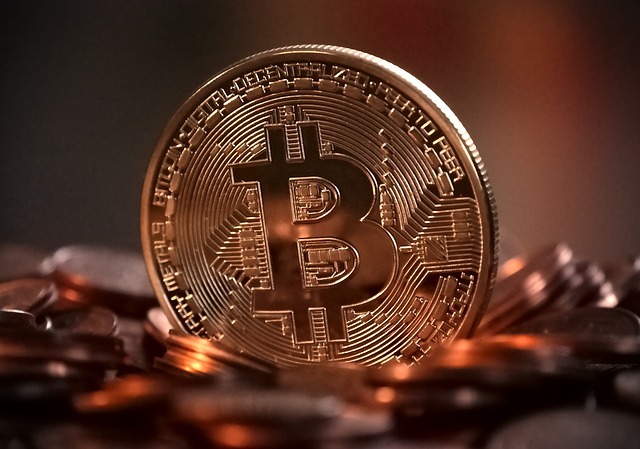
- Discover what truly drives Bitcoin’s price—scarcity, adoption, sentiment, regulation, and more—in this deep 2025 analysis.
- Beyond speculation: Learn the real factors shaping Bitcoin’s $115K price in 2025 and its future role in global finance.
- Is Bitcoin just hype? Explore the key forces behind Bitcoin’s price, from halvings to regulation and institutional adoption.
Why Bitcoin’s Value Debate Still Matters
For more than a decade, Bitcoin has divided opinions in financial circles. While billionaire investor Warren Buffett once dismissed it as “rat poison squared,” millions of investors, institutions, and even nation-states now treat it as a legitimate store of value. At more than $115,000 per coin in late 2025, Bitcoin is no longer a niche experiment—it’s a global financial phenomenon.
The question remains: what actually determines Bitcoin’s price?
Unlike traditional commodities such as oil or gold, Bitcoin has no physical form, industrial use, or government backing. Critics argue that this makes it inherently worthless. Yet, its price movements suggest otherwise. From scarcity-driven halvings to institutional adoption, from regulatory shifts to macroeconomic shocks, Bitcoin’s value is shaped by a complex web of forces that go far beyond speculation.
Supply and Demand: Bitcoin’s Digital Gold Standard
At the heart of Bitcoin’s valuation lies its programmed scarcity. Only 21 million BTC will ever exist, and as of November 2024, more than 19.5 million had already been mined. This fixed cap ensures that Bitcoin is not subject to inflationary printing, unlike fiat currencies.
The supply side tightens further through halving events, which cut the block reward miners receive every four years. For example:
| Halving Year | Block Reward Before | Block Reward After | Approximate Price 12 Months Later |
|---|---|---|---|
| 2012 | 50 BTC | 25 BTC | ~$1,000 |
| 2016 | 25 BTC | 12.5 BTC | ~$20,000 |
| 2020 | 12.5 BTC | 6.25 BTC | ~$60,000 |
| 2024 | 6.25 BTC | 3.125 BTC | ~$99,000 (Nov 2024) |
Each halving reduces new supply entering circulation, tightening markets and historically driving price rallies. While the April 2024 halving’s effects were more gradual, analysts expect its impact to play out fully in 2025 and beyond.
On the demand side, institutional adoption has transformed Bitcoin’s landscape. BlackRock’s 2024 spot Bitcoin ETF and corporate holdings like MicroStrategy’s 330,000+ BTC reinforce demand while legitimizing Bitcoin as a mainstream asset. Retail investors, meanwhile, amplify volatility, often driven by FOMO (fear of missing out) during price surges.
Market Sentiment: Bitcoin as a Confidence Game
Bitcoin’s price is acutely sensitive to sentiment, sometimes more than fundamentals. Positive news—such as ETF approvals or PayPal’s integration of Bitcoin payments—can spark rallies, while negative developments—like hacks or regulatory bans—can trigger steep declines.
Consider these historical examples:
- BlackRock ETF filing (2023): Merely announcing the filing boosted Bitcoin’s price by 20% within days.
- China’s mining ban (2021): Sparked a nearly 50% decline in value over a few months.
- Mt. Gox hack (2014): The theft of 850,000 BTC crashed the market and took years to recover.
Social media and online forums amplify these swings. Narratives of optimism or fear spread quickly, creating feedback loops that drive rapid volatility. In this sense, Bitcoin reflects not just economics, but also psychology.
Bitcoin as a Macroeconomic Barometer
Beyond speculation, Bitcoin often moves in response to global economic trends. Its decentralized, borderless design makes it both a hedge against inflation and a speculative proxy for broader market sentiment.
- Argentina (2024): With annual inflation hitting 193%, Bitcoin became a lifeline for citizens seeking a stable store of value.
- Russia-Ukraine conflict: Individuals used Bitcoin to transfer wealth across borders despite sanctions.
- US Elections (2024): Bitcoin rallied alongside the S&P 500 as investors priced in Donald Trump’s pro-crypto policies.
This dual nature—sometimes diverging from traditional markets, sometimes moving in lockstep—underscores Bitcoin’s evolving role as a global financial barometer.
The Regulatory Landscape: Carrot or Stick?
Regulation has become a critical determinant of Bitcoin’s trajectory. Policies shape not only investor trust but also market participation.
- United States (2024): Trump’s pro-crypto agenda boosted sentiment. His proposal for a national Bitcoin reserve signaled unprecedented government engagement.
- European Union: The MiCA framework (Markets in Crypto-Assets) introduced stricter compliance requirements, creating operational hurdles for startups but offering much-needed clarity.
- Asia: Hong Kong embraced crypto with open regulations, while India maintained uncertainty, dampening market enthusiasm.
Global regulatory clarity—especially as CBDCs (central bank digital currencies) emerge—could provide legitimacy and stability. Over 130 countries are exploring CBDCs, which may coexist with Bitcoin or compete with it, shaping its future utility and price stability.
Adoption as the Ultimate Driver
Bitcoin’s long-term price strength is inseparable from its adoption. Institutional investors, retail users, and technological advancements all play pivotal roles.
- Institutional Use: MicroStrategy’s multi-billion-dollar Bitcoin reserves exemplify corporate adoption.
- Retail Payments: PayPal and remittance services in Latin America now process Bitcoin transactions, cutting fees and boosting utility.
- Technology: The Lightning Network has scaled Bitcoin for everyday transactions, enabling faster and cheaper payments. Companies like Square and Strike are leading adoption here.
Global adoption is accelerating: over 560 million people owned crypto in 2024, a 34% increase year-on-year. Every new user, business, or government that embraces Bitcoin strengthens its network effect and, by extension, its price foundation.
Bitcoin: Beyond Buffett’s Skepticism
Warren Buffett’s claim that Bitcoin “produces nothing” reflects a narrow view of value. While Bitcoin doesn’t yield dividends or industrial use, its worth lies in what it represents:
- A hedge against inflationary currencies.
- A decentralized alternative to traditional finance.
- A borderless tool for wealth transfer.
- A programmable form of digital money with expanding utility.
Also Read: Can Bitcoin Price Double to $200,000 by the End of 2025
In this sense, Bitcoin is more than speculation—it is a monetary experiment that has matured into a globally traded asset class. Its price is a dynamic interplay of scarcity, sentiment, adoption, regulation, and macroeconomics.
What Truly Determines Bitcoin’s Price
Bitcoin’s price cannot be reduced to a single factor or dismissed as a speculative bubble. Instead, it is shaped by a convergence of forces:
- Supply and demand mechanics through halvings and capped issuance.
- Investor psychology and sentiment cycles amplified by media.
- Macroeconomic realities like inflation, crises, and elections.
- Regulatory clarity that shapes market trust.
- Growing adoption, from institutional reserves to retail payments.
As Bitcoin integrates further into global finance, its price will increasingly reflect real-world demand and utility rather than pure speculation. Whether one views it as “digital gold,” a hedge, or a speculative asset, one fact is clear: Bitcoin’s value is no longer just about belief—it’s about its role in the modern economy.