


- Bitcoin fell below $63,000 after fresh U.S. strikes on Iran pushed oil prices higher and increased market uncertainty.
- Investors are now watching U.S. inflation data and Federal Reserve expectations for the next move in crypto markets.
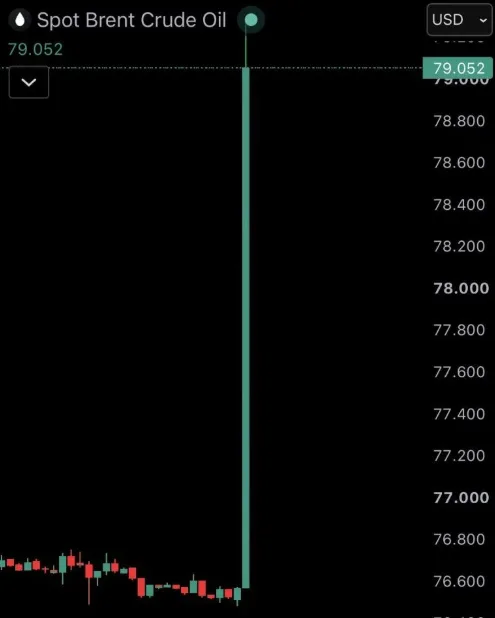
Bitcoin slipped below the $63,000 level after the United States launched another round of military strikes on Iran, adding fresh pressure to global financial markets. At the same time, Brent crude oil climbed 4.5% after Tehran announced the closure of the Strait of Hormuz, raising concerns about energy supplies and inflation.

Bitcoin Drops as Middle East Tensions Escalate
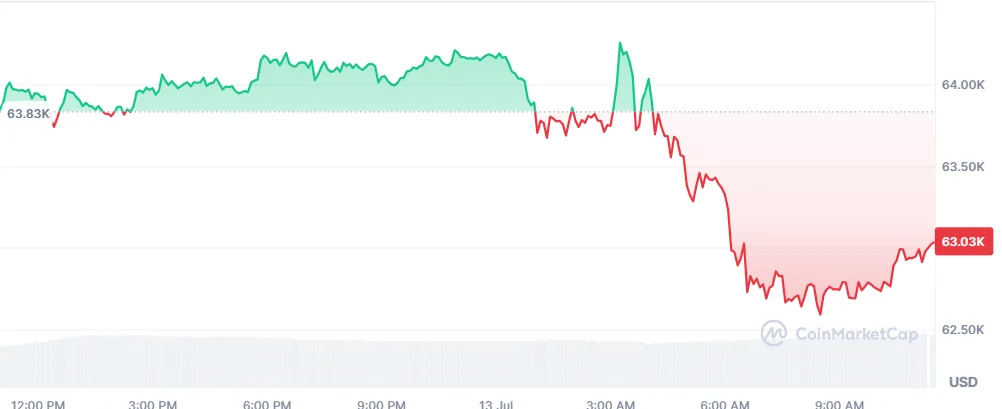
Bitcoin traded around $63,000, marking a 2% decline over the past 24 hours as investors reacted to renewed geopolitical tensions in the Middle East.

The latest sell-off followed a third wave of U.S. strikes on Iran in one week. According to U.S. Central Command, the operation targeted Iran’s ability to attack commercial shipping after Iranian forces reportedly struck a Cyprus-flagged container vessel.
Iranian state media later reported explosions near key energy facilities and ports, including Bushehr, Asalouyeh, Bandar Abbas, and Bandar-e Dayyer.
Despite the decline, Bitcoin remained above the lows seen during last week’s market panic, suggesting that traders have become less reactive to the ongoing conflict than they were earlier in the month.
Oil Prices Jump After Strait of Hormuz Closure
The biggest reaction came from the energy market.
Iran declared the Strait of Hormuz closed “until further notice,” disrupting one of the world’s most important oil shipping routes. The waterway handles roughly 20% of global oil supplies, making any disruption a major concern for energy markets.
Brent crude rose 4.5% when futures trading opened on Sunday. The move echoed the sharp rally seen earlier this year when a previous closure of the strait briefly pushed oil prices above $100 per barrel.
Shipping activity through the strait remained below normal, although some tanker traffic continued during Asian trading hours.
Crypto Market Holds Up Better Than Before
With traditional financial markets closed for most of the weekend, Bitcoin became one of the first major assets to reflect investor sentiment.
Ethereum traded near $1,800 and remained higher than a week ago. XRP held around $1.09, while Solana underperformed, falling about 5% over the past seven days.
The overall crypto market reaction was milder than previous episodes of the conflict. Last week, Bitcoin briefly fell below $62,000 after the U.S.-Iran ceasefire began to unravel. Earlier tensions in the region also triggered more than $310 million in long-position liquidations across the crypto market.
The latest price action suggests investors are becoming more accustomed to geopolitical uncertainty, although volatility remains elevated.
Inflation Data Could Be the Next Market Driver
Attention is now shifting from geopolitical developments to U.S. economic data. Markets are waiting for the June Consumer Price Index (CPI), followed by the Producer Price Index (PPI). The reports will offer fresh clues about inflation and the Federal Reserve’s next policy move.
Higher oil prices could increase inflationary pressure if they remain elevated. That would make it more difficult for the Federal Reserve to begin cutting interest rates, a scenario that could weigh on risk assets, including Bitcoin.
Investors will also watch whether shipping through the Strait of Hormuz returns to normal and whether oil prices remain elevated after global markets fully reopen.
Outlook
Bitcoin is holding near an important support zone despite rising geopolitical risks and a sharp increase in oil prices. The next few days could prove decisive as investors assess inflation data, Federal Reserve expectations, and developments in the Middle East. A sustained hold above $63,000 may help stabilize sentiment, while further escalation or stronger-than-expected inflation could increase pressure on the market.
ALSO READ: Uniswap Daily Fees Hit $5.2 Million as Robinhood Chain Overtakes Ethereum
DISCLAIMER:
The views and opinions expressed herein are solely those of the author or advertiser and do not necessarily reflect the views of the publisher. The publisher does not endorse or guarantee the accuracy of any information presented in this article. Readers are encouraged to conduct further research and consult additional sources before making any decisions based on the content provided.