



- Bitcoin mining faced record difficulty in September 2025, causing production declines for most miners.
- MARA maintained its lead, while smaller operators struggled with rising costs and shrinking profit margins.
Bitcoin Production Declines Amid Rising Difficulty
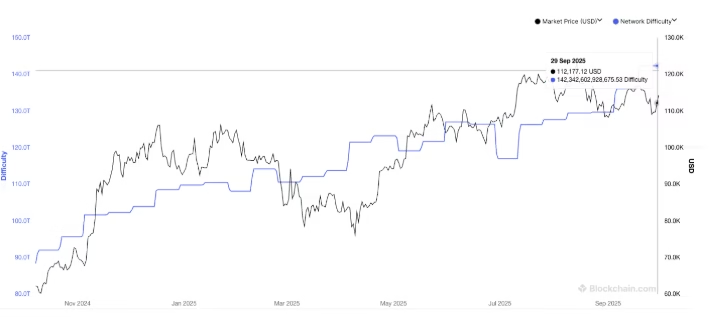
September 2025 brought significant challenges for Bitcoin miners as the network’s mining difficulty surged to a record 142.34 trillion. This all-time high means that each unit of computational power now yields fewer BTC, directly affecting revenue per hash, or hashprice. The rising difficulty, combined with increasing energy costs, caused production declines for most major operators, highlighting the widening gap between large and small-scale miners.
ALSO READ:Eskom Turns to Bitcoin Mining to Rescue Declining Power Demand
MARA Leads Despite Tough Conditions
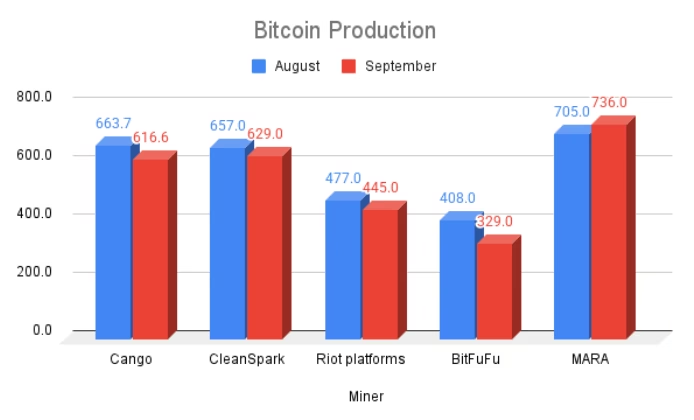
Among major miners, Marathon Digital Holdings (MARA) maintained its dominance, mining 736 BTC in September. The company’s efficiency and strategic BTC accumulation allowed it to outperform competitors such as CleanSpark, which produced 629 BTC, and Riot Platforms with 445 BTC. Smaller miners like BitFuFu saw a sharp decline, producing just 329 BTC, while Cango mined 616 BTC, down from 663 BTC in August. These figures illustrate how larger firms with robust infrastructure can sustain profitability even as operational pressures mount.


Profit Margins Shrinking for Smaller Miners
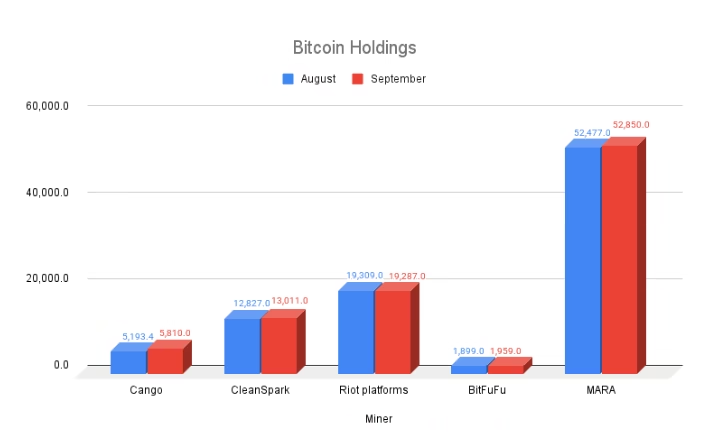
The rising difficulty and lower hashprice are squeezing margins, particularly for miners with higher energy costs or outdated hardware. Many smaller operators face difficult choices, including reducing power consumption, selling BTC reserves, or scaling down operations entirely. In contrast, companies with advanced mining setups and significant BTC holdings remain well-positioned to weather market volatility.

Regulatory Pressure Adds Uncertainty
Adding to the challenges, New York recently proposed an anti-Bitcoin mining bill that could impose progressive taxes on mining companies, directing revenue to lower residents’ utility bills. While the bill’s future remains uncertain, it could disrupt expansion plans for data centers and add a layer of regulatory complexity for miners operating in the state.
The Outlook for Bitcoin Mining
September’s data underscores the increasingly competitive and volatile nature of the Bitcoin mining industry. Large miners like MARA, benefiting from efficient operations and accumulation strategies, continue to strengthen their position. Meanwhile, smaller operators must navigate a landscape marked by rising difficulty, shrinking margins, and potential regulatory hurdles. The disparity between large and small miners is likely to widen unless innovative solutions or cost reductions are implemented.
MIGHT ALSO LIKE:Inside Tether’s Hidden Strategy: How It’s Quietly Dominating Bitcoin Mining
DISCLAIMER:
The views and opinions expressed herein are solely those of the author and do not necessarily reflect the views of the publisher. The publisher does not endorse or guarantee the accuracy of any information presented in this article. Readers are encouraged to conduct further research and consult additional sources before making any decisions based on the content provided.