



- BlackRock launched its iShares Staked Ethereum Trust (ETHB) ETF on Nasdaq, generating $15.5 million in trading on its first day.
- The fund offers staking rewards to investors, paying out 82% of earnings monthly, while the broader crypto ETF market continues to see strong inflows.
BlackRock has officially launched its iShares Staked Ethereum Trust (ETHB) ETF on Nasdaq, offering investors both exposure to Ethereum and monthly staking rewards. The debut trading volume reached $15.5 million, with 621,705 shares purchased and assets under management totaling $100 million.
NEW: BlackRock is launching their Ethereum Staking ETF today — $ETHB. It will have the same fee as $ETHA at 0.25% bps but has a fee waiver down to 0.12% for the first year or first $2.5 billion in assets. pic.twitter.com/aR3FVRChPz
— James Seyffart (@JSeyff) March 12, 2026
ETHB Staking Features
Unlike traditional Ethereum ETFs that track price only, ETHB locks 70–95% of its reserves for staking, generating rewards for shareholders. About 82% of staking earnings are paid monthly, similar to dividends, while the remaining 18% supports the trust, custodians, and service providers. The ETF charges a 0.25% sponsor fee, reduced to 0.12% on the first $2.5 billion in assets.
Crypto ETF Market Update
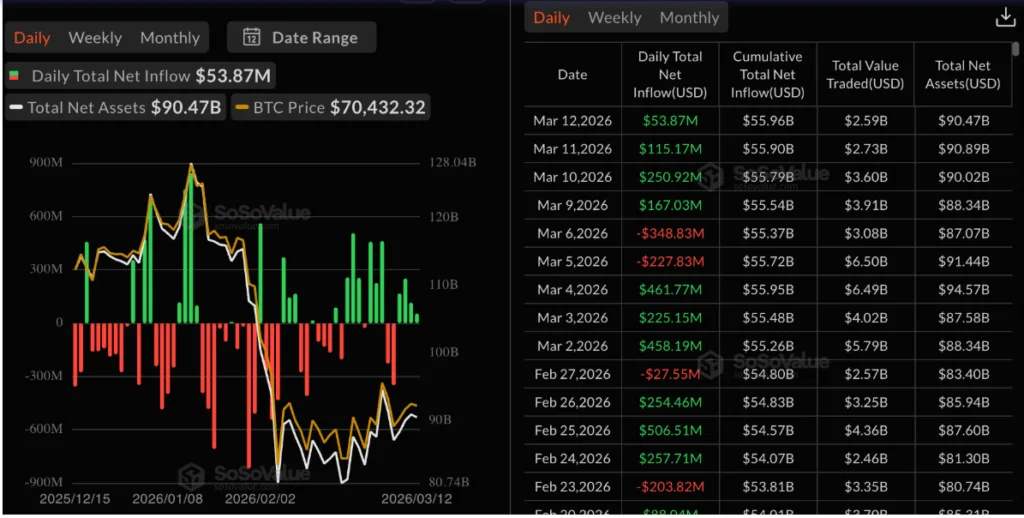
BlackRock is also preparing a Bitcoin Premium Income ETF, which sells covered call options on bitcoin futures to provide additional income. On March 12, bitcoin ETFs saw $53.8 million in inflows, with BlackRock’s IBIT fund leading at $46.1 million.

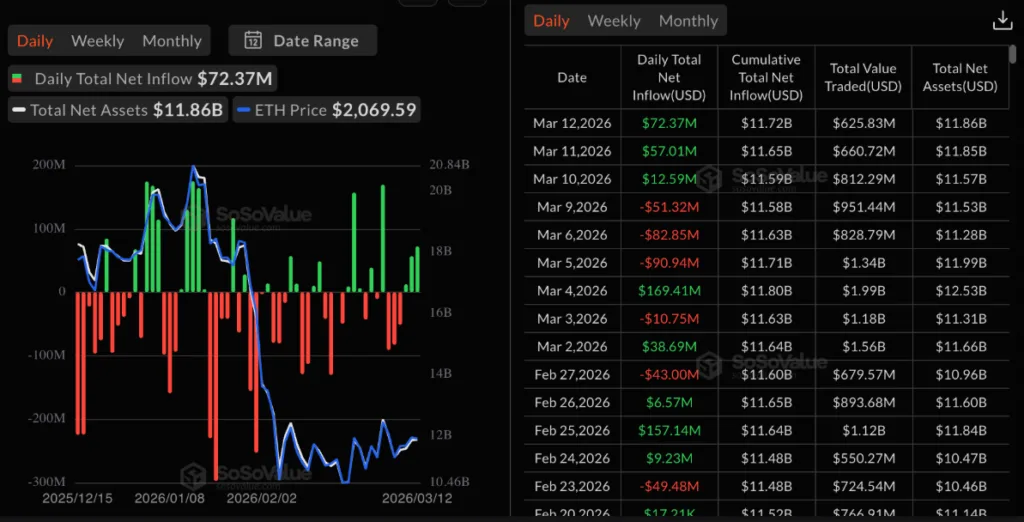
Ethereum ETFs collectively attracted $72.3 million, with Fidelity’s FETH fund at $52 million and BlackRock’s ETHA at $18.6 million.

Growing Institutional Interest
The strong debut of ETHB highlights the growing appetite for income-generating crypto ETFs. Investment giants like Morgan Stanley have also applied for spot bitcoin ETFs, signaling increased institutional involvement in the crypto market.
ALSO READ: BlackRock Expands Bitcoin ETF Holdings with $46M Purchase
DISCLAIMER:
The views and opinions expressed herein are solely those of the author and do not necessarily reflect the views of the publisher. The publisher does not endorse or guarantee the accuracy of any information presented in this article. Readers are encouraged to conduct further research and consult additional sources before making any decisions based on the content provided.