


- Cardano activates Van Rossem hard fork to improve smart contracts and network performance
- ADA price outlook depends on adoption and ecosystem growth
Cardano has completed its Van Rossem hard fork, marking a major step in the blockchain’s ongoing development. The upgrade introduces Protocol Version 11, bringing faster smart contracts, lower execution costs, and improved network security.
The successful launch has renewed interest in Cardano’s native token ADA, but investors are now watching whether the technical upgrade can translate into long-term price growth.
Cardano Activates First Major Governance-Approved Upgrade
The Van Rossem hard fork went live on July 18 at around 21:45 UTC. The upgrade was completed smoothly, with only a 10-minute gap during the transition.
Named after Cardano contributor Max van Rossem, the upgrade represents the first major network change approved through Cardano’s Voltaire governance system.

Unlike earlier major Cardano upgrades, Van Rossem does not introduce a new development era. Instead, it improves the existing Conway framework by making the network more efficient for developers and users.
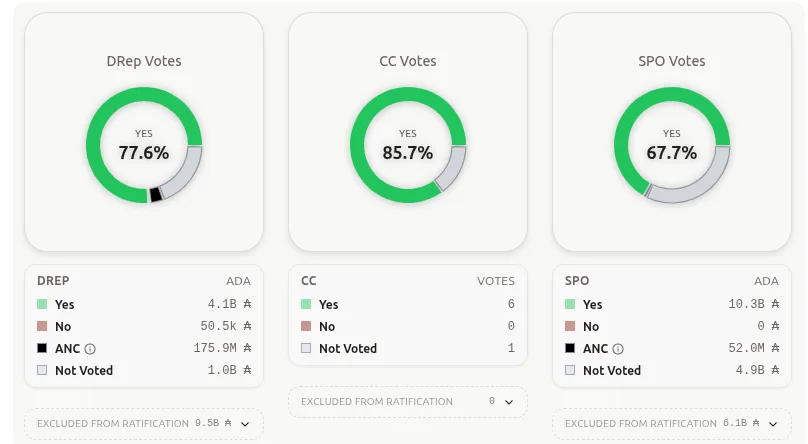
More than 77% of delegated representatives (DReps) and 52% of stake pool operators supported the upgrade before activation, highlighting the growing role of community governance in Cardano’s future.

Faster Smart Contracts and Lower Costs Could Boost Adoption
One of the biggest improvements from Van Rossem focuses on Cardano’s Plutus smart contract platform.
The upgrade introduces faster Plutus execution, new built-in functions, updated cost models, and stronger node security. These changes aim to make decentralized applications cheaper and easier to build on Cardano.
Developers working on decentralized finance (DeFi), NFTs, and real-world asset projects could benefit from improved performance and reduced costs.
Cardano’s development coordinator Intersect described the successful activation as evidence that decentralized governance is becoming more effective within the ecosystem.
Can the Upgrade Push ADA Price Higher?
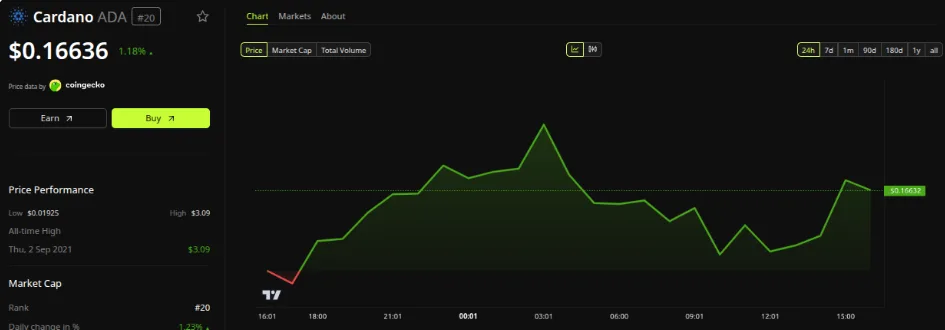
Despite the positive network update, ADA’s price reaction remains limited. ADA is trading near $0.1663, gaining around 1.2% in the 24 hours following the upgrade.
Historically, Cardano hard forks have often created short-term excitement but did not always lead to sustained price increases. Long-term growth will depend on whether the upgrade attracts more users, developers, and capital into the ecosystem.
Key factors to watch include rising developer activity, new decentralized applications, increased DeFi adoption, and growth in total value locked across Cardano-based platforms.
ADA Whales Show Growing Confidence
Large Cardano holders have also increased their exposure. Wallets holding between 100,000 and 100 million ADA have accumulated more than 25.6 billion tokens, reaching their highest level since February 2023.
This accumulation suggests that some large investors are preparing for potential future growth. However, whale activity alone may not be enough to drive a major price rally.
Cardano will need stronger network usage and higher on-chain activity to compete with other leading Layer-1 blockchains such as Solana.
Cardano’s Next Growth Phase Depends on Adoption
The Van Rossem hard fork strengthens Cardano’s technology and governance structure, but its impact on ADA’s price will depend on real-world adoption.
Future developments, including the planned Ouroboros Leios upgrade to improve scalability, could play an important role in Cardano’s ability to attract more users.
For now, Van Rossem marks another milestone in Cardano’s roadmap. Whether it becomes a catalyst for a major ADA recovery will depend on continued ecosystem growth rather than the upgrade alone.
ALSO READ: Tether USDT Risks Losing U.S. Market Access Without GENIUS Act Compliance
DISCLAIMER:
The views and opinions expressed herein are solely those of the author and do not necessarily reflect the views of the publisher. The publisher does not endorse or guarantee the accuracy of any information presented in this article. Readers are encouraged to conduct further research and consult additional sources before making any decisions based on the content provided.