



- Chainlink CCIP 2.0 introduces new verification, compliance and settlement controls designed to support institutional cross-chain transactions.
- LINK traded at $8.93 as CCIP’s secured cross-chain token value exceeded $84 billion.
Chainlink has launched CCIP 2.0, introducing new security, verification and compliance features designed to support institutional cross-chain transactions. The upgrade gives banks, financial institutions and digital asset issuers greater control over how assets move between blockchain networks as demand for secure interoperability grows.
Chainlink CCIP 2.0 Introduces Custom Verification
Chainlink made CCIP 2.0 available to institutions and digital asset issuers on September 28, 2026. The upgrade allows organizations to choose how cross-chain transactions are verified before they are executed on a destination blockchain.
Institutions can operate their own Cross-Chain Verifiers or select independent verification providers. These verifiers independently examine transactions and provide cryptographic signatures before transfers proceed.
The default Chainlink Committee Verifier uses 16 independent node operators that undergo security reviews. The operators must reach consensus on each transaction before it can be processed.
CCIP 2.0 also introduces an open verifier marketplace where third-party providers can offer specialized verification services and set additional fees. Asset issuers can also establish extra approval requirements for specific transactions, including transfers that exceed predefined value limits.
New Compliance Tools Give Institutions More Control
The upgrade integrates with Chainlink’s Automated Compliance Engine, allowing institutions to apply programmable rules to cross-chain transfers.
These controls include approved and restricted wallet lists, sanctions screening, transaction limits and issuer-defined compliance requirements. The system also connects with an ecosystem of more than 20 identity, risk management and regulatory infrastructure providers.
Chainlink has also introduced configurable settlement speeds. Institutions can choose faster execution for smaller, frequent transfers, while high-value transactions can wait for full confirmation from the source blockchain.
The updated API, software development kit and command-line interface are designed to make CCIP easier to integrate across supported blockchain networks.
CCIP Secures More Than $84 Billion in Cross-Chain Value
Chainlink reported that CCIP had secured more than $84 billion in total cross-chain token value when it announced the upgrade. More than $15 billion in token value had migrated to the protocol over the preceding four months.
The assets included Wrapped Bitcoin (WBTC), Coinbase Wrapped BTC (cbBTC), Kraken Wrapped BTC (kBTC) and the FRNT stablecoin.
CCIP has also attracted interest from major financial institutions and infrastructure providers. Its named participants and supporters include Swift, DTCC, Euroclear, UBS, ANZ Bank, Fidelity International and SBI Digital Markets.
The growing participation of established financial institutions highlights the demand for infrastructure that can support secure asset transfers between different blockchain networks.
Chainlink Price Reaches $8.93
Chainlink (LINK) traded around $8.93 on November 23, 2026, at 06:06:21 UTC, marking a 1.37% increase from its previous UTC daily close of $8.81.

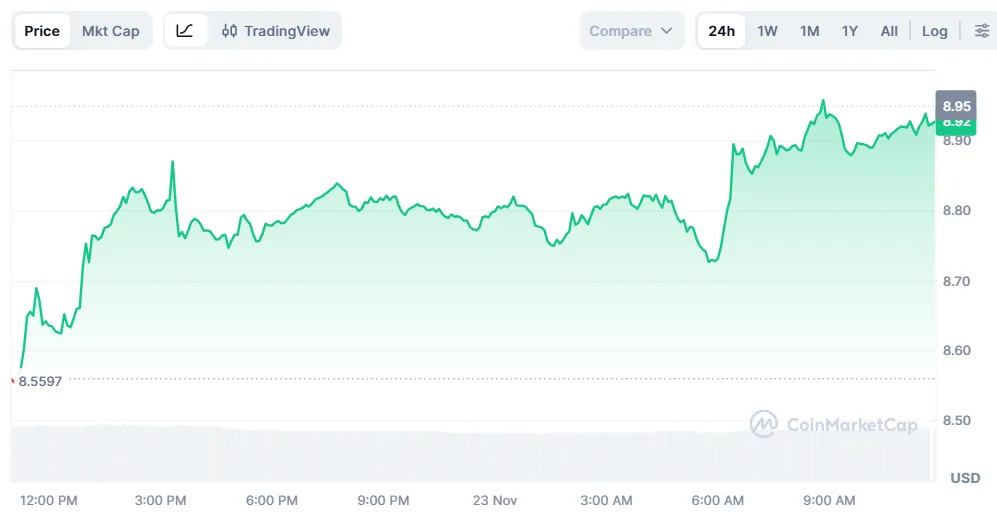
LINK opened the day at $8.81 and traded between a low of $8.73 and a high of $8.97 at the time of the reported market update.
The CCIP 2.0 upgrade adds institutional verification and compliance capabilities to Chainlink’s interoperability infrastructure. Its adoption and the growing value secured by the protocol remain important developments as financial institutions explore cross-chain transactions.
ALSO READ: VeChain Is Moving Into AI Agents — And It Could Change What the Blockchain Is For
DISCLAIMER:
This article reflects the author’s views and is provided for informational purposes only. While we strive for accuracy, the publisher does not guarantee that all information is complete or current. Readers should verify important information and consult appropriate sources before making decisions based on this content.