DeFi has spent years optimizing one side of the equation: yield.
But every yield opportunity carries risk.
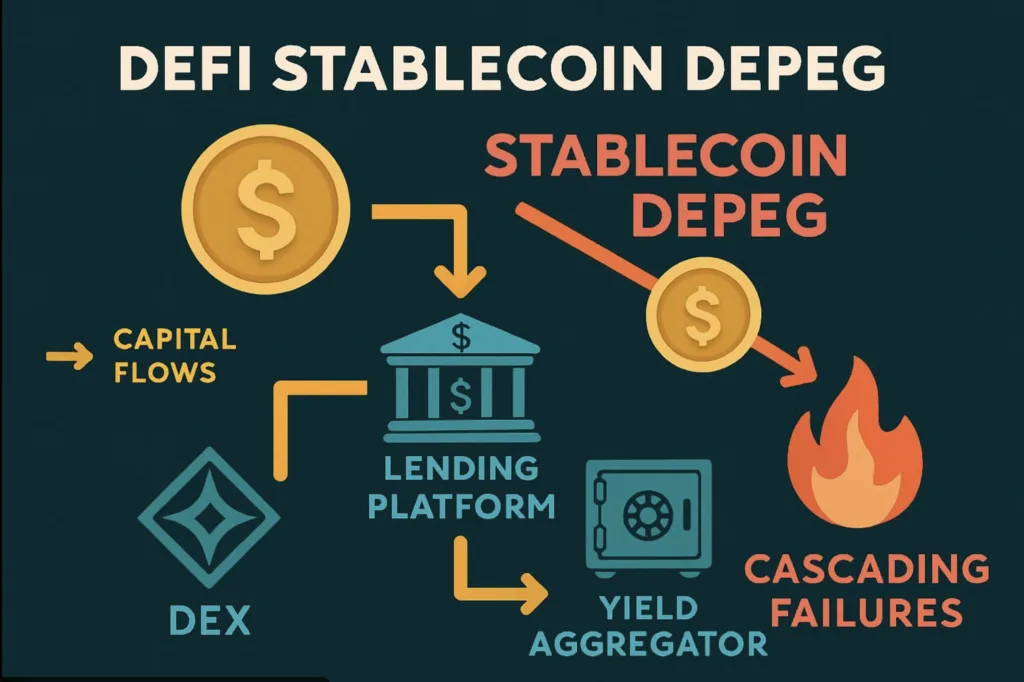
Stablecoins can depeg. Liquid-staking assets can trade below their underlying value. Tokenized real-world assets can become illiquid. Vaults can suffer losses. And when markets become stressed, liquidity can disappear precisely when users need it most.
Cork Protocol is betting that the next major piece of DeFi infrastructure won’t be another exchange, lending market or yield optimizer.
It will be a market for risk itself.
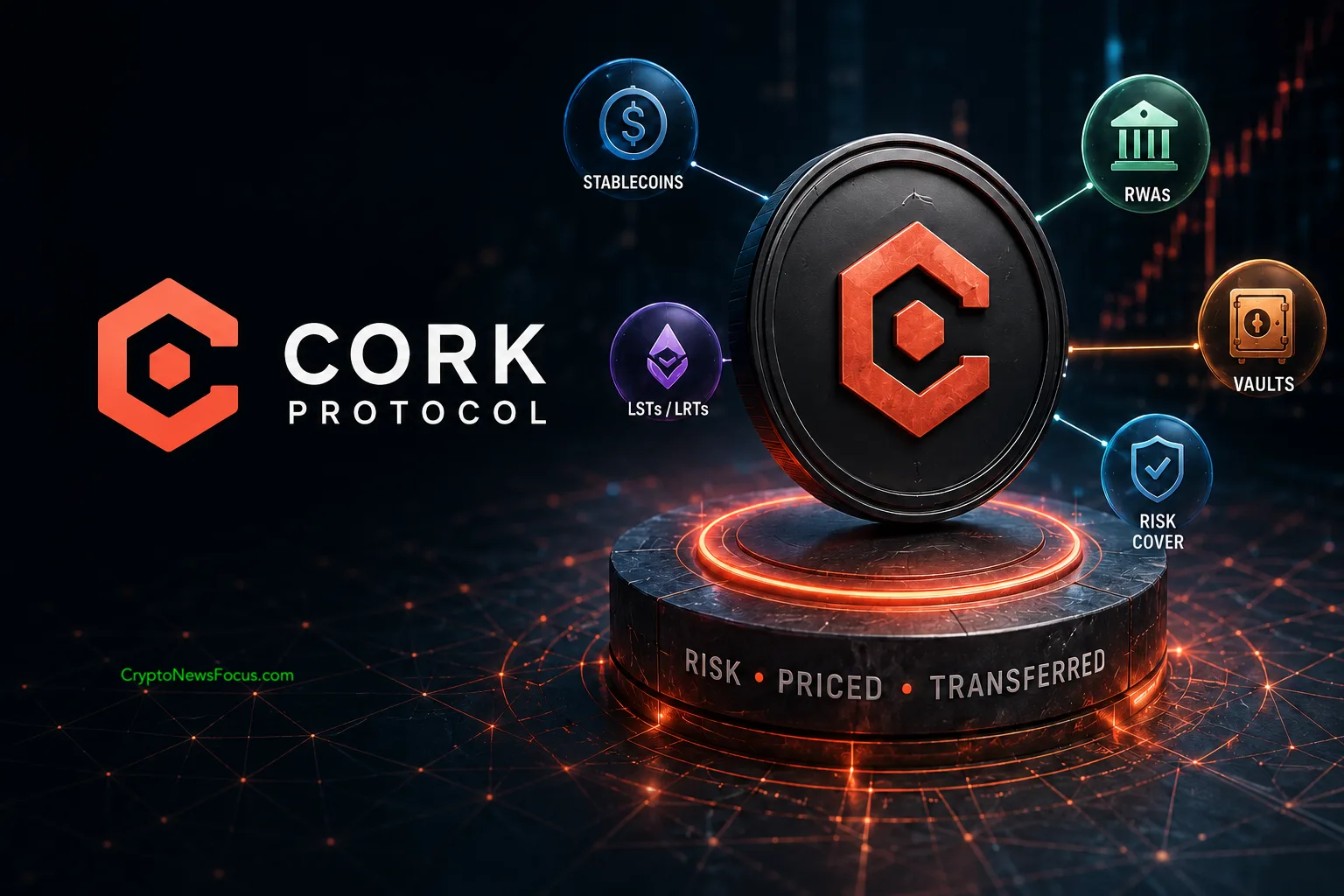
Cork describes its protocol as a programmable risk layer for on-chain assets, including yield-bearing stablecoins, vault tokens and liquid restaking assets. Its objective is to make risk measurable, transferable and tradable on-chain.
That sounds abstract.
The underlying idea, however, is surprisingly simple.
DeFi Has a Risk Problem
Imagine you hold an asset that is supposed to be worth $1.
Everything is fine until it isn’t.
The asset drops to $0.90.
You can sell it, accept the loss, wait for it to recover, or hope that someone else provides liquidity.
Traditional finance has developed a huge industry around managing these kinds of risks.
Insurance, credit derivatives, hedging markets and structured products all exist because investors don’t just want exposure to assets — they want ways to manage the risks associated with those assets.
Crypto has historically been much more focused on creating exposure.
Cork is attempting to build infrastructure for the other side of the equation.
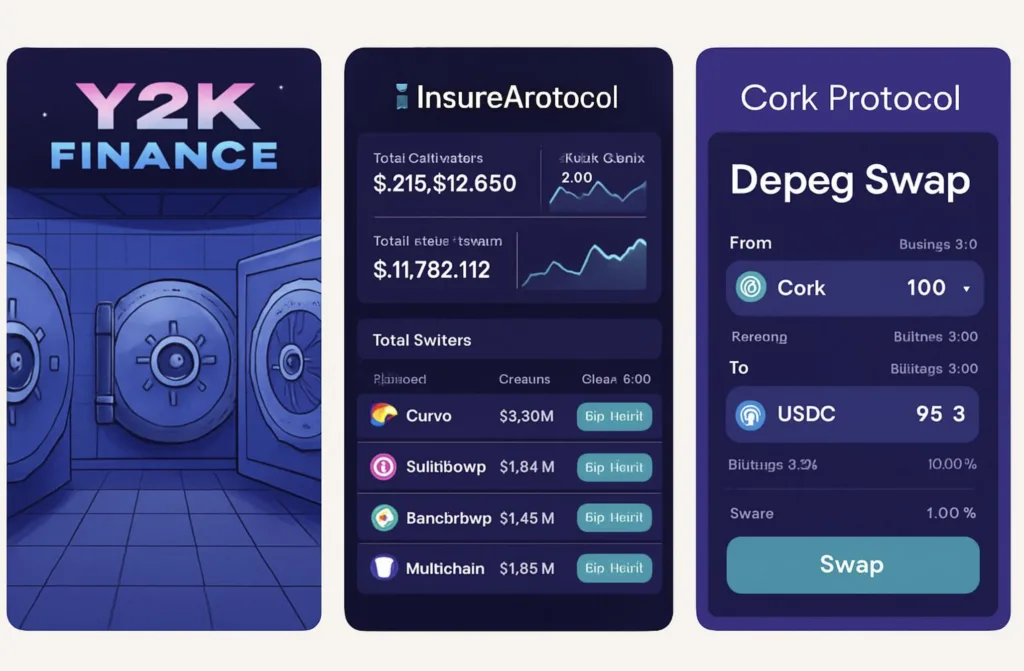
Enter the Depeg Swap
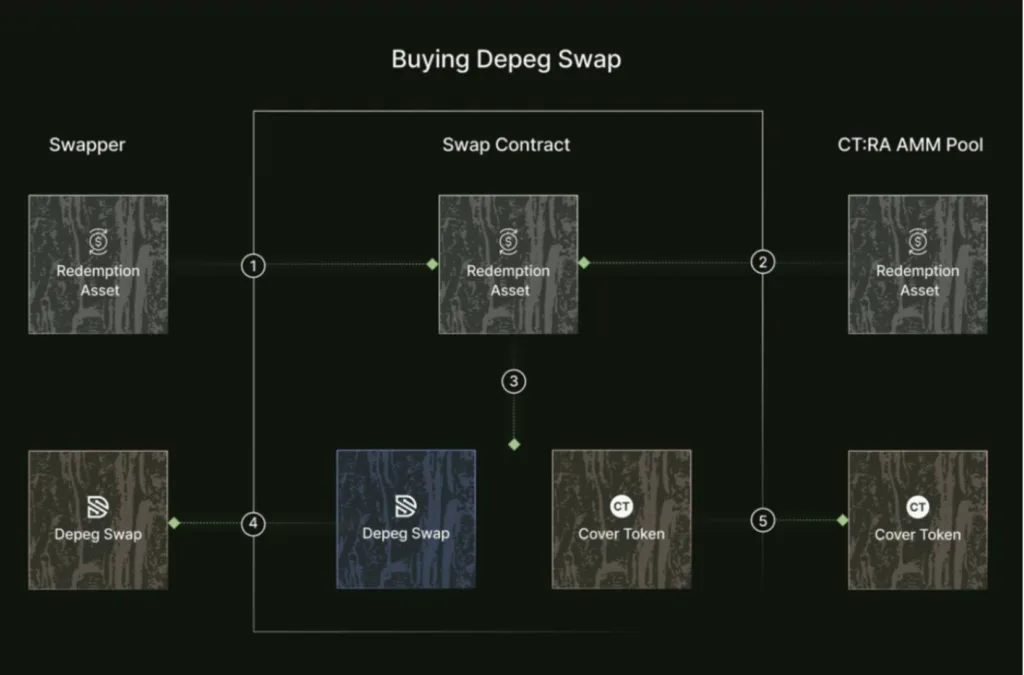
One of Cork’s core mechanisms is the Cork Swap Token, which allows users to obtain cover against the risk associated with a reference asset.
Cork pools pair a collateral asset — such as a liquid, yield-bearing asset — with a reference asset whose risk is being managed. Liquidity providers deposit collateral and receive two tokens: a Cork Principal Token (cPT) and a Cork Swap Token (cST).
The cPT represents the principal claim.
The cST represents the risk-transfer component.
In simplified terms, someone willing to underwrite the risk can earn a premium, while someone worried about that risk can pay for protection.
That is an important shift in thinking.
Instead of asking:
“How much yield can I earn?”
DeFi can begin asking:
“How much am I willing to pay to protect this yield?”
Why This Could Matter
The tokenization of real-world assets is growing.
Stablecoins are becoming increasingly important to on-chain finance.
Yield-bearing assets are becoming more sophisticated.
And institutions entering crypto are unlikely to be satisfied with simply being told to “DYOR” when allocating capital.
They need risk frameworks.
They need pricing.
They need hedging.
They need liquidity during periods of stress.
Cork’s thesis is that risk itself can become a programmable financial primitive.
The company has explicitly positioned its infrastructure around stablecoins, vaults and RWAs, arguing that tokenized risk could become a foundational layer for on-chain finance.
That makes Cork interesting beyond its own protocol.
It is effectively betting on the idea that as crypto becomes more financialized, risk management becomes as important as yield generation.
But Cork Has a Complicated History
This is where the story gets more interesting.
Cork’s public beta launched in 2025 with integrations involving projects including Lido, EtherFi, Ethena and Sky.
But on May 28, 2025, Cork suffered a security incident involving one of its liquidity vaults. Cork later published a detailed post-mortem of the incident.
According to Cork’s post-mortem, 3,761 wstETH were extracted from the affected vault.
For a protocol whose entire value proposition revolves around managing risk, a security incident is obviously significant.
It raises an uncomfortable question:
Can a protocol designed to protect users from financial risk itself become a source of financial risk?
That question shouldn’t be ignored.
It should be central to evaluating Cork.
Then Came the $5.5 Million
Despite the earlier incident, investor interest did not disappear.
In January 2026, Cork announced a $5.5 million seed round led by Road Capital and a16z CSX, with participation from a long list of investors including BitGo Ventures, Gate Labs, Hyperithm and others.
That doesn’t prove Cork will succeed.
But it does suggest sophisticated investors believe the problem Cork is trying to solve is significant enough to justify serious capital.
And that’s arguably the most interesting part of the story.
The question isn’t simply:
“Is Cork a good crypto investment?”
The more interesting question is:
“Why are investors betting millions on infrastructure for programmable on-chain risk?”
Cork’s Bigger Ambition
Cork’s current documentation goes beyond simple depeg protection.
Its architecture is designed around customizable risk markets.
A pool can pair a collateral asset with a reference asset, allowing the market to price exposure to credit, duration or depeg-related risks.
That potentially opens the door to a much larger market.
Think about the evolution:
Stablecoins → liquid staking → restaking → vaults → RWAs → on-chain credit
Each new financial primitive introduces new forms of risk.
If those markets grow, the demand for risk-management infrastructure could grow alongside them.
This is why Cork is worth watching.
Not because it is another token with a catchy narrative.
But because it is attempting to build something that becomes more useful as the rest of DeFi becomes more complicated.
The Underwriting Economy
One of the most interesting aspects of Cork’s design is that risk doesn’t simply disappear.
Someone has to take the other side.
Cork’s Principal Tokens represent the principal claim in a pool, while Swap Token holders pay a premium to those providing the risk-bearing capital.
That creates a market in which participants can effectively choose different positions:
Want protection?
Pay a premium.
Want to underwrite risk?
Earn a premium.
Want liquidity?
Provide capital to the system.
This is conceptually similar to how sophisticated financial markets separate exposure from risk.
The difference is that Cork is attempting to make these relationships programmable and on-chain.
The Catch
There is no free insurance.
If a risk market is badly priced, one side can lose money.
If protection is too expensive, nobody buys it.
If premiums are too low, nobody wants to underwrite the risk.
If liquidity is insufficient, protection may not be useful when it matters most.
And if the underlying smart contracts fail, the financial model doesn’t matter.
This means Cork faces a difficult balancing act:
risk pricing + liquidity + incentives + smart-contract security.
All four have to work.
The Security Question Cannot Be Ignored
This is perhaps the biggest issue for anyone researching Cork.
The 2025 exploit is part of the project’s history.
And because Cork is explicitly positioning itself as infrastructure for risk management, its security record deserves greater scrutiny than that of a typical speculative token.
Cork has continued development following the incident, and its documentation describes mechanisms intended to handle scenarios such as temporary depegs and arbitrage-based restoration of pool assets.
But investors and users should still ask:
- What changed after the exploit?
- Which contracts are currently deployed?
- What audits cover the current architecture?
- How much capital is actually secured by the protocol?
- How deep are its risk markets?
- What happens during a severe market-wide event?
- Who ultimately absorbs losses when assumptions fail?
Those questions matter more than a partnership announcement.
So, Is Cork Undervalued?
That’s much harder to answer.
A promising protocol doesn’t automatically mean its token — or any future token associated with it — is a good investment.
The protocol can succeed while a token performs poorly.
Conversely, a token can rally long before the underlying product achieves meaningful adoption.
The more important metrics to watch are therefore usage, liquidity, risk-market depth, integrations and real demand for protection.
If those numbers begin growing substantially, the thesis becomes much stronger.
If they don’t, the narrative could remain just that — a narrative.
What Makes Cork Different?
Crypto has no shortage of projects claiming to solve “risk.”
Cork’s interesting proposition is that it isn’t simply trying to build another insurance product.
It is attempting to create markets around risk.
That distinction matters.
Insurance traditionally involves underwriting a specific risk under a defined contract.
Cork’s model attempts to make risk exposure itself tradable through on-chain instruments.
If successful, that could make risk management more composable.
A lending protocol could potentially interact with a risk market.
An RWA issuer could potentially create protection around its asset.
A stablecoin ecosystem could potentially develop markets around depeg exposure.
A vault manager could potentially make its risk profile more transparent.
That’s the long-term vision.
The Bigger Bet
The real Cork thesis isn’t:
“DeFi needs depeg protection.”
It’s:
“As more financial value moves on-chain, risk needs to become programmable too.”
That’s a much bigger bet.
And it is one reason Cork deserves more attention than it currently receives.
The project sits at the intersection of several major crypto trends:
DeFi + stablecoins + RWAs + institutional adoption + tokenized risk.
But it also sits at the intersection of several major risks:
smart-contract risk + liquidity risk + market risk + model risk.
That makes Cork neither an obvious winner nor an obvious failure.
It makes it a project worth watching.
Verdict…
Cork Protocol is not interesting because it is another “hidden gem.”
It’s interesting because it is trying to solve a problem that becomes more important as crypto matures.
The first generation of DeFi taught users how to earn yield.
The next generation may need to teach them how to price, transfer and hedge the risks behind that yield.
Cork wants to be part of that infrastructure.
Its funding and investor backing give the thesis credibility. Its technology presents an interesting approach to on-chain risk markets. But its previous security incident is a reminder that the very infrastructure designed to manage risk must itself survive extreme stress.
For now, the most important thing to watch isn’t the price of a token.
It’s adoption.
If Cork can turn programmable risk into a liquid, widely used financial primitive, the project could become considerably more important than its current profile suggests.
If it cannot attract sufficient liquidity and demand, the concept may remain ahead of the market.
Disclaimer: This article is for informational purposes only and is not financial advice. Crypto assets and DeFi protocols carry substantial risk, including total loss of capital. Always conduct your own research before making financial decisions.
About the Author