


- Dogecoin is gaining support from whale accumulation even as retail trading activity remains subdued.
- A break above the $0.077 resistance level could strengthen the recovery and open the door to higher prices.
Dogecoin is attempting to recover after a recent rebound, but the rally is losing strength as it approaches an important resistance level. While large investors continue accumulating DOGE, retail traders appear to be taking a cautious approach.
On-chain data and derivatives metrics suggest that whale support is gradually improving. However, weaker trading activity means Dogecoin still needs stronger buying pressure before a sustained recovery can begin.
Whale Accumulation Offers Support for Dogecoin
Large Dogecoin holders have quietly increased their positions over the past few days. Wallets holding more than one billion DOGE now control approximately 73.85 billion coins, up from 72.73 billion recorded last week.
This increase suggests that some major investors remain confident despite the recent market weakness.
At the same time, the percentage of the DOGE supply currently in profit has climbed to 38.51%, up from 23.7% a week earlier. More profitable holders often reflect improving market conditions and can encourage fresh buying if prices continue rising.

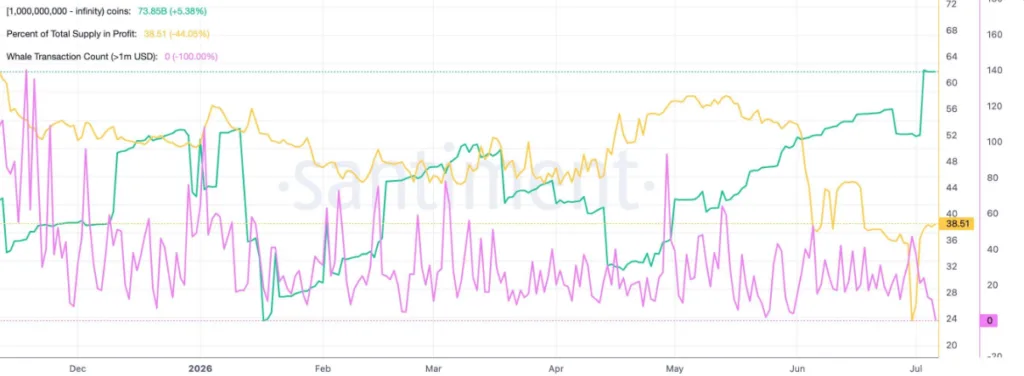
However, whale activity has slowed after the initial accumulation phase. Whale transactions dropped sharply from 47 on Friday to just 12 on Sunday, indicating that large investors are no longer buying as aggressively.
Retail Traders Take a Wait-and-See Approach
While whales continue showing interest, retail participation has weakened. Dogecoin futures open interest has remained relatively stable at around $1.03 billion, showing that traders are holding existing positions instead of opening many new ones.
Funding rates remain positive, suggesting that bullish traders still outnumber bearish ones. However, derivatives trading volume has fallen by more than 5%, highlighting reduced market activity. This combination points to cautious sentiment rather than strong bullish conviction.

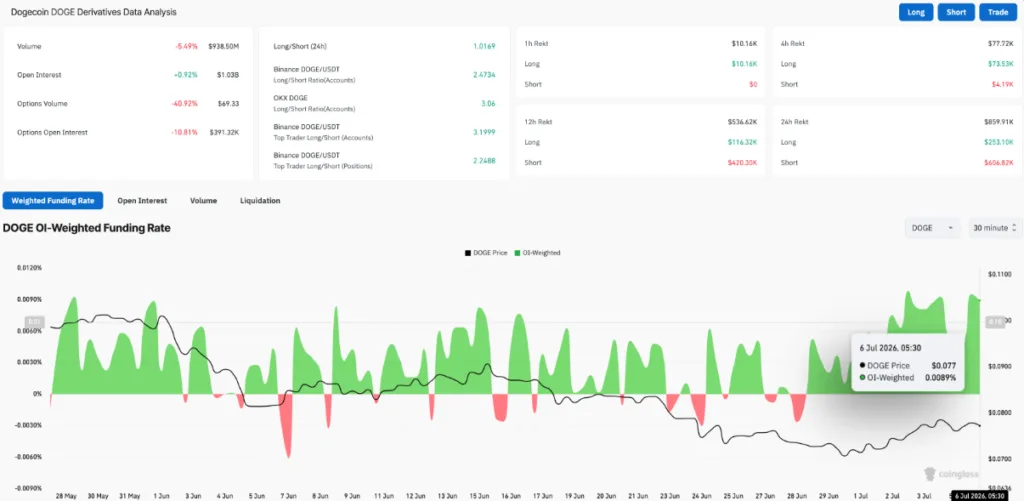
Without higher trading volumes, any price recovery could struggle to build enough strength for a sustained breakout.
Dogecoin Price Faces Major Resistance
Dogecoin is currently trading close to the important $0.077 resistance level after recovering from support near $0.070.
A successful move above this resistance could allow DOGE to target its 50-day EMA around $0.085. Breaking above that level would strengthen the case for a broader trend reversal.
Technical indicators remain mixed. The MACD indicator recently produced a bullish crossover, while its histogram continues to improve gradually.
Meanwhile, the RSI remains near 41. This reading suggests buying strength is still relatively weak, even though selling pressure has eased. Dogecoin also continues trading below both the 50-day and 200-day Exponential Moving Averages, meaning the longer-term trend still favors sellers.
Key Price Levels to Watch
The $0.077 level remains the most important resistance for DOGE in the short term.
If buyers manage to push above it, the next target sits near $0.085. A move beyond that level would improve the overall technical outlook. On the downside, immediate support remains around $0.070. If this level fails to hold, attention would shift to the stronger support near $0.0642, where buyers may attempt to stop further losses.
Dogecoin is showing early signs of recovery, supported by growing whale holdings and improving profitability across its supply. Even so, weaker retail participation and declining trading volumes continue to limit upside potential.
For now, the market remains in a consolidation phase. A decisive break above $0.077 could strengthen bullish sentiment, while failure to overcome this resistance may leave DOGE trading within its current range for longer.
ALSO READ: Solana Price Surges Above $80 as Whales Eye a Move to $100
DISCLAIMER:
The views and opinions expressed herein are solely those of the author and do not necessarily reflect the views of the publisher. The publisher does not endorse or guarantee the accuracy of any information presented in this article. Readers are encouraged to conduct further research and consult additional sources before making any decisions based on the content provided.