


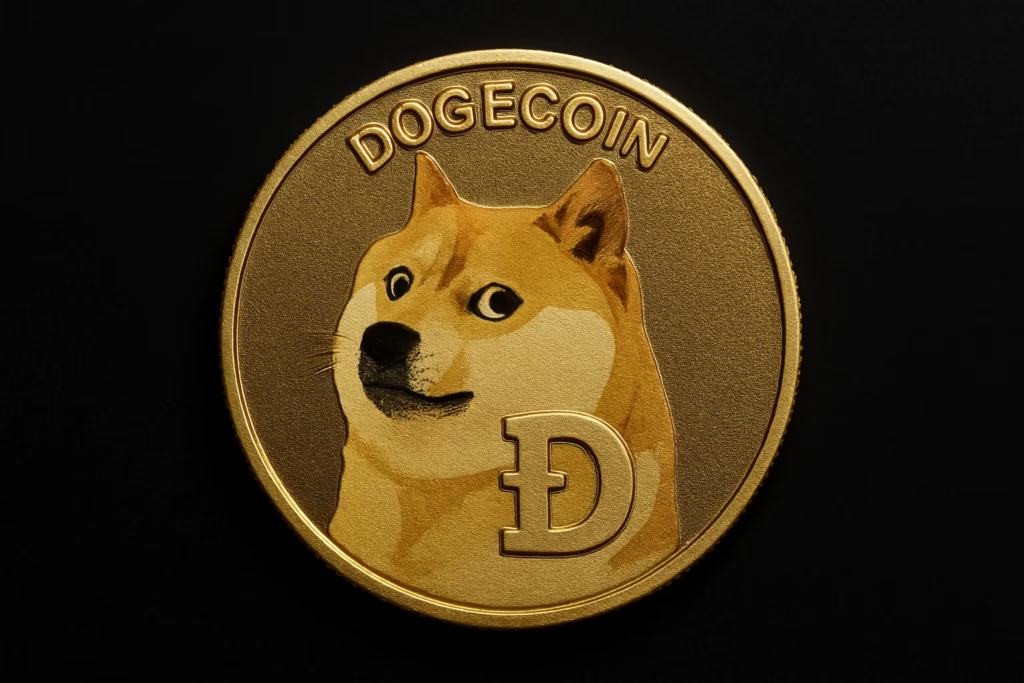
- Dogecoin is trading near $0.092 after a weak rebound, leaving the token close to key support levels.
- If buying pressure fades, analysts warn the price could slip back into a clearer downtrend.
Dogecoin is once again testing investor confidence after a brief recovery, losing strength in early March. The coin is trading close to key support levels, raising concerns that selling pressure could return if buyers fail to defend current prices.
Dogecoin Price Holds Near Support
Dogecoin is trading near $0.092 on March 10, 2026, following a narrow intraday range between roughly $0.0896 and $0.0923. While the token managed a small rebound, the move has not yet signaled a clear reversal in trend.
Market data shows DOGE changing hands around $0.09198, a level that remains well below areas bulls would need to reclaim to confirm a stronger recovery. The limited follow-through after the bounce suggests buyers are cautious, leaving the market vulnerable if support levels weaken.
Despite the uncertainty, Dogecoin remains one of the largest cryptocurrencies by market value. According to market data, the token has a market capitalization of about $14 billion and a circulating supply of nearly 150 billion DOGE. Its large size keeps it among the most visible assets in the meme-coin sector.
Weak Rebound Keeps Bearish Pressure Alive
The recent price action reflects a familiar pattern often seen after sharp declines. Dogecoin experienced a short reflex rally, but the rebound stalled before breaking major resistance levels.
Analysts note that support in the $0.08 to $0.09 range has become the key zone to watch. If the price falls below that area, traders may interpret the move as confirmation that sellers remain in control.
Technical commentary cited in recent market analysis points to the same conclusion: DOGE currently sits at a critical point where support and resistance levels will determine its next direction.
While sudden reversals are common in crypto markets, a bounce that fades before reclaiming resistance often signals weakening buying interest.
Why Dogecoin Struggles to Build a Strong Recovery
Several factors are limiting Dogecoin’s ability to stage a stronger rebound.
First, meme coins often rely heavily on market sentiment and retail participation rather than fundamental revenue or protocol activity. When overall crypto risk appetite softens, assets like DOGE usually feel the impact faster.
Second, Dogecoin’s history shows that rallies frequently depend on social media attention, celebrity commentary, and speculative enthusiasm. Without a new catalyst, price recoveries may struggle to attract sustained trading volume.
Regulation has also played a role in shaping the narrative around meme coins. In February 2025, the U.S. Securities and Exchange Commission’s Division of Corporation Finance stated that meme coins generally do not involve the sale of securities under federal law. Many market participants viewed this as a positive development.
However, SEC Commissioner Caroline Crenshaw criticized the guidance at the time, arguing that the analysis raised legal questions and should be considered on a case-by-case basis.
Broader Crypto Sentiment Will Likely Shape DOGE’s Next Move
Dogecoin rarely moves independently of the wider crypto market. When major assets such as Bitcoin and leading altcoins strengthen, meme coins often benefit from increased speculative demand.
However, in a cautious market, these tokens can underperform because traders typically reduce exposure to high-risk assets first.
For now, Dogecoin’s price structure reflects a market that has stabilized but has not yet confirmed a full recovery. If support near current levels holds, buyers may attempt another rebound. But if that support breaks, the risk of a renewed downtrend could quickly return.
With DOGE still trading near $0.092, the coming sessions may determine whether the token stabilizes or continues lower.
ALSO READ: XRP Price Prediction: Analyst Sees Over 1,100% Surge as Wave 5 Begins
DISCLAIMER:
The views and opinions expressed herein are solely those of the author and do not necessarily reflect the views of the publisher. The publisher does not endorse or guarantee the accuracy of any information presented in this article. Readers are encouraged to conduct further research and consult additional sources before making any decisions based on the content provided.