


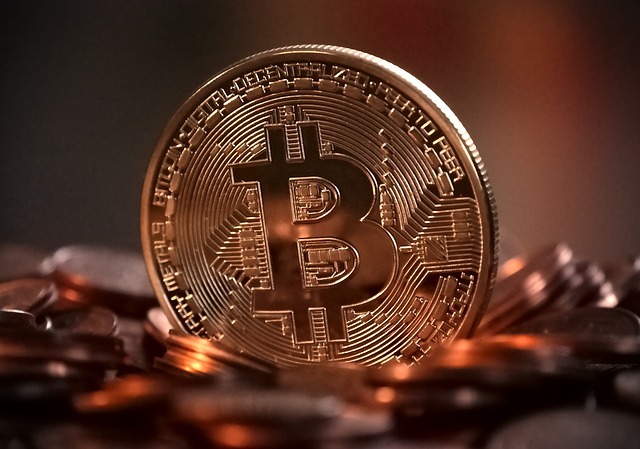
- El Salvador split 6,274 BTC into 14 wallets, reducing risk exposure and improving custody practices.
- The move invokes quantum computing as a future threat, though experts say the risk is decades away.
- Beyond quantum hype, the strategy signals responsibility, transparency, and foresight in sovereign Bitcoin management.
Bitcoin First Sovereign Custodian Takes a Bold Step
When El Salvador became the first country to adopt Bitcoin as legal tender in September 2021, the move drew global headlines, applause from crypto enthusiasts, and sharp criticism from institutions like the International Monetary Fund (IMF). Four years later, the Central American nation has once again taken center stage — this time by restructuring its $678 million Bitcoin treasury.
In August 2025, El Salvador’s government quietly shifted 6,274 BTC from a single wallet into 14 separate addresses, each capped at 500 BTC. The stated reason? To protect its national Bitcoin reserve from a quantum computing threat that experts say may be decades away — if it ever materializes.
Also Read: The Mathematics of Bitcoin Halvings: Cracking the Code of Scarcity
The decision has sparked debate: Is this a forward-thinking security upgrade, or just theatrics designed to burnish President Nayib Bukele’s pro-Bitcoin legacy? The truth lies somewhere in between.
What Exactly Did El Salvador Do?
Until August 2025, El Salvador’s entire Bitcoin reserve sat in one address — a simple but risky setup. In a single sweep, the National Bitcoin Office (ONBTC) split the reserve into 14 fresh wallets. Onchain data confirmed the redistribution, and a public dashboard now tracks the addresses for transparency.
Breakdown of El Salvador’s Bitcoin Split
| Metric | Value |
|---|---|
| Total Bitcoin moved | 6,274 BTC |
| Approximate value (Aug. 2025) | $678 million |
| Previous storage | 1 wallet |
| Current storage | 14 wallets |
| Cap per wallet | 500 BTC |
The “shard and spread” approach is designed to create firebreaks. If one wallet is ever compromised, losses are capped at 500 BTC rather than the entire reserve.
Why Quantum Computing Entered the Conversation
Bitcoin’s cryptographic backbone relies on the Elliptic Curve Digital Signature Algorithm (ECDSA). Under normal circumstances, it’s nearly impossible to derive a private key from its public counterpart. However, in theory, a sufficiently advanced quantum computer running Shor’s algorithm could reverse this math, exposing vulnerable wallets.
El Salvador’s ONBTC cited this exact risk when announcing the move. Once a Bitcoin address is used, its public key becomes visible onchain. Over time, those exposed keys could be prime targets in a post-quantum era.
Potentially Vulnerable Bitcoin Supply
| Source | Estimate | Note |
|---|---|---|
| Project Eleven (Jan 2025) | 6M+ BTC | If elliptic-curve keys become breakable |
| YCharts (Jun 2025) | Similar range | Reflects at-risk supply over time |
But here’s the catch: No existing quantum computer comes close to breaking Bitcoin’s 256-bit encryption. Current machines struggle with even toy-sized keys. As Michael Saylor, executive chairman of MicroStrategy, put it, much of the quantum threat talk is “hype.”
Is This an Imminent Threat? Experts Say No
In reality, the threat is decades away at best. No public demonstration has shown quantum computers capable of breaking Bitcoin’s encryption. The U.S. National Institute of Standards and Technology (NIST) only began standardizing post-quantum cryptographic algorithms in 2022, highlighting just how early the field remains.
Critics argue that invoking quantum computing is more a narrative than a necessity. Yet, even if the technology isn’t ready, the principle of not reusing addresses and splitting reserves remains best practice in Bitcoin custody.
What Splitting Wallets Achieves in Practice
El Salvador’s move has both technical and symbolic value:
- Public key protection – By transferring reserves into unused wallets, the government ensures no public keys are exposed, eliminating immediate vulnerabilities.
- Damage limitation – Capping wallets at 500 BTC reduces the risk of catastrophic loss.
- Transparency – The ONBTC has maintained a public dashboard, balancing accountability with security.
Think of it as placing treasure into multiple vaults rather than one — even if a thief cracks one vault, the rest remain safe.
Timing: Why Do This Now?
If the quantum threat is far off, why act in 2025?
The answer lies in optics and credibility. El Salvador has faced relentless scrutiny over its Bitcoin gamble, particularly from the IMF. After adopting Bitcoin in 2021, the nation struggled to secure financing until late 2024, when it struck a staff-level deal with the IMF. That agreement, finalized in February 2025, included repeated warnings about Bitcoin-related risks.
By splitting its Bitcoin reserve, El Salvador sends a message: it treats Bitcoin not as a publicity stunt but as a sovereign treasury asset worth securing. The move positions the country as forward-looking, capable of anticipating future risks rather than merely reacting.
Supporters vs. Critics: A Divided Reaction
Reaction to the move has been mixed.
- Supporters see a pioneering blueprint for sovereign Bitcoin custody — transparent, fragmented, and resilient. Even if the quantum angle is overstated, they argue, the operational hygiene is sound.
- Critics dismiss the quantum framing as theatrics. Since the risk is negligible today, they argue, the reshuffling is more about headlines than genuine security.
Still, most observers concede that the underlying practices — avoiding address reuse, spreading reserves, ensuring transparency — represent prudent steps in crypto asset management.
Could This Set a Precedent for Other Nations?
El Salvador remains the only nation-state with Bitcoin as legal tender, but its custody practices could ripple outward. For institutional investors and custodians holding billions in BTC, the episode reinforces best practices:
- Never reuse addresses
- Fragment reserves across multiple wallets
- Think about long-term cryptographic risks
The precedent is significant. El Salvador is not only showcasing how a government can secure Bitcoin reserves but also reframing the cryptocurrency as a serious, institutional-grade asset class.
Was It Necessary? Maybe Not — But It Was Smart
From a technical standpoint, El Salvador didn’t need to split its Bitcoin reserves today. Quantum computers aren’t ready to crack ECDSA. But the cost of acting early is negligible, while the cost of being late could be catastrophic.
By spreading risk, preserving transparency, and signaling long-term foresight, El Salvador demonstrates that it treats Bitcoin like a strategic treasury asset, not just a symbol of defiance.
The move reflects a broader reality of governance in the digital era: when dealing with experimental technologies, the prudent path is often to prepare for low-probability, high-impact risks — even if they may never arrive.
Responsible Housekeeping or Quantum Hype?
El Salvador’s decision to split $678 million in Bitcoin across 14 wallets is less about imminent quantum threats and more about optics, credibility, and operational best practices.
Whether or not quantum computers ever threaten Bitcoin, the move strengthens the country’s custody strategy, reassures international observers, and positions El Salvador as a sovereign actor capable of managing its digital assets responsibly.
The lesson is clear: in crypto, as in finance, it is often smarter to prepare for unlikely risks than to be caught unprepared. El Salvador’s bet may not be on quantum computing but on showing the world it takes its Bitcoin future seriously.