


- Ethereum activity jumped after the Fusaka update as lower fees pulled usage back to the main network.
- Analysts say part of the rise may be driven by spam rather than real users.
- Even so, Ethereum continues to dominate stablecoins and tokenized assets.
Ethereum has overtaken several leading layer-2 chains after the Fusaka update sharply reduced transaction costs. Data from on-chain trackers shows a notable rise in usage, signaling what analysts describe as a “return to mainnet.” Still, beneath the surface of this resurgence, experts warn that not all activity reflects genuine user demand.
🪃⛓️ Return to Mainnet@ethereum L1 outranks all leading L2s in terms of daily active addresses.
Interesting. pic.twitter.com/Nk7O5adWA5
— Token Terminal 📊 (@tokenterminal) January 22, 2026
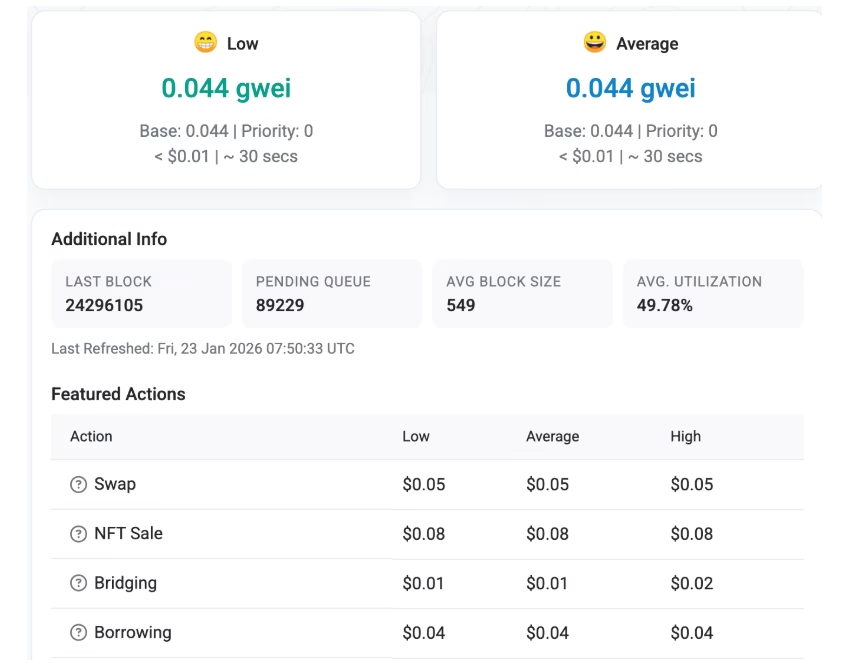
Following the Fusaka upgrade in December, Ethereum’s gas fees dropped by more than 60%. This reduction changed user behavior almost immediately, making the mainnet more competitive compared to popular L2 networks that previously thrived on lower costs.
Mainnet Activity Overtakes Leading L2 Networks
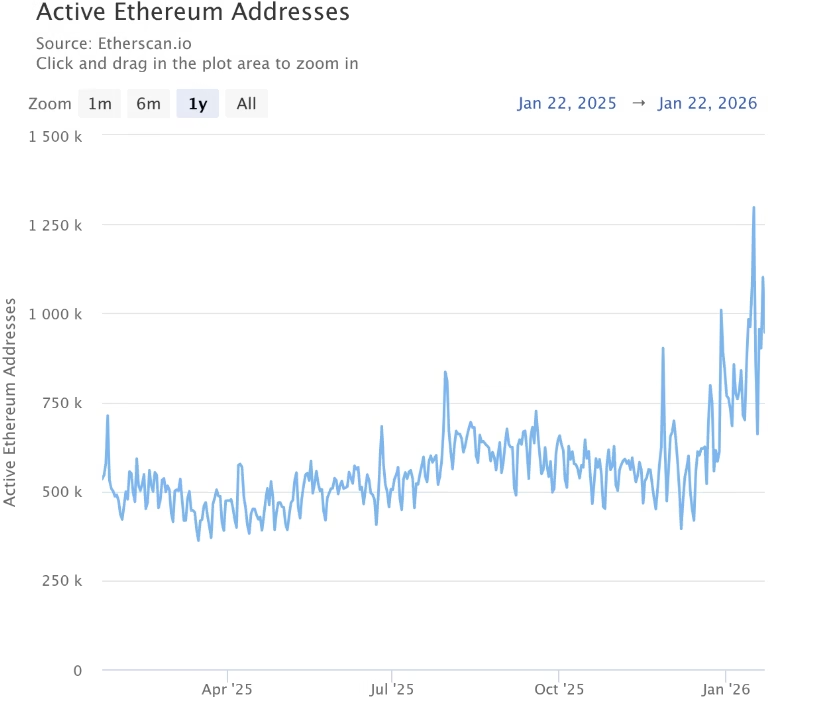
According to Etherscan, active Ethereum addresses surged to around 1.3 million on January 16. Although the figure was later corrected, daily activity stabilized near 945,000 addresses. This level still exceeds the daily metrics recorded by major L2 platforms such as Arbitrum, Base, and OP Mainnet.

At the same time, liquidity has been flowing out of the L2 ecosystem. Data from L2Beat shows that total value locked across second-layer networks has fallen by 17% over the past year, now sitting at roughly $45 billion. Analysts suggest that lower mainnet fees have reduced the urgency to rely on overlays for routine transactions.

Falling Fees Open the Door to Spam Activity
While cheaper transactions have encouraged broader use, they have also introduced new risks. Blockchain security specialist Andrey Sergeenkov argues that a significant portion of the recent spike is driven by large-scale spam operations rather than organic adoption.
Sergeenkov links the surge to address “poisoning” attacks, where attackers send tiny transactions to wallets using addresses that visually resemble legitimate ones. After Fusaka, these schemes became economically viable due to lower fees, even with extremely low success rates.
His analysis of activity from mid-December 2025 to January 2026 revealed that 67% of newly created wallets received less than $1 in their first transaction. In total, 3.86 million out of 5.78 million wallets fit this pattern, largely tied to stablecoin transfers. Despite the low conversion rate, 116 users reportedly fell victim, losing more than $740,000 combined.
Ethereum’s Dominance in Tokenized Assets Remains Intact
Despite concerns over artificial activity, Ethereum’s long-term position remains strong, especially in real-world asset tokenization. ARK Invest notes that more than $350 billion in funds are currently held on the network. Stablecoins dominate this segment, with Ethereum controlling 56% of the market.
When L2 networks are included, the broader Ethereum ecosystem accounts for 66% of tokenized real-world assets. With analysts projecting the global tokenization market to reach $11 trillion by 2030, Ethereum continues to stand as the leading infrastructure, even as it navigates the trade-offs brought by lower fees and rising on-chain noise.
ALSO READ: Pi Network Launches No-Code Payments and Pi Credit Rewards for Creators
DISCLAIMER:
The views and opinions expressed herein are solely those of the author and do not necessarily reflect the views of the publisher. The publisher does not endorse or guarantee the accuracy of any information presented in this article. Readers are encouraged to conduct further research and consult additional sources before making any decisions based on the content provided.