


- Ethereum remains below the key $2,000 resistance despite rising ETF inflows, falling exchange reserves, and growing staking activity.
- Weak demand continues to limit the rally, with analysts warning that ETH could drop to $1,500 if $1,847 support breaks.
Ethereum (ETH) continues to trade below the key $2,000 level despite signs of tightening supply. While exchange reserves are falling and more ETH is being locked in staking, demand has not kept pace, making it difficult for Ethereum to sustain a breakout.
Recent spot Ethereum ETF inflows have offered some support, but on-chain data suggests buyers remain cautious. Unless demand strengthens, ETH could remain under pressure in the near term.
Ethereum Faces Strong Resistance at $2,000
Ethereum has repeatedly attempted to move above the $2,000 psychological level in recent weeks, but sellers have continued to reject each rally.
A positive development came on August 4, when U.S. spot Ethereum ETFs recorded $53.75 million in net inflows. Continued institutional buying could provide the momentum needed for Ethereum to challenge the resistance level again.
However, ETF demand alone may not be enough to change the broader market trend if on-chain activity remains weak.
New Ethereum Proposal Aims to Reduce Inflation
Ethereum developers have introduced EIP-8361, a proposal designed to lower Ethereum’s long-term inflation.
The proposal introduces a mechanism known as tapered issuance burn, which would automatically burn a larger portion of staking rewards as the percentage of staked ETH increases.
Although EIP-8361 remains in the draft stage, supporters believe it could strengthen Ethereum’s tokenomics by limiting new ETH issuance over time.
Falling Supply Does Not Tell the Whole Story
Several on-chain indicators point to a tightening ETH supply. Exchange reserves continue to decline, suggesting fewer coins are available for immediate selling.

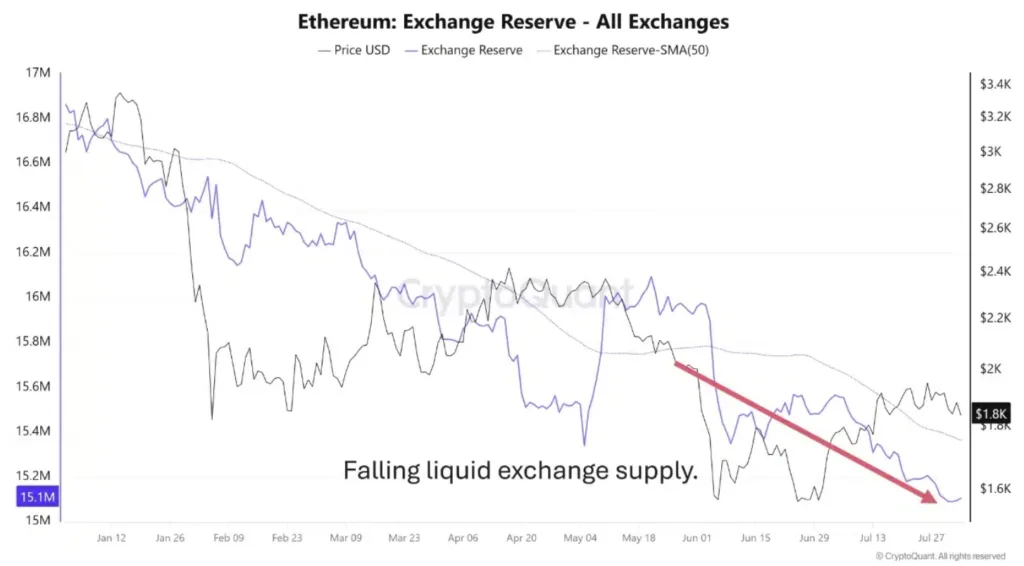
At the same time, approximately 41.4 million ETH, or about 34% of Ethereum’s total supply, is currently locked in staking.
Under normal market conditions, these trends would support a stronger price outlook.
However, researchers at Novaque Research argue that supply constraints alone are not enough. They noted a growing gap between reduced supply and actual market demand.
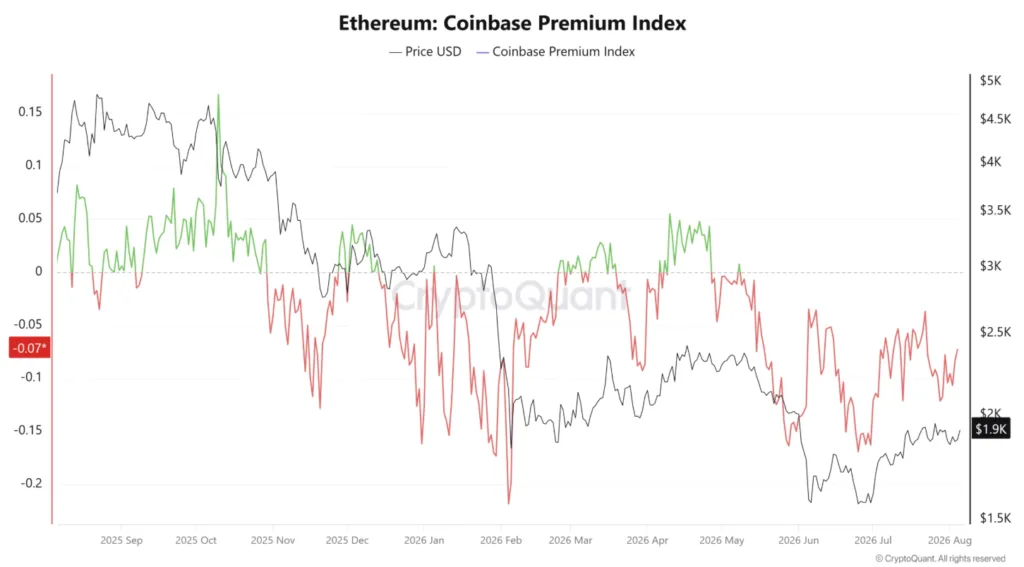
One of the clearest signs is the Coinbase Premium Index, which has remained negative since May. This indicates that U.S. investors have shown limited interest in paying higher prices to accumulate Ethereum.

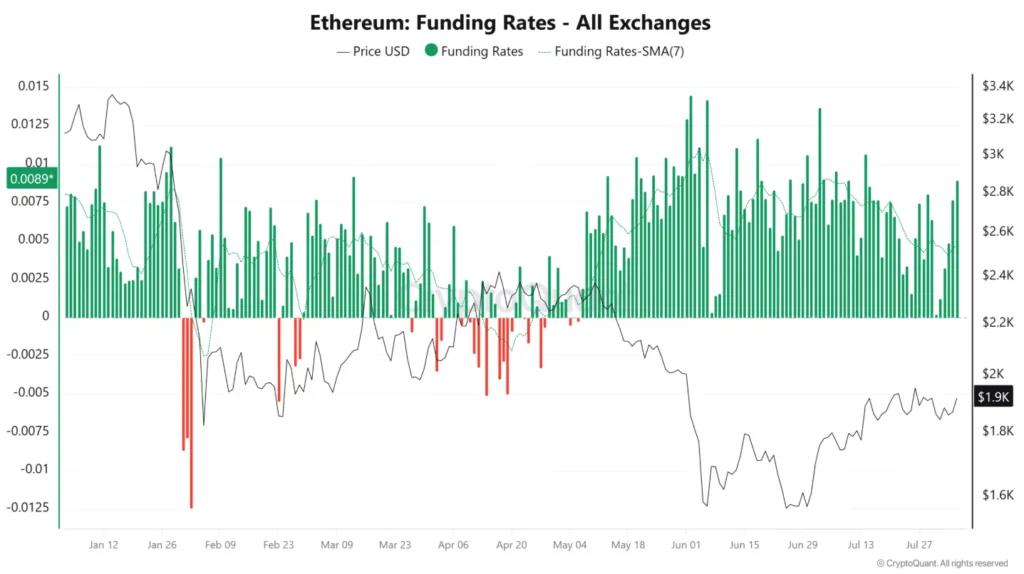
Funding rates have also stayed positive but have gradually weakened over the past month, reflecting cooling bullish sentiment.

According to Novaque Research, Ethereum needs stronger network activity, higher transaction fees, and increased settlement volume before a convincing scarcity-driven rally can develop.
Ethereum Could Fall to $1,500 if Support Breaks
Crypto analyst Credibull Crypto believes Ethereum could face a deeper correction if current support fails. The analyst identified $1,847 as a key support level.

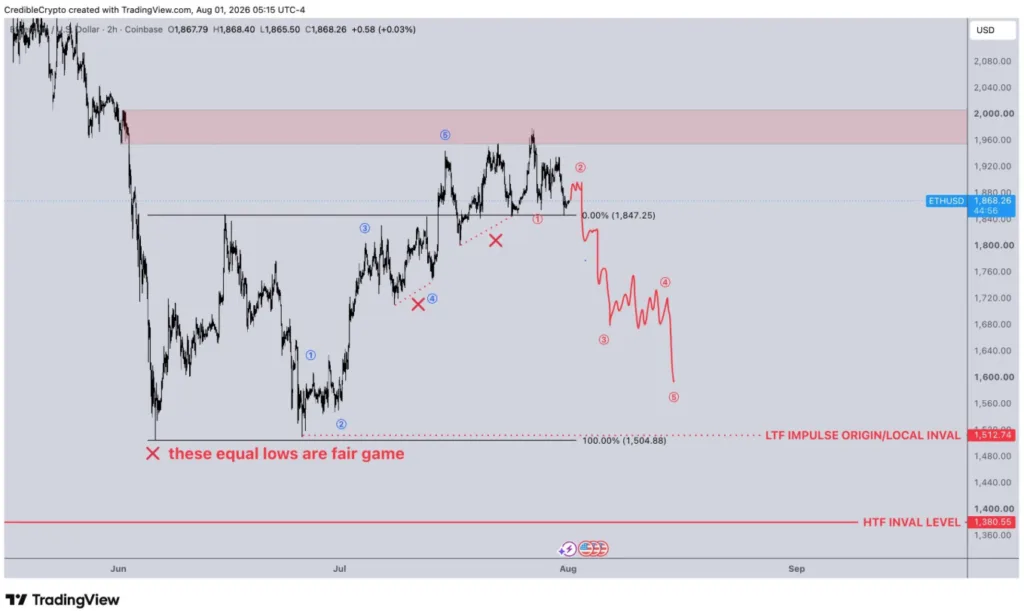
Ethereum has successfully defended this price for the past two weeks, but losing it could open the door for a decline toward $1,500, where the previous rally began in July.
As long as Ethereum remains below $2,000, traders are likely to watch these support levels closely. Ethereum continues to benefit from declining exchange reserves, rising staking participation, and renewed ETF inflows. However, those bullish signals are being offset by weak buying demand and soft on-chain activity.
Unless investor demand improves, Ethereum may struggle to turn $2,000 into support. A successful breakout could strengthen bullish momentum, while a break below $1,847 would increase the risk of a deeper pullback toward $1,500.
ALSO READ: Coldcard Security Flaw Exposes Bitcoin Wallets as Hackers Steal Millions
DISCLAIMER:
The views and opinions expressed herein are solely those of the author and do not necessarily reflect the views of the publisher. The publisher does not endorse or guarantee the accuracy of any information presented in this article. Readers are encouraged to conduct further research and consult additional sources before making any decisions based on the content provided.