


- Ethereum trades above key short-term levels but remains under long-term pressure after being classified as a digital commodity.
- Regulatory uncertainty, liquidity risks, and weak institutional demand point to continued volatility with downside risk.
Ethereum has come under renewed pressure after U.S. regulators officially classified it as a digital commodity, a move that is reshaping market sentiment and institutional behavior.
Regulatory Shift Weighs on Institutional Confidence
The classification of Ethereum as a digital commodity introduces clearer federal oversight on activities such as staking, mining, and airdrops. While this step provides regulatory direction, it has also created hesitation among institutional investors.

Ongoing disagreements in the United States over stablecoin policies and anti-money laundering rules have slowed broader crypto legislation. As a result, many large investors are adopting a cautious stance, limiting capital inflows into Ethereum markets.
Macroeconomic factors are also adding pressure. The U.S. Federal Reserve’s decision to maintain interest rates, combined with geopolitical tensions and rising oil prices, has dampened overall risk appetite across financial markets, including crypto.
Ethereum Holds Short-Term Support but Faces Long-Term Pressure
Ethereum is currently trading above its short- and medium-term moving averages, including the SMA-20 and SMA-50, signaling some underlying strength in the near term. The Ichimoku Kijun level is also acting as immediate support, helping stabilize the price.
However, the asset remains significantly below its SMA-200, indicating that long-term downward pressure is still in play. This divergence highlights a market caught between short-term recovery attempts and broader bearish trends.
At the same time, liquidity concerns are emerging. More than 66% of Ethereum’s supply is locked in the Beacon Deposit Contract, with a large portion concentrated among major exchanges and staking platforms. This raises the risk of sudden, synchronized outflows during periods of stress.
Mixed Signals Point to Volatility Ahead
Technical indicators present a mixed outlook. Momentum indicators such as MACD and ADX suggest buying interest, while others, including RSI, indicate mild bullishness. However, overbought signals from tools like CCI and BBP point to possible short-term exhaustion.
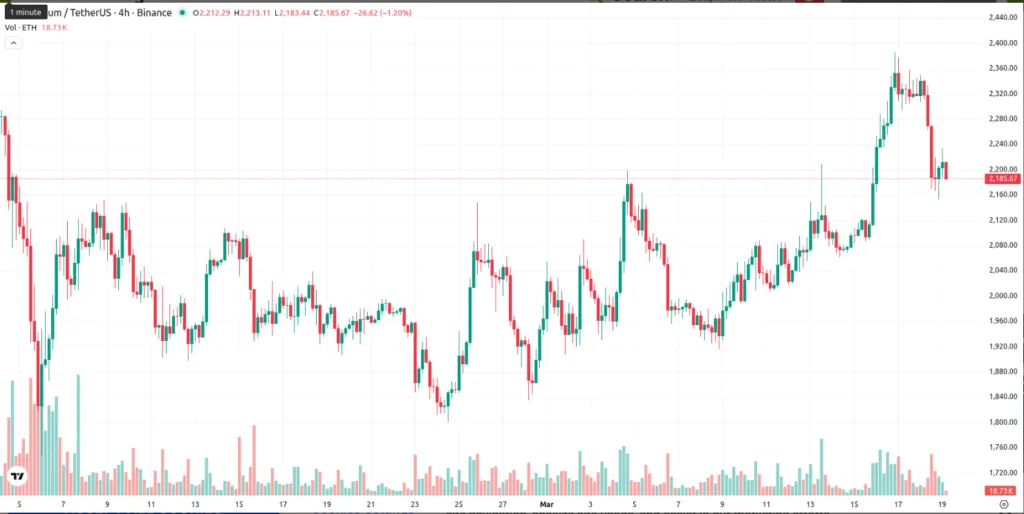
Ethereum recently dropped over 5% in a single day, opening with a gap down and trading near the lower end of its daily range. This reflects elevated volatility and ongoing selling pressure.
Key Levels to Watch as Downside Risk Persists
For the week ahead, Ethereum is expected to trade between $2,085 and $2,203. Analysts suggest that the likelihood of further downside remains higher than a sustained upward move, given bearish signals on higher timeframes.
If the price breaks above $2,203, it could trigger renewed buying interest. On the downside, a fall below $2,085 may open the door to deeper losses.
In the near term, Ethereum appears set for consolidation as regulatory uncertainty, macroeconomic pressure, and liquidity risks continue to shape market direction.
ALSO READ: Pi Network Reviews PiRC-101 Proposal as Token Value Debate Heats Up
DISCLAIMER:
The views and opinions expressed herein are solely those of the author and do not necessarily reflect the views of the publisher. The publisher does not endorse or guarantee the accuracy of any information presented in this article. Readers are encouraged to conduct further research and consult additional sources before making any decisions based on the content provided.