


- HYPE has surged 194% in 2026, nearing its all-time high on strong demand for perpetual futures trading.
- Rising U.S. regulation and new licensed competitors may pressure Hyperliquid’s future growth.
Hyperliquid (HYPE) has recorded one of the strongest performances in 2026, even as regulatory changes begin to reshape the derivatives market. Despite rising competition and policy shifts, the token continues to attract strong interest from traders.
HYPE rallies nearly 200% in 2026
Hyperliquid has surged about 194% year-to-date in 2026. At the time of reporting, HYPE is trading close to its all-time high of around $77. This performance has placed it among the top-performing major crypto assets of the year.

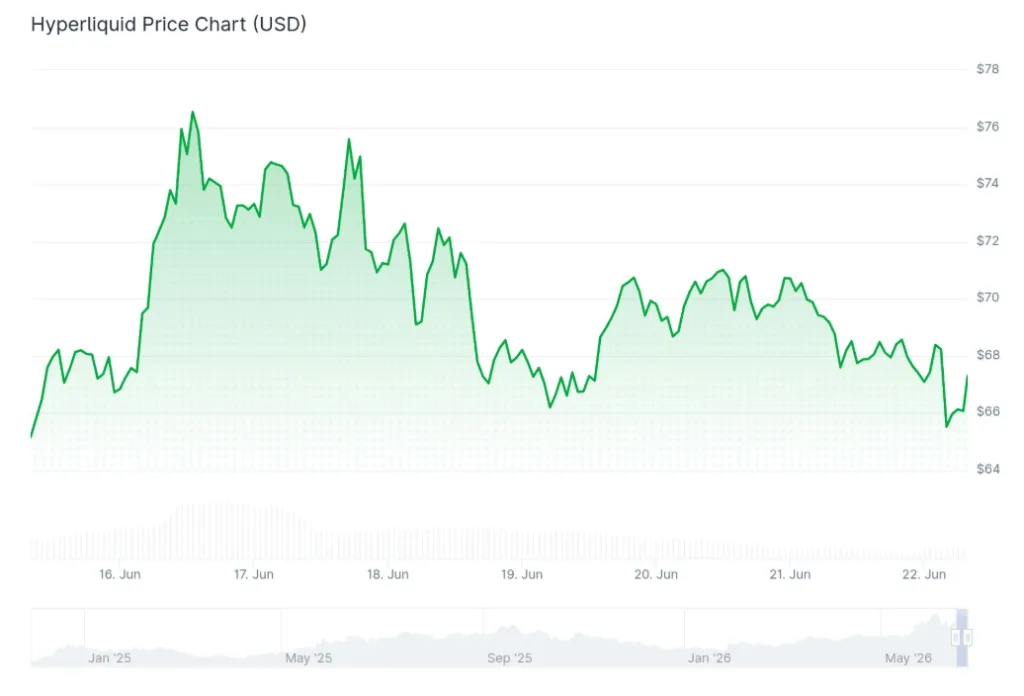
The rally has been driven by growing demand for decentralized derivatives trading, especially perpetual futures contracts. These products allow traders to speculate on crypto prices using leverage without owning the underlying assets.
Hyperliquid has positioned itself as a leading decentralized platform in this niche, benefiting from increased interest in high-risk, high-reward trading strategies.
What makes Hyperliquid stand out
Hyperliquid operates as a decentralized exchange focused mainly on perpetual futures trading. These contracts are widely used in crypto markets because they enable traders to profit in both rising and falling markets.
The global perpetual futures market has expanded rapidly over the past few years. However, access in the United States has remained limited due to regulatory restrictions and concerns around leverage risks and liquidation exposure.
This gap allowed offshore and decentralized platforms like Hyperliquid to capture significant trading volume from global users.
U.S. regulation begins to shift
The regulatory environment around perpetual futures is now changing in the United States. In early June 2026, Kalshi became the first CFTC-regulated platform to offer perpetual futures trading in the U.S.
$HYPE attempted once again to go for price discovery and break above all-time high. But this time we got a pretty decent rejection.
Now buyers have one simple task: hold the $62 and transform it into a solid support level.
Only by holding $62 could we truly have another chance… pic.twitter.com/PCrkU2QYcO
— Sjuul | AltCryptoGems (@AltCryptoGems) June 19, 2026
The launch was a major milestone and quickly gained traction. Kalshi recorded around $1 billion in trading volume during its first week, showing strong demand for regulated access to these products.
At the same time, major U.S. platforms including Coinbase and Robinhood are preparing to introduce their own perpetual futures offerings. This signals a broader shift toward regulated derivatives trading in the American market.
Rising competition creates pressure for Hyperliquid
The expansion of regulated offerings in the U.S. presents a direct challenge to Hyperliquid. American traders currently cannot legally access the platform, which limits its reach in one of the world’s largest financial markets.
If U.S. traders move toward regulated domestic platforms, Hyperliquid could lose a portion of its potential user base. Analysts suggest that access and compliance may become more important than decentralization for mainstream adoption.
To compete directly in the U.S., Hyperliquid would need approval from the Commodity Futures Trading Commission (CFTC). While the project has expressed interest in pursuing regulatory compliance, no clear timeline has been confirmed.
What it means for the HYPE token
The long-term outlook for HYPE is now closely tied to how the regulatory landscape evolves. Some analysts believe the token’s rapid growth reflects early-stage demand in an underregulated market.
However, others warn that regulated competitors could gradually capture market share. Market commentary has compared the situation to the shift in online gambling, where offshore platforms lost users after U.S. legalization and regulation expanded.
Despite concerns, demand for perpetual futures remains strong. Kalshi’s $1 billion debut-week volume highlights how quickly regulated platforms can scale when given legal access.
Outlook
Hyperliquid remains a major player in decentralized derivatives trading, supported by strong 2026 performance and growing user activity. However, increasing U.S. regulation and new entrants could reshape the competitive landscape.
The next phase for HYPE will depend on whether decentralized platforms can adapt to regulation or maintain their advantage in global markets.
ALSO READ: Litecoin’s First US Spot ETF Hits $5.4M After Eight Months Since Launch
DISCLAIMER:
The views and opinions expressed herein are solely those of the author and do not necessarily reflect the views of the publisher. The publisher does not endorse or guarantee the accuracy of any information presented in this article. Readers are encouraged to conduct further research and consult additional sources before making any decisions based on the content provided.