


- IOTA is forming a bullish ABCDE triangle pattern, signaling a potential breakout toward March 2024 highs.
- Its Tangle technology enables feeless, scalable transactions, making it ideal for the Internet of Things.
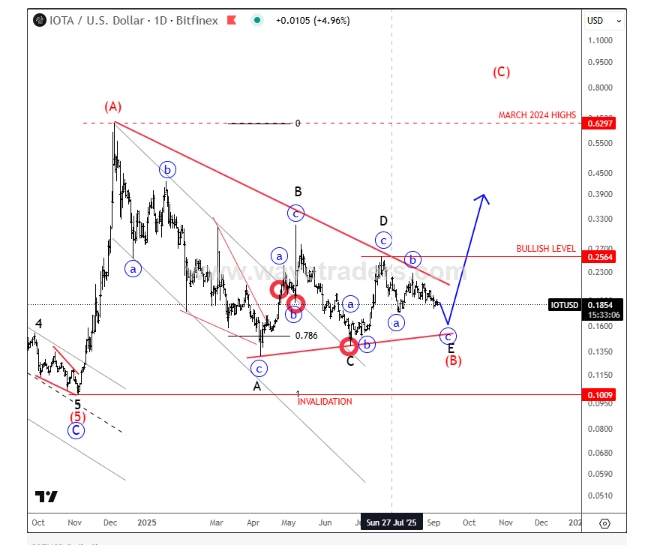
IOTA (IOTUSD) has been moving sideways, forming a bullish ABCDE triangle pattern in wave (B). Analysts are now tracking the final subwave “c” of E, suggesting a breakout could happen soon. If the price rises above the upper triangle line and crosses the 0.25 level, IOTA may enter wave (C), potentially reaching the highs seen in March 2024. This period of consolidation indicates IOTA is building strength for a possible upward move. Traders should watch for confirmation signals, as a breakout could create significant opportunities.

IOTA Technology Makes It Stand Out
IOTA is not a typical blockchain cryptocurrency. It uses a technology called the Tangle, a directed acyclic graph (DAG) that allows feeless, fast, and scalable transactions.
This makes IOTA’s ideal for machine-to-machine payments, microtransactions, and secure data sharing, supporting the growing Internet of Things (IoT) ecosystem. Its goal is to power a machine economy where devices can transact and exchange data autonomously.
ALSO READ:IOTA Mainnet Hits 100 Days of Zero Downtime and 170 Million Transactions
Key Levels to Watch
For a bullish trend to confirm, IOTA must break above the triangle’s upper line and surpass the 0.25 level. Success could validate the ABCDE triangle pattern and trigger wave (C), potentially bringing prices back to March 2024 highs.
Investors should also consider trading volume and broader market conditions, which can influence the strength of any breakout. With its innovative Tangle architecture and a promising technical setup, IOTA could become a major player in the machine economy, attracting both traders and long-term investors.
ALSO READ:IOTA TVL Surges to $36M as Token Eyes $0.50 Breakout.
DISCLAIMER:
The views and opinions expressed herein are solely those of the author and do not necessarily reflect the views of the publisher. The publisher does not endorse or guarantee the accuracy of any information presented in this article. Readers are encouraged to conduct further research and consult additional sources before making any decisions based on the content provided.