



- Pi Network faces a severe liquidity crisis as trading volume collapses by over 99%, leaving it vulnerable to sharp price swings.
- Investors who relied on the GCV valuation have suffered heavy losses amid stagnant market demand.
Pi Network has seen a modest recovery in early 2026, yet it remains stagnant, exposing investors to significant risks. While the total altcoin capitalization (TOTAL3) rose from $825 billion to over $880 billion, Pi’s market price lingered around $0.2, signaling weak demand despite broader market gains.
Pi’s Trading Volume Collapses to Record Lows
Data from CoinGecko reveals that Pi’s trading activity has fallen sharply, with weekly volumes dropping below $100 million and daily averages hovering near $10 million. In contrast, March of last year saw Pi achieve over $10 billion in weekly trading volume, a decline exceeding 99%.

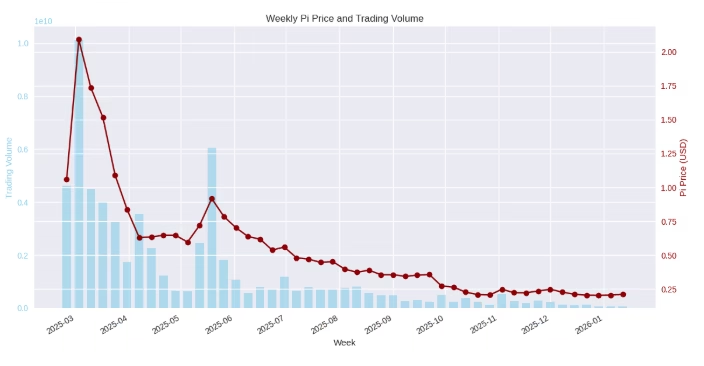
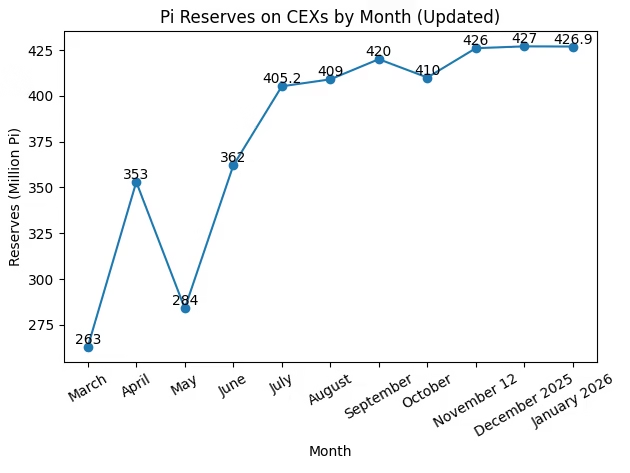
This collapse in liquidity creates a precarious environment. Thin trading volumes make Pi susceptible to sudden price swings: even minor buying or selling activity could trigger sharp movements. While exchange reserves remain high, with over 427 million Pi held on centralized exchanges, the imbalance between supply and demand increases the risk of further price declines. On January 9 alone, 1.3 million Pi tokens were transferred to exchanges, amplifying selling pressure in an already fragile market.

ALSO READ: Pi Network Surpasses 15.8M Mainnet Users as Ecosystem Expands in 2026
GCV Hopes Backfire on Pioneers
Pi Network’s unique dual-value system allows holders to reference both its market price and the theoretical Global Consensus Value (GCV). GCV proponents claim a fixed value of $314,159 per Pi, based on the mathematical constant π, and encourage its adoption among users and merchants.
However, reality has clashed with these expectations. Reports from the Pi community indicate that several investors have suffered severe losses by relying on GCV valuations. One notable case involves Taufan Kurniawan, who invested approximately $3,200 to open a shop accepting Pi at GCV prices. As Pi’s market price collapsed, his business failed, leaving him with heavy financial losses. Community discussions warn that merchants relying on GCV face similar risks, with bankruptcies already occurring.
The Road Ahead for Pi Network
The combination of record-low trading volumes, high exchange reserves, and failed GCV expectations paints a stark picture for Pi Network. Without renewed demand and increased liquidity, the project faces persistent volatility and the potential for further investor losses. Pioneers holding Pi tokens may need to reassess their strategies in light of these growing challenges.
ALSO READ: Pi Network Activates Testnet 25 as January Mainnet Vote Nears
DISCLAIMER:
The views and opinions expressed herein are solely those of the author and do not necessarily reflect the views of the publisher. The publisher does not endorse or guarantee the accuracy of any information presented in this article. Readers are encouraged to conduct further research and consult additional sources before making any decisions based on the content provided.