


- Ripple seeks an OCC license to expand services.
- This move boosts XRP’s legitimacy and institutional use.
Ripple has taken a major step toward solidifying its position in the U.S. financial system by submitting an application to the Office of the Comptroller of the Currency (OCC) to establish a federally chartered trust bank. This move could significantly enhance the credibility and practical use of XRP, its native digital asset.
ALSO READ:Ripple Expands XRP Access to 11,000 Banks Through SWIFT Partnership
Ripple OCC Application Signals Regulatory Ambitions
The filing, officially for the creation of Ripple National Trust Bank, is under public review and represents a notable regulatory milestone. If approved, Ripple would gain the ability to offer regulated financial services beyond its well-known cross-border payment infrastructure. These services could include custody solutions, settlement operations, and other banking functions critical for institutional clients.

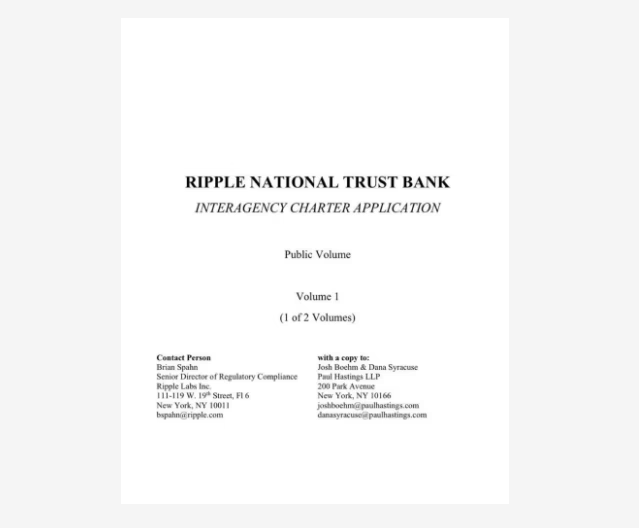
Brian Spahn, Ripple’s Senior Director of Regulatory Compliance, is listed as the primary contact for the application, reflecting the company’s proactive approach to navigating complex U.S. financial regulations. The public comment period now underway will be closely monitored by market participants and regulators alike.
Why the Banking License Matters for XRP
For XRP holders and the wider crypto community, the potential approval of Ripple’s trust bank carries substantial implications. A federally chartered status would elevate Ripple’s legitimacy within the U.S. financial system, fostering increased confidence from institutional investors. This could drive wider adoption of XRP in practical applications such as regulated settlements, liquidity provision, and cross-border financial operations.
Currently, XRP continues to maintain key technical support levels in the market. Ripple seeks an OCC license to expand services. Approval could boost XRP’s credibility and institutional adoption.
Ripple’s Strategic Move in Context
This regulatory pursuit reflects Ripple’s broader strategy of bridging traditional finance and blockchain innovation. By seeking an OCC banking license, the company demonstrates a commitment to compliance, transparency, and institutional-grade financial infrastructure. Analysts suggest that if approved, Ripple could redefine how digital assets like XRP integrate with mainstream banking systems, potentially paving the way for new financial products and services.
As Ripple’s application undergoes review, investors and industry observers are watching closely. Approval could mark a turning point, signaling a new era where digital assets gain practical legitimacy within the regulated banking sector.
ALSO READ:Ripple CTO David Schwartz Steps Down: What This Means for XRP’s Future
DISCLAIMER:
The views and opinions expressed herein are solely those of the author and do not necessarily reflect the views of the publisher. The publisher does not endorse or guarantee the accuracy of any information presented in this article. Readers are encouraged to conduct further research and consult additional sources before making any decisions based on the content provided.