


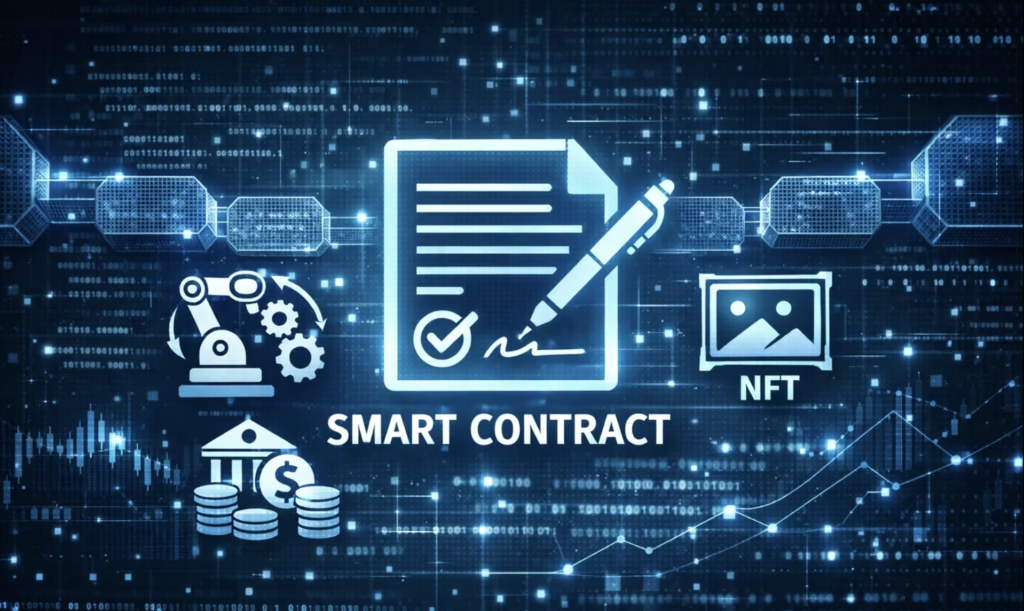
A smart contract is a digital program that automatically executes, manages, or records actions once predefined conditions are met. Unlike traditional contracts, smart contracts run on blockchain networks and operate without the need for intermediaries such as banks or legal authorities. Their primary purpose is to reduce costs, limit fraud, and eliminate delays caused by third-party involvement.
Smart contracts are closely linked to cryptocurrencies, with Ethereum-based contracts widely regarded as a core foundation of decentralized finance (DeFi) and non-fungible token (NFT) ecosystems.
What is TECH?
Tech is short for technology. It’s basically tools, systems, or software created to solve problems, automate tasks, or make life easier. Technology isn’t just computers; it includes anything designed to help humans work or communicate more efficiently.
Examples of TECH Include;
- Smartphones, computers, and the internet
- Software programs and apps
- Machines in factories or hospitals
- Artificial intelligence (AI) systems
How TECH is Related to Smart Contracts
Smart contracts are a type of digital technology. They use computer programs to automatically execute agreements when certain conditions are met. Here’s the connection:
- Blockchain Tech
- Smart contracts run on blockchains like Ethereum.
- Blockchain ensures that contracts are secure, transparent, and tamper-proof.
- Automation Tech
- Traditional contracts need humans to enforce them.
- Smart contracts automate the process, reducing errors and delays.
- Software Tech
- Smart contracts are written in programming languages like Solidity.
- This is purely digital tech enabling code to act like a contract.
- Real-World Applications
- Tech allows smart contracts to be used in finance (DeFi), supply chains, insurance, and legal agreements.
- They are a technological solution to trust and efficiency problems in contracts.
What is Crypto
Crypto is short for cryptocurrency, a type of digital or virtual money that exists only online. Unlike traditional money, crypto is not controlled by banks or governments. Instead, it relies on blockchain technology and cryptography (secure computer coding) to keep transactions safe and verifiable. Examples include Bitcoin, Ethereum, and Solana
Key Features of Crypto
- Digital and Decentralized – Exists only on computers and networks, not in physical form, and is controlled by many users rather than a single authority.
- Secure and Transparent – Transactions are recorded on a blockchain, which everyone can see, but personal information is protected.
- Fast and Global – You can send crypto anywhere in the world almost instantly, often with lower fees than banks.
- Programmable – Some cryptocurrencies, like Ethereum, can run smart contracts, which are automatic agreements executed by code.
Uses of Smart Contracts in Crypto
Smart contracts play a vital role in the cryptocurrency ecosystem by automating processes, increasing efficiency, and reducing reliance on intermediaries. Key uses include:
- Decentralized Finance (DeFi)
Smart contracts power DeFi platforms, enabling lending, borrowing, and staking automatically. They manage collateral, calculate interest, and execute transactions without banks. - NFT Transactions
Smart contracts manage the creation, sale, and transfer of NFTs. They automatically enforce royalty payments to creators whenever the NFT is sold. - Token Creation and Management
Many cryptocurrencies and tokens are created using smart contracts. These contracts define token supply, transfer rules, and ownership automatically. - Governance and Voting
Smart contracts allow crypto holders to vote on protocol upgrades and decisions. Votes are counted transparently and executed without human interference. - Automated Payments and Escrow
Smart contracts hold funds in escrow and release them only when agreed conditions are met, ensuring trustless transactions between parties. - Incentives and Rewards
They distribute staking rewards, mining payouts, or liquidity incentives automatically, reducing the risk of human error or fraud.
How do Smart Contracts Work
Smart contracts function through an automated mechanism where blockchain technology enforces agreed conditions without human involvement. Once deployed, their execution follows a predefined sequence that ensures actions are carried out securely, transparently, and exactly as programmed.
Their digital design allows them to be programmed to run automatically, following a six-step process that governs their execution.
1. Parties agree to the terms and conditions
The process begins when all parties decide on the rules of the agreement. These rules define what actions will occur and the conditions required for execution. The parties also determine whether the contract will run automatically once conditions are met.
2. The smart contract is created
The agreed terms are converted into computer code. This code sets clear instructions, conditions, and outcomes, similar to clauses in a traditional contract. Careful development and testing are essential, as errors in the code can create serious security risks.
3. The smart contract is deployed
After testing, the contract is uploaded to a blockchain network. Once deployed, it becomes active and cannot be modified. This step ensures transparency but leaves no room for changes or reversals.
4. Triggering conditions are met
The smart contract continuously checks for predefined conditions. These conditions may include completed payments, reached deadlines, or verified external data provided through trusted sources.
5. The smart contract is executed
When all conditions are satisfied, the contract automatically performs its programmed actions. These actions may include transferring funds, granting access, or recording ownership changes.
6. The contract result is recorded to the blockchain
After execution, the blockchain verifies the transaction and permanently stores the outcome. This record is publicly accessible and cannot be altered, ensuring accountability and trust.
Uses of Smart Contracts
Smart contracts are used in many industries to automate agreements, reduce costs, and improve transparency. Here is how smart contracts can be used;
1. Finance and Banking
Smart contracts are widely used in decentralized finance (DeFi) to automate financial services.
- Automatic loan approvals and repayments
- Instant payments without banks
- Transparent interest calculations
This reduces delays and removes intermediaries like banks.
2. Supply Chain Management
Smart contracts help track goods from production to delivery.
- Automatic payment when goods arrive
- Real-time tracking of shipments
- Reduced fraud and errors
This improves efficiency and trust between suppliers and buyers.
3. Real Estate
Smart contracts simplify buying, selling, and renting property.
- Automatic transfer of ownership
- Faster payments and reduced paperwork
- Lower legal and processing costs
They make real estate transactions faster and more secure.
4. Insurance
Insurance claims can be processed automatically using smart contracts.
- Claims are paid instantly after verification
- Reduced fraud
- Faster settlements
For example, flight delay insurance can pay automatically when a delay is confirmed.
5. Healthcare
Smart contracts protect and manage patient data.
- Secure sharing of medical records
- Automatic access control for doctors
- Improved data privacy
This ensures sensitive information is handled safely.
6. Voting Systems
Smart contracts can support secure digital voting.
- Transparent vote counting
- Reduced election fraud
- Faster results
Votes are recorded permanently on the blockchain.
7. Digital Identity Management
Smart contracts help verify identities securely.
- Protect personal data
- Prevent identity theft
- Give users control over their information
8. Gaming and NFTs
Smart contracts power NFTs and blockchain games.
- Automatic ownership transfer
- Royalties paid to creators
- Secure in-game transactions
Challenges and Limitations of Smart Contracts
Despite their growing adoption, smart contracts face several technical, legal, and operational challenges that can affect reliability and usability. These issues often stem from code complexity, reliance on blockchain infrastructure, and the difficulty of applying automated systems to real-world scenarios. Understanding these limitations is key to assessing risks and improving smart contract design. The main challenges include the following
1. Code Vulnerabilities
Smart contracts are only as secure as the code written. Errors or bugs can be exploited, leading to financial losses. Once deployed, fixing these mistakes is difficult.
2. Immutability
After deployment on a blockchain, smart contracts cannot be easily changed. While this improves trust, it becomes a limitation when updates or corrections are needed.
3. Dependence on External Data (Oracles)
Smart contracts often require real-world data, such as prices or events. This data is provided by oracles, which can fail or be manipulated, creating risks.
4. Legal and Regulatory Uncertainty
Smart contracts are not fully recognized as legally binding in many jurisdictions. This creates uncertainty when disputes arise.
5. Scalability and Performance Issues
Blockchain networks can become congested, leading to slow transaction speeds and high fees. This affects how efficiently smart contracts run.
6. Limited Flexibility
Smart contracts follow strict rules and cannot interpret human intent or exceptions. Complex real-world situations may not fit well into coded logic.
7. Security of User Interaction
Users may interact with fake or malicious contracts. Human error, such as sending funds to the wrong address, can result in permanent losses.
8. High Development Costs
Writing, testing, and auditing smart contracts requires specialized skills. This increases development time and costs.
Bottom line
Smart contracts are a powerful blockchain-based technology that enables agreements to be executed automatically without intermediaries. They improve efficiency, transparency, and trust in digital transactions. However, challenges such as coding risks, reliance on external data, scalability issues, and legal uncertainty remain. Addressing these limitations through better security practices, regulation, and technical improvements is essential for wider real-world adoption.
DISCLAIMER:
The views and opinions expressed herein are solely those of the author and do not necessarily reflect the views of the publisher. The publisher does not endorse or guarantee the accuracy of any information presented in this article. Readers are encouraged to conduct further research and consult additional sources before making any decisions based on the content provided.