



- Strategy purchased 24,869 BTC worth $2 billion, pushing its total Bitcoin holdings above 843,000 BTC.
- Bitcoin charts are showing possible local bottom signals, though bearish pressure remains in the short term.
Bitcoin continues to face selling pressure, but major institutional players are still accumulating aggressively. The latest example comes from Strategy, which has added another massive Bitcoin purchase despite ongoing market weakness.
The move comes at a time when several market indicators suggest that Bitcoin may be approaching a local bottom. However, technical signals still show caution in the short term.
Strategy Expands Bitcoin Holdings Past 843,000 BTC
According to the company’s latest filing, Strategy purchased 24,869 BTC worth approximately $2.01 billion. The acquisition was made at an average price of roughly $80,985 per Bitcoin.


With this latest buy, Strategy’s total Bitcoin holdings have now climbed to 843,738 BTC. The company reportedly spent around $63.87 billion in total to build its Bitcoin treasury, with an average acquisition price of $75,700 per coin.
The purchase further strengthens Strategy’s position as the largest corporate holder of Bitcoin. The move also reflects continued confidence from institutional investors even as the broader crypto market struggles with volatility and uncertainty.
Michael Saylor had hinted at another Bitcoin acquisition before the official announcement, signaling the company’s continued commitment to its long-term accumulation strategy.
Bitcoin Market Shows Signs of a Potential Local Bottom
While Bitcoin’s price action remains weak, several on-chain and market indicators are beginning to resemble conditions seen during previous local bottoms.

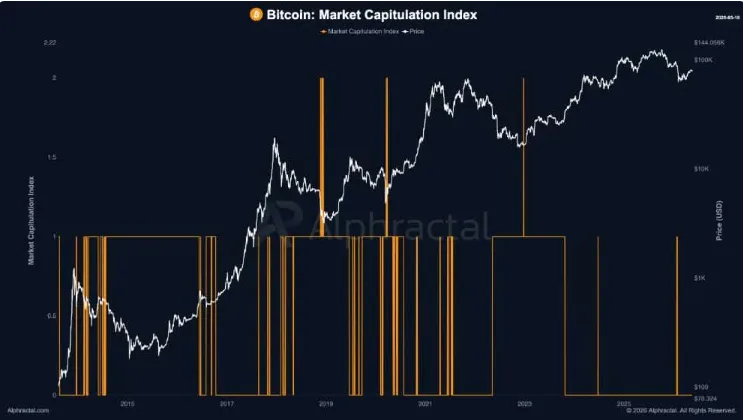
Recent data suggests that short-term holders are under pressure as fear spreads across the market. At the same time, long-term holders continue to hold their positions rather than sell into weakness.
This combination has historically played an important role during Bitcoin corrections. When retail traders panic and leverage is flushed from the market, larger investors often begin accumulating aggressively.
Analysts are also watching the market capitulation index closely, as previous spikes in the metric have frequently appeared near short-term bottoms for Bitcoin.
Although these signals do not guarantee an immediate rebound, they suggest that the current market environment may be shifting from panic selling toward accumulation.
Bitcoin Price Still Faces Technical Pressure
Despite the growing optimism around a possible bottom, Bitcoin has not yet confirmed a bullish reversal.
At the time of writing, Bitcoin was trading near $76,500 after falling from the $82,000 region earlier this month. Technical indicators continue to show weakness in the short term. The RSI recently dropped to around 44, indicating slowing buying strength without entering oversold territory.

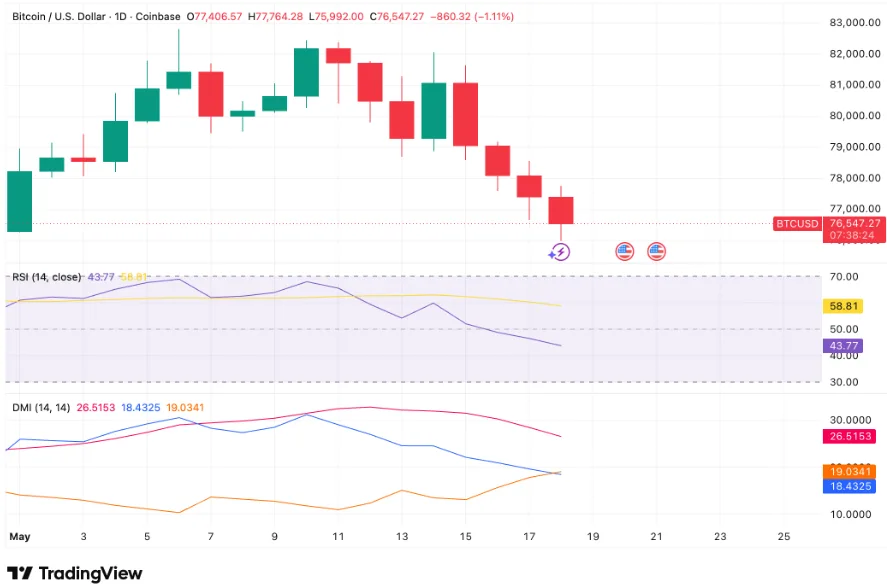
Meanwhile, the Directional Movement Index (DMI) still favors sellers, with the bearish indicator remaining above the bullish line. This suggests that downward pressure could continue unless buyers regain control soon.
For bulls, reclaiming the recent breakdown zone would be one of the first major signs that the market is recovering.
Institutional Confidence Remains Strong
Even with Bitcoin struggling below recent highs, institutional demand continues to stand out as one of the market’s strongest signals. Strategy’s latest $2 billion purchase highlights how large investors are still viewing Bitcoin as a long-term accumulation asset rather than reacting to short-term volatility.
If Bitcoin stabilizes around current levels and buying activity continues increasing, the market could eventually build the foundation needed for another recovery phase.
ALSO READ: The New Crypto Exchange Battleground Isn’t Fees — It’s Trust
DISCLAIMER:
The views and opinions expressed herein are solely those of the author and do not necessarily reflect the views of the publisher. The publisher does not endorse or guarantee the accuracy of any information presented in this article. Readers are encouraged to conduct further research and consult additional sources before making any decisions based on the content provided.