



- Terra Luna Classic trades near $0.00004 after the $60 billion collapse.
- Token burns remain too small to offset the massive 5.5 trillion supply.
- Any 2026 gains are speculative and carry high downside risk.
Terra Luna Classic (LUNC) remains one of crypto’s most controversial comeback stories. Trading near $0.000040, the token is a shadow of its former self after the catastrophic May 2022 collapse that erased roughly $60 billion from the market. In 2026, investors are again asking whether aggressive community burns and technical upgrades can deliver a meaningful recovery or not.
A Collapse That Still Shapes the Present
The original Terra ecosystem collapsed when its algorithmic stablecoin, UST, lost its dollar peg. The stabilizing mechanism backfired, inflating LUNA’s supply from hundreds of millions to trillions in days. Prices imploded, trust vanished, and the chain later split into Terra 2.0 and Terra Classic. LUNC survives as a community-maintained network with no backing from its original creators, and it still carries the reputational weight of founder Do Kwon’s fraud conviction in late 2025.
Burns Versus a Trillion-Token Reality
Supporters point to token burns as the core recovery strategy. So far, about 415 billion LUNC have been destroyed. While that sounds substantial, more than 5.5 trillion tokens remain in circulation. At the current pace, supply reduction would take decades. Even reaching $0.01 would require either burning over 90% of the supply or achieving a market value larger than most top cryptocurrencies, both highly unrealistic scenarios.
Technical Picture and Limited Growth Drivers
From a chart perspective, LUNC continues to trade below major moving averages, reflecting persistent selling pressure. Support sits around the $0.000038–$0.000040 range, while meaningful resistance begins near $0.000055.

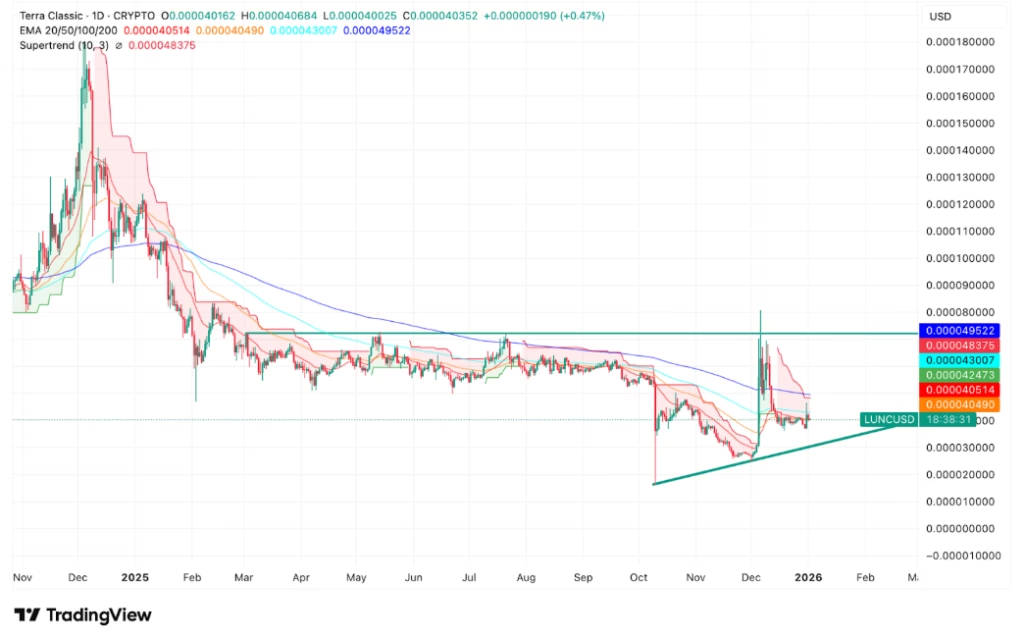
Minor upgrades scheduled through 2026 focus on maintenance rather than innovation, keeping the chain operational but not necessarily attractive to new developers or users. DeFi activity remains thin, and low fees largely reflect low usage.
Risks That Overshadow the Upside
One of the largest concerns is dependency on Binance, which accounts for a significant share of trading liquidity and burns. Any reduction in support or a potential delisting would be devastating. Additionally, proposals to revive USTC, which is still trading far below its target price, reintroduce risks that previously led to the ecosystem’s destruction.
What 2026 Could Realistically Look Like
Under favorable conditions, analysts see upside capped near $0.000075–$0.00015 by late 2026, assuming steady burns and a supportive crypto market. On the downside, renewed USTC issues or exchange withdrawals could push prices sharply lower.
LUNC’s story is no longer about fundamentals. It is a high-risk bet on community persistence against overwhelming structural challenges. Any exposure should reflect that reality.
ALSO READ: Vitalik Buterin Calls for Mandatory Diffusion to Prevent Power Concentration
DISCLAIMER:
The views and opinions expressed herein are solely those of the author and do not necessarily reflect the views of the publisher. The publisher does not endorse or guarantee the accuracy of any information presented in this article. Readers are encouraged to conduct further research and consult additional sources before making any decisions based on the content provided.