


- Uniswap has surged to $10.40, breaking key resistance.
- If strength continues, UNI could soon test the $11.28 zone.
Uniswap (UNI) has officially broken through major resistance levels, trading at around $10.40 at the time of writing. With strong technical indicators and rising volume, UNI appears poised to test the $11.28 mark — a level many traders now have in their sights.
Uniswap Clears $10 Barrier, Turning Resistance Into Support
The recent price movement has flipped previous resistance levels at $9.84 and $10.213 into support, confirming a bullish breakout. This shift reinforces market confidence and signals that buyers are gaining control.

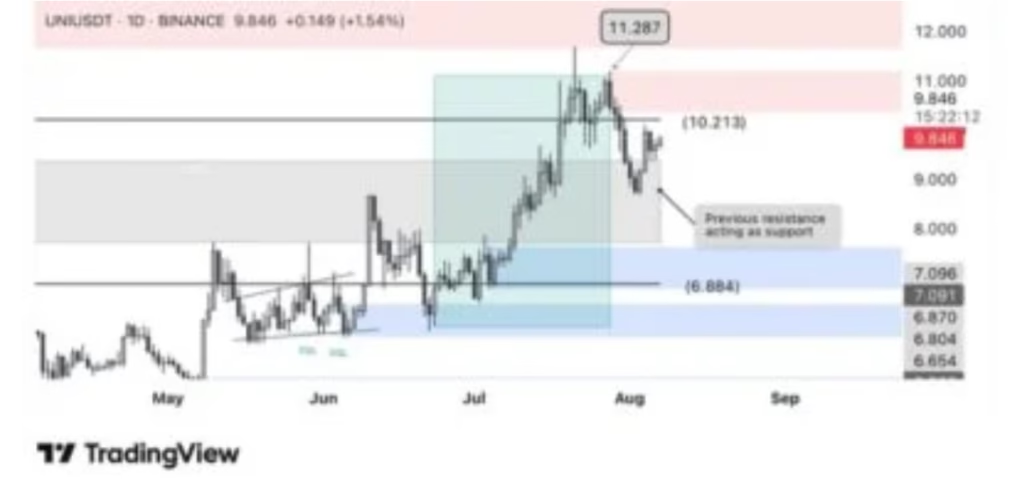
The Relative Strength Index (RSI) has climbed above 56, indicating growing bullish pressure. With price now well above the $10.00 mark, the next resistance level to watch is around $11.287, which aligns with the upper Bollinger Band.
Volume and Volatility Favor Further Gains
Trading volume remains strong, currently hovering near $296 million in 24-hour activity. This consistent participation supports the strength of the breakout. UNI is also navigating within the Bollinger Bands, with the upper band positioned at $11.263 and the lower at $8.822.
As the price pushes higher, any consolidation above $10.20 could create the base for a continued rally toward $11.28 and beyond. Conversely, a drop below $10.00 could test lower supports, but current indicators suggest upward strength remains intact.
Bullish Signals Confirm Uptrend
The bullish divergence previously noted in the RSI is now playing out in real time. Combined with Uniswap’s break above key Fibonacci levels and strong market participation, the setup favors further gains if momentum holds.
Traders should watch closely for volume confirmation as the price approaches the $11.28 resistance — a breakout above this level could unlock a fresh wave of gains for UNI in the short term.
ALSO READ:Uniswap v4 TVL Surpasses $1B as UNI Price Targets $12
DISCLAIMER:
The views and opinions expressed herein are solely those of the author and do not necessarily reflect the views of the publisher. The publisher does not endorse or guarantee the accuracy of any information presented in this article. Readers are encouraged to conduct further research and consult additional sources before making any decisions based on the content provided.