- Bitcoin rebounded above $65,000 as growing corporate adoption and strong support levels boosted investor confidence.
- Lower mining difficulty and expanding BTC holdings by major firms continue to support its long-term outlook.
Bitcoin has regained strength after a volatile start to June, with buyers stepping in near major support levels as investors await the next Federal Reserve decision. BTC briefly fell below $60,000 earlier this month before recovering above $65,000, highlighting continued long-term confidence despite macroeconomic uncertainty.
The latest recovery comes at a time when institutional outflows and economic concerns continue to pressure risk assets. However, growing corporate adoption and improving network fundamentals are helping support Bitcoin’s long-term outlook.
Bitcoin Rebounds as Buyers Defend Key Support
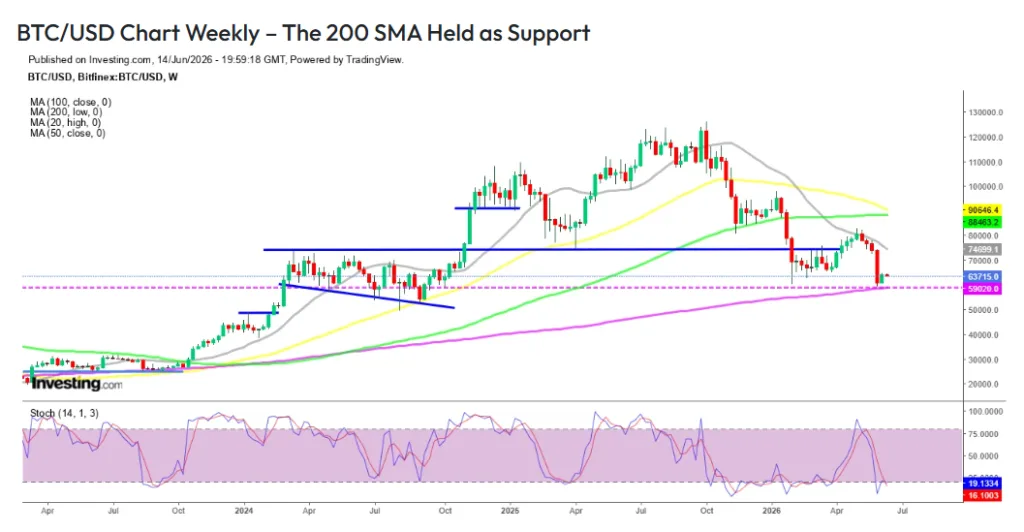
Bitcoin’s recent recovery suggests that investors continue to view sharp declines as buying opportunities. After falling below the psychologically important $60,000 level, the asset found strong support near its 200-week moving average.
The rebound above $65,000 reflects resilient demand even as stronger U.S. economic data and ETF withdrawals create short-term headwinds. Market participants now await signals from the Federal Reserve, as interest rate expectations remain one of the biggest drivers of crypto prices.
While volatility remains elevated, Bitcoin’s ability to hold major support levels has improved confidence in the broader market.
Strategy Expands Bitcoin Holdings
Investor sentiment briefly weakened after Strategy Inc., formerly known as MicroStrategy, sold 32 Bitcoin. The move raised questions about whether the company was changing its long-standing accumulation strategy.
Those concerns quickly faded after company executives clarified that the sale represented only a procedural test. Shortly afterward, Strategy raised $181 million through share sales and purchased an additional 1,550 BTC.
The latest acquisition increased the firm’s holdings to 845,256 Bitcoin, reinforcing its commitment to expanding its digital asset treasury. The move also strengthened confidence among investors who closely watch corporate buying activity.
SpaceX and Tesla Strengthen Corporate Adoption
Corporate adoption received another boost after SpaceX’s public listing revealed significant Bitcoin holdings. Filings showed that the company owns 18,712 BTC, placing it among the largest corporate holders of the asset.
Combined with Tesla’s reported 11,509 Bitcoin holdings, Elon Musk’s companies continue to hold substantial exposure to the cryptocurrency market. The disclosures add to the growing list of businesses using Bitcoin as a reserve asset.
Increasing corporate ownership has become an important support factor for Bitcoin, especially during periods of market weakness.
Mining Difficulty Decline Improves Network Health
Bitcoin’s network fundamentals also showed encouraging signs as mining difficulty fell by roughly 10% to 124.93 trillion. The decline marked the lowest reading of 2026 and the weakest level since July 2025.
Lower mining difficulty does not directly increase Bitcoin’s price. However, it can improve miner profitability and help stabilize network activity during challenging market conditions.
The adjustment highlights Bitcoin’s ability to adapt to changing environments while maintaining network security.
Key Levels Could Define the Next Move
From a technical standpoint, the $60,000 area has emerged as a crucial long-term support zone. Bitcoin’s recent rebound from this region reinforces its importance for market participants.
A sustained break below the 200-week moving average could expose the asset to further downside toward $50,000. On the upside, reclaiming the $80,000 level would strengthen the case for a broader recovery toward $100,000 and potentially beyond.
Investors will closely monitor whether Bitcoin can maintain its recovery as the Federal Reserve announces its next policy decision.
Long-Term Outlook Remains Positive
Despite recent market turbulence, Bitcoin’s long-term outlook remains constructive. Regulatory progress, expanding corporate adoption, and resilient network fundamentals continue to support the investment case.
Although monetary policy and institutional fund flows may drive short-term price swings, Bitcoin’s growing role as a corporate reserve asset suggests that long-term demand remains intact.
As attention shifts to the Federal Reserve, the coming weeks could determine whether Bitcoin extends its recovery or faces another test of key support levels.
ALSO READ: Why Japan Largest Banks Are Investing in Stablecoin Infrastructure
DISCLAIMER:
The views and opinions expressed herein are solely those of the author and do not necessarily reflect the views of the publisher. The publisher does not endorse or guarantee the accuracy of any information presented in this article. Readers are encouraged to conduct further research and consult additional sources before making any decisions based on the content provided.
About the Author