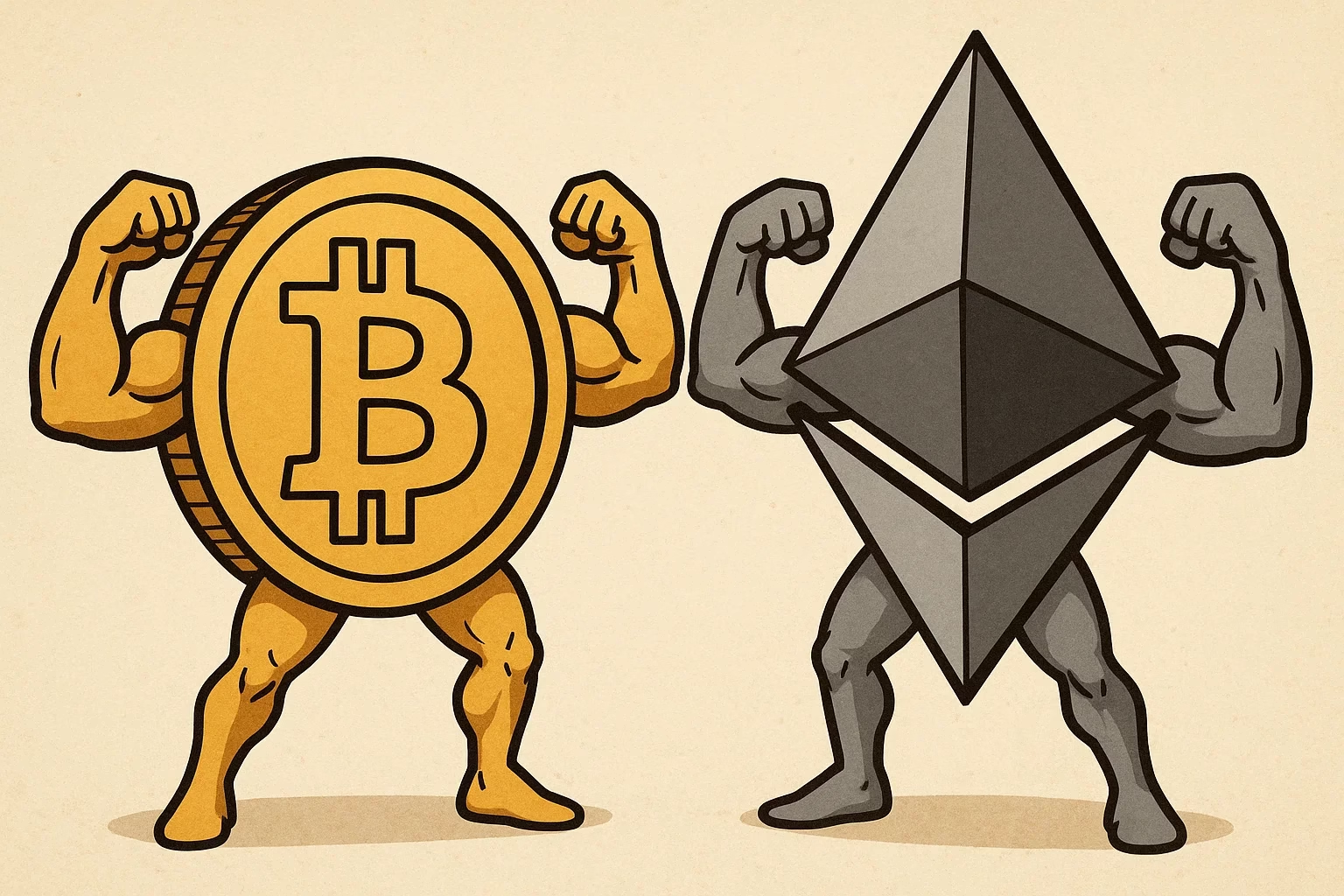
- Bitcoin is a stable, long-term store-of-value cryptocurrency, while Ethereum offers a versatile platform for smart contracts and decentralized applications.
- Choosing between them depends on an investor’s goals, risk tolerance, and preference for stability versus growth potential.
The cryptocurrency market continues to expand, with Bitcoin and Ethereum leading the pack. Both have strong track records, yet they serve different purposes and appeal to different types of investors. Understanding their distinctions is crucial for anyone looking to invest wisely in the digital currency space.
Understanding Bitcoin and Ethereum
Bitcoin: Digital Gold
Launched in 2009 by the mysterious Satoshi Nakamoto, Bitcoin is often called “digital gold.” Its primary purpose is to serve as a decentralized digital currency, free from government control. Many investors treat it as a long-term store of value, with its capped supply of 21 million coins enhancing its appeal as an inflation hedge.
Ethereum: The Smart Contract Leader
Introduced in 2015 by Vitalik Buterin, Ethereum is more than a cryptocurrency. Its platform allows developers to build decentralized applications (dApps) and execute smart contracts. Ether (ETH) fuels these operations, making Ethereum both a digital currency and a technological ecosystem.
Key Differences That Matter
Purpose and Technology
Bitcoin’s blockchain focuses on recording transactions, while Ethereum supports programmable contracts and dApps. Technologically, Bitcoin uses Proof of Work (PoW), although energy-efficient alternatives are being explored. Ethereum has shifted to Proof of Stake (PoS) with Ethereum 2.0, improving scalability and reducing environmental impact.
Market Dynamics
Bitcoin generally has a higher market cap and lower volatility, making it a more stable investment. Ethereum, by contrast, is more volatile but offers potentially higher short-term returns due to the growth of decentralized finance (DeFi) and its expanding dApp ecosystem.
Investment Strategies
Long-Term vs Short-Term
Bitcoin appeals to conservative, long-term investors seeking stability. Ethereum offers versatility, attracting those interested in both long-term appreciation and short-term opportunities driven by technological innovation.
Risks to Consider
Both cryptocurrencies carry risks. Regulatory changes could affect either coin, while technological vulnerabilities—such as smart contract bugs—pose unique challenges for Ethereum. Bitcoin’s simpler infrastructure typically faces fewer technological hazards.
Conclusion: Which One Fits Your Goals?
Choosing between Bitcoin and Ethereum depends on your investment objectives and risk tolerance. Bitcoin suits those looking for a secure, store-of-value asset, while Ethereum appeals to investors seeking exposure to blockchain innovation and the digital economy.
For many, diversifying between both coins provides a balanced approach, combining Bitcoin’s stability with Ethereum’s growth potential. Careful research and financial guidance are essential to navigate the volatile crypto market effectively.
DISCLAIMER:
The views and opinions expressed herein are solely those of the author and do not necessarily reflect the views of the publisher. The publisher does not endorse or guarantee the accuracy of any information presented in this article. Readers are encouraged to conduct further research and consult additional sources before making any decisions based on the content provided.
About the Author