


- Canary Capital has filed for a PEPE ETF, giving traditional investors regulated exposure to the meme coin through brokerage accounts.
- The filing also highlights risks such as volatility, speculative pricing, and PEPE’s limited real-world utility.
Canary Capital has filed for a PEPE exchange-traded fund (ETF), marking another major step in bringing meme coins into traditional finance. The proposal shows that institutional investors may soon gain regulated exposure to PEPE without needing to buy or store the token directly.
As crypto investment products continue to expand beyond Bitcoin and Ethereum, the PEPE ETF filing highlights growing interest in high-risk digital assets. At the same time, it raises questions about volatility, valuation, and the long-term appeal of meme-based cryptocurrencies.
Canary Capital Seeks SEC Approval for PEPE ETF
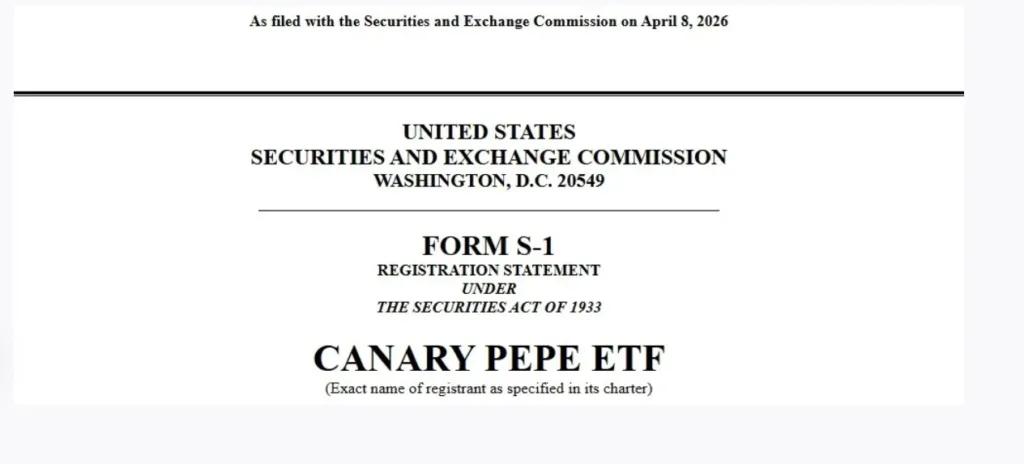
Canary Capital Group LLC submitted a registration statement to the U.S. Securities and Exchange Commission on April 8 for the proposed Canary PEPE ETF. The investment product is designed to track the price of PEPE by directly holding the token.
According to the filing, the trust aims to give investors access to PEPE through traditional brokerage accounts. This removes the need to manage private wallets, direct custody, or token purchases on crypto exchanges.
The filing also explains that the ETF will avoid derivatives. This reduces counterparty and credit risks that are sometimes linked to synthetic crypto exposure.

How the PEPE ETF Will Operate
The Canary PEPE ETF is structured as an exchange-traded product that will issue shares traded on a public exchange. The trust will hold PEPE tokens directly as its main asset.
Its share value will be calculated daily at 4:00 p.m. Eastern time using the same pricing benchmark applied to PEPE.
All PEPE holdings will remain under the control of a custodian. This setup is meant to provide secure storage while maintaining direct exposure to the token’s market price.
The filing also states that up to five percent of the trust’s assets will initially be held in ethereum. These funds will help cover transaction fees on the Ethereum network.
Fees Could Reduce PEPE Holdings Over Time
Canary Capital disclosed that operating fees and trust expenses may slowly reduce the ETF’s PEPE reserves.
Over time, these deductions could lower token holdings significantly. The filing even notes that PEPE assets inside the trust could eventually approach zero if expenses continue over a long period.
This means the ETF may not always fully match its stated investment objective.
Meme Coin Risks Remain a Major Concern
The SEC filing outlines several risks linked to PEPE and other meme coins.
One major concern is speculative demand. Meme token prices often rise quickly because of hype and social media attention. However, they can also fall sharply when market sentiment changes.
The filing also highlights PEPE’s limited utility. Unlike bitcoin, PEPE is not widely used for payments or commercial transactions.
Its value depends more on market speculation than practical adoption.
Another issue is competition. Since meme coins can gain popularity fast, PEPE could lose market share if newer digital assets attract stronger investor interest.
The document also warns about possible market manipulation and the limited historical data available for evaluating PEPE’s long-term performance.
Wall Street Expands Into Higher-Risk Crypto Assets
The PEPE ETF proposal reflects a wider trend in digital asset investing.
Asset managers are moving beyond established cryptocurrencies like bitcoin and ethereum. They are now testing investor demand for niche sectors, including meme coins.
If approved, the Canary PEPE ETF could become one of the first institutional products focused entirely on meme-based crypto exposure.
That would mark a major shift in how speculative digital assets are packaged for mainstream investors.
What the PEPE ETF Filing Means for Crypto Markets
Canary Capital’s PEPE ETF filing shows that institutional finance is willing to explore even the most volatile corners of the crypto market.
The move could increase PEPE’s visibility among traditional investors and add legitimacy to meme coins as investable assets.
Still, the filing makes it clear that serious risks remain.
Volatility, weak utility, speculative pricing, and expense-related asset erosion could all affect long-term investor returns.
For now, the PEPE ETF stands as another sign that Wall Street’s interest in cryptocurrency products continues to widen far beyond the largest digital assets.
ALSO READ: Pi Network Advances Launchpad Vision as 12-Grid Token Distribution Test Shows Real Progress
DISCLAIMER:
The views and opinions expressed herein are solely those of the author and do not necessarily reflect the views of the publisher. The publisher does not endorse or guarantee the accuracy of any information presented in this article. Readers are encouraged to conduct further research and consult additional sources before making any decisions based on the content provided.