- Chainlink is seeing rising CCIP activity, boosting LINK demand through higher usage and reserve accumulation.
- Chainlink still faces resistance despite a rebound from the $9 support zone and ongoing institutional inflows.
Chainlink is seeing renewed attention as CCIP adoption rises across major protocols. The shift has lifted network activity and sparked discussions about whether LINK can build a stronger recovery from recent lows.
CCIP migration wave drives record network activity
A major boost in activity came after several protocols moved to Chainlink’s Cross-Chain Interoperability Protocol (CCIP).
Following the KelpDAO exploit, multiple platforms, including Kraken, Lombard Finance, Solv Protocol, and Reinsurance Protocol, shifted operations toward CCIP.
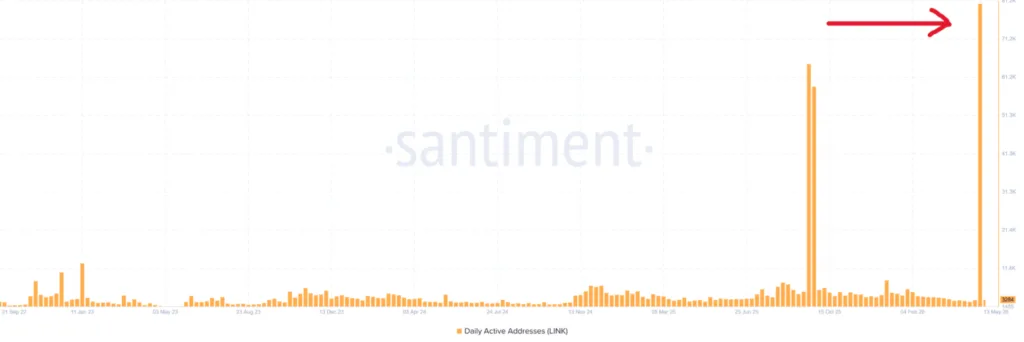
This migration wave pushed Chainlink usage to new highs. Daily Active Addresses climbed to about 80.43K, breaking the previous record of 67K. The surge shows how quickly demand for CCIP expanded during the transition period.
At the center of this growth is Chainlink, which continues to position CCIP as a key infrastructure layer for cross-chain communication.
Rising CCIP usage fuels LINK demand pressure
As CCIP activity increased, more service fees were generated within the network. These fees are converted into LINK purchases, creating steady demand from the protocol side.
Over 500,000 LINK have reportedly entered reserves since the migration wave began, equivalent to roughly $5 million in buying activity. This ongoing accumulation is gradually tightening the available supply in the market.
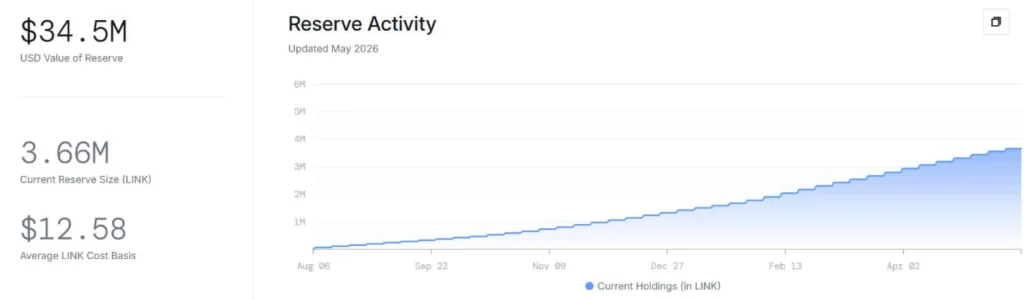
The Chainlink reserve has now grown to around 3.66 million LINK, valued at nearly $35 million. This structure supports the idea of a developing supply squeeze if demand continues rising.
ETF inflows add long-term support
Institutional interest is also playing a role. Spot exposure products such as Grayscale and Bitwise have continued to attract steady inflows into LINK-related products.
Since launch, these products have not recorded consistent outflows, and together they represent a notable share of LINK’s circulating supply. This adds another layer of long-term holding pressure on available tokens.
LINK price still faces strong resistance
Despite stronger fundamentals, LINK price action remains uneven.
The coin recently rebounded from the $9 zone after a steady decline. However, overhead supply continues to limit upward movement.
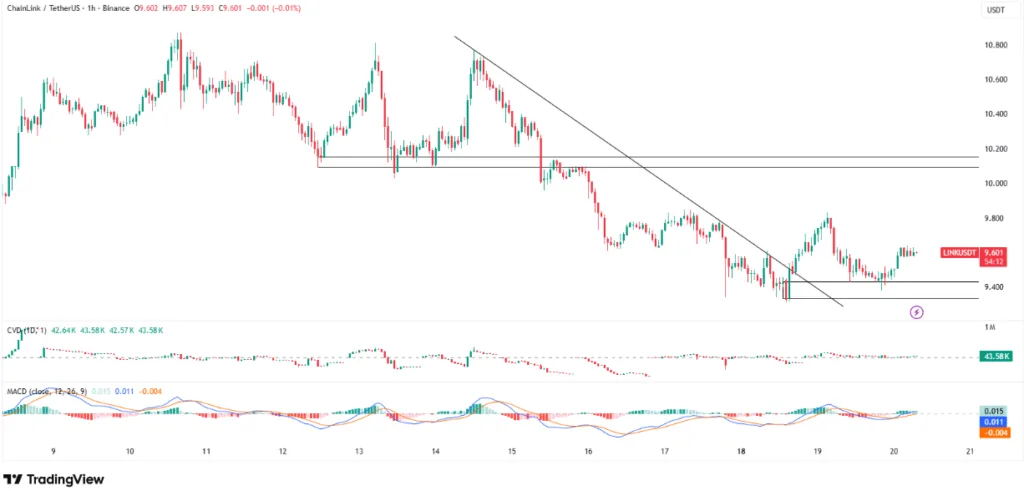
On the chart, LINK broke above a short-term descending resistance trendline, suggesting early recovery signals. The $9 level also aligns with a historical demand zone, which may act as a local bottom if buyers defend it.
Still, sellers remain active above current levels. If LINK fails to hold this base, the recovery setup could weaken and push the price back into deeper consolidation.
Final outlook
Chainlink’s CCIP expansion has clearly lifted network activity and increased on-chain demand for LINK. The combination of protocol buybacks, rising usage, and institutional inflows is creating stronger long-term support.
However, price recovery is still dependent on whether buyers can overcome persistent overhead supply near current resistance zones.
ALSO READ: Pi Network Price Forecast as OKX Opens US Trading Access for PI Coin
DISCLAIMER:
The views and opinions expressed herein are solely those of the author and do not necessarily reflect the views of the publisher. The publisher does not endorse or guarantee the accuracy of any information presented in this article. Readers are encouraged to conduct further research and consult additional sources before making any decisions based on the content provided.
About the Author