Chainlink Cryptonewsfocus.com
- Chainlink partnership with Turkish bank Misyon boosts institutional interest and supports its push into real-world asset tokenization.
- While technical signals show mixed momentum, maintaining key support at $16.15 and breaking resistance at $17.50 will be crucial for potential price gains.
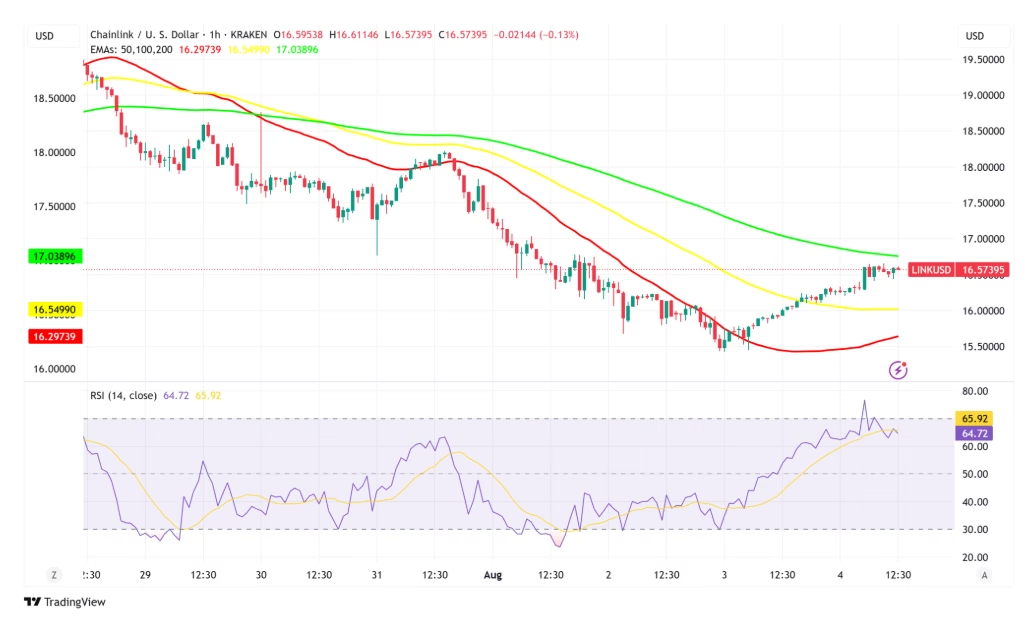
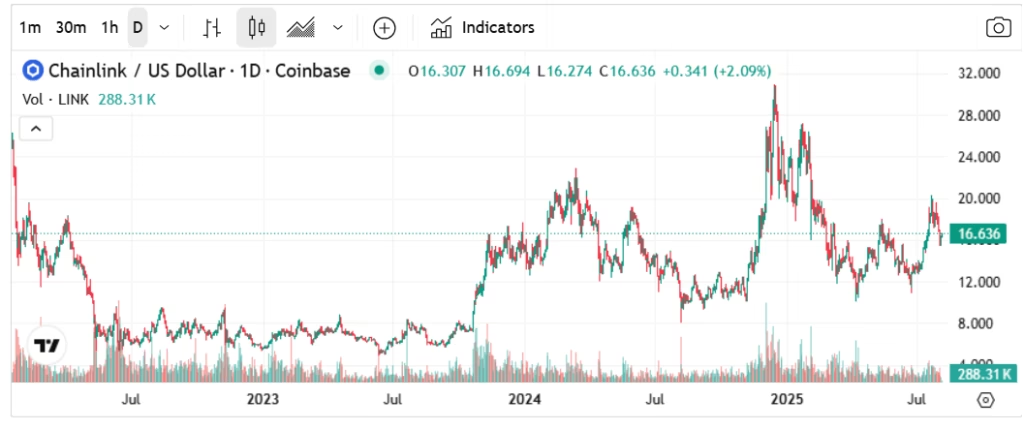
Chainlink (LINK) is making moves above $16, gaining nearly 4% in the last 24 hours amid promising fundamental news yet cautious technical signals. A recent strategic partnership with Turkish bank Misyon has injected optimism into the market, especially as Chainlink advances its goal to tokenize real-world assets (RWA). However, price action shows consolidation and technical uncertainty as LINK tests crucial support and resistance levels.
Chainlink Partnership with Turkish Bank Signals Institutional Growth
Chainlink’s deal with Misyon Bank is a significant milestone in expanding its influence in traditional finance. By integrating Chainlink’s on-chain data feeds, the Turkish banking sector gains improved tokenization capabilities. This aligns with a broader institutional trend that aims to bridge cryptocurrencies with established financial systems globally.
This collaboration has positively impacted market sentiment, supporting LINK’s 20% price gain over the past month. It underscores the increasing institutional interest in Chainlink’s technology, especially in tokenizing real-world assets—an area expected to grow in importance throughout 2025.
Chainlink Technical Analysis Reveals Mixed Market Signals
From a price perspective, Chainlink currently holds just above $16.15 after being rejected near the $17.50 resistance zone. This resistance has proven difficult to overcome since LINK’s July high near $20. Although a short-term bearish trend emerged following this rejection, LINK has maintained a higher low pattern—a sign many analysts interpret as a still-bullish structure amid recent volatility.
Key technical indicators offer a mixed outlook:
- The Relative Strength Index (RSI) is neutral at 43.52.
- The MACD histogram points to mild bearish pressure without sharp declines.
- LINK has dipped below its 20-day and 50-day moving averages but is retesting its 200-day Exponential Moving Average (EMA), which could signal a rebound if it holds.
Price Predictions Range from Conservative to Ambitious
Market experts remain cautiously optimistic. If LINK sustains above resistance at $17.50, short-term targets include $22 and $28. More aggressive forecasts, based on Elliott Wave theory and other technical patterns, point toward potential rallies up to $32 or even $51.
Analyst CryptoBullet highlights a $50 price target tied to the accelerating pace of real-world asset tokenization, matching the sentiment around a $52 milestone watched closely by investors.
On-Chain Metrics Confirm Growing Institutional Interest
On-chain data strengthens Chainlink’s bullish case. Since early July, whale holdings increased by 13% to nearly 3.84 million LINK tokens, reflecting heightened institutional buying. Simultaneously, LINK supply on exchanges has declined, suggesting reduced selling pressure and increased long-term holding.
This dynamic typically indicates growing demand and price support, paving the way for potential upward momentum if technical hurdles are overcome.
Outlook: Watch Support and Resistance Levels Closely
Chainlink’s near-term trajectory hinges on holding above $16.15 support and breaking through $17.50 resistance. A sustained move above $17.50 could trigger gains toward the $20-$22 range. Failure to hold support might lead to sideways movement or further downside tests.
In sum, Chainlink stands at a crossroads where fundamental partnerships bolster its promise, but technical consolidation tempers expectations. Investors should monitor key levels and institutional trends as the broader crypto market navigates a complex landscape.
DISCLAIMER:
The views and opinions expressed herein are solely those of the author and do not necessarily reflect the views of the publisher. The publisher does not endorse or guarantee the accuracy of any information presented in this article. Readers are encouraged to conduct further research and consult additional sources before making any decisions based on the content provided.
About the Author