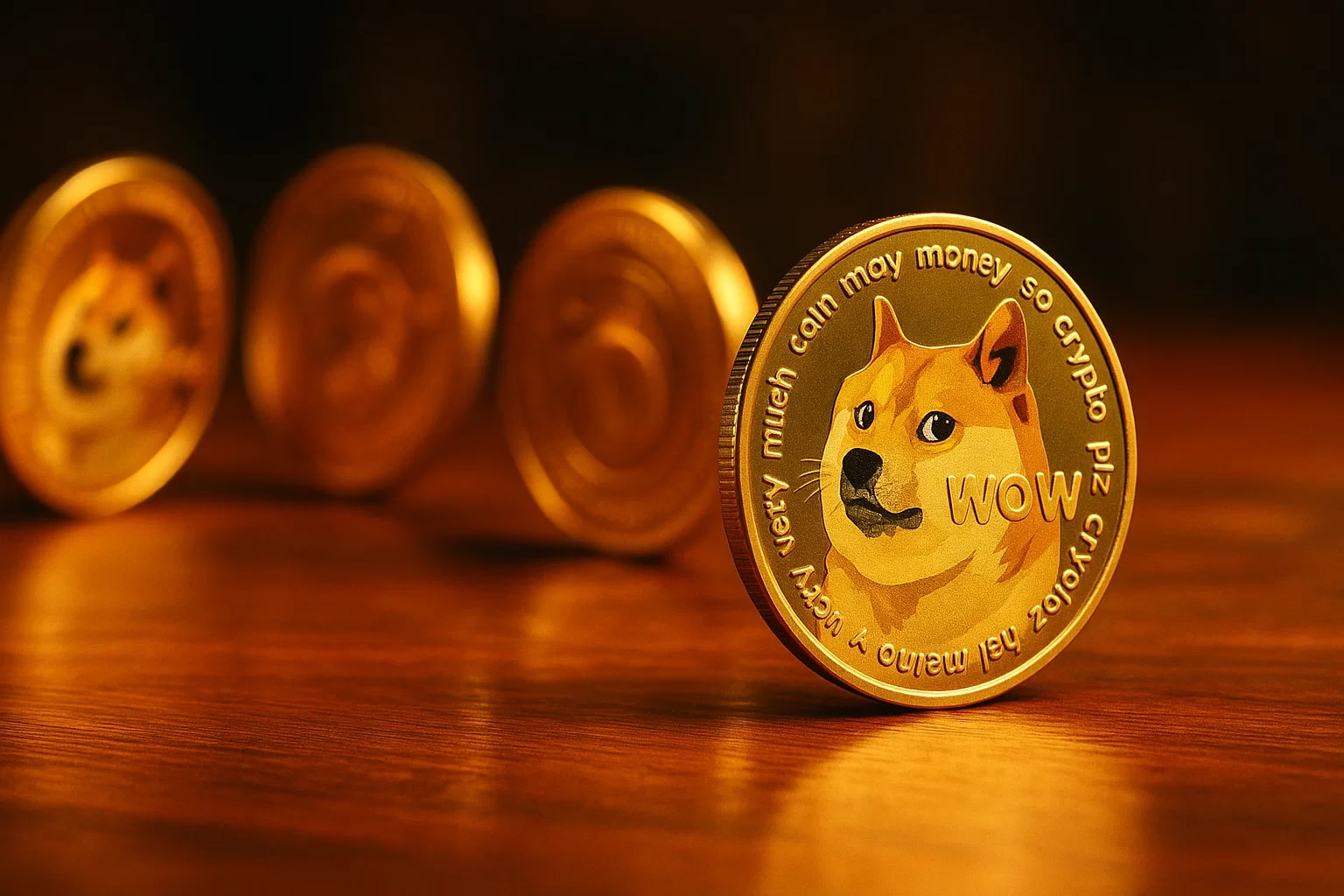
- Dogecoin stalled near $0.1065 after a brief recovery, facing strong resistance and weakening technical signals.
- Support at $0.10 and $0.095 is key to avoiding further downside.
Dogecoin (DOGE) faced selling pressure near the $0.1065 level after a modest recovery from recent lows, highlighting key resistance points that could shape its next move. Investors and traders are now watching critical support levels to determine whether the meme coin can regain momentum or slide further.
Recovery Stalls at Key Resistance
After bouncing from the $0.095 zone, DOGE climbed above $0.10 and briefly surpassed a bearish trend line at $0.1060 on the hourly chart. This move allowed it to break past the 23.6% Fibonacci retracement of its recent decline from $0.1185 to $0.0948.
However, the advance was halted as bears stepped in near the 50% Fibonacci retracement around $0.1065. Currently, the price trades below its 100-hourly simple moving average, signaling that the recovery might be weakening.
Technical Indicators Point to Potential Downside
Technical readings suggest caution for traders. The hourly MACD shows bearish positioning, while the RSI sits below 50, indicating limited upward momentum.
Resistance for DOGE now stands at $0.1065 and $0.1120, with a break above the latter potentially opening the door to $0.1185. On the downside, support holds at $0.10 and $0.095, but failure to maintain these levels could push DOGE toward $0.088 or even $0.085.
What This Means for Traders
For investors, the $0.10 mark is crucial. Holding this support could allow Dogecoin to attempt another rally, while a break below could signal further downside. Traders will need to monitor both resistance and support closely to gauge the next price direction.
ALSO READ: Pi Network Unblocks Millions of Pioneers for Mainnet Migration
DISCLAIMER:
The views and opinions expressed herein are solely those of the author and do not necessarily reflect the views of the publisher. The publisher does not endorse or guarantee the accuracy of any information presented in this article. Readers are encouraged to conduct further research and consult additional sources before making any decisions based on the content provided.
About the Author