- Solana launched its first digital asset treasury in South Korea, boosting institutional adoption.
- Market sentiment remains bullish, with SOL USD eyeing $250.
Solana (SOL) has launched its first digital asset treasury (DAT) in South Korea, marking a major step for institutional adoption. The initiative is a partnership between DeFi Development Corp. (DFDV) and Fragmetric Labs. While SOL USD has faced recent market sell-offs, this move could help push prices back toward $250.
DFDV and Fragmetric Labs Drive the Initiative
DFDV, a Nasdaq-listed company holding over 2 million SOL, is teaming up with Fragmetric Labs, a liquid staking platform, to create the South Korea treasury. The plan involves acquiring a local public company and converting it into a Solana-focused treasury through a reverse merger.
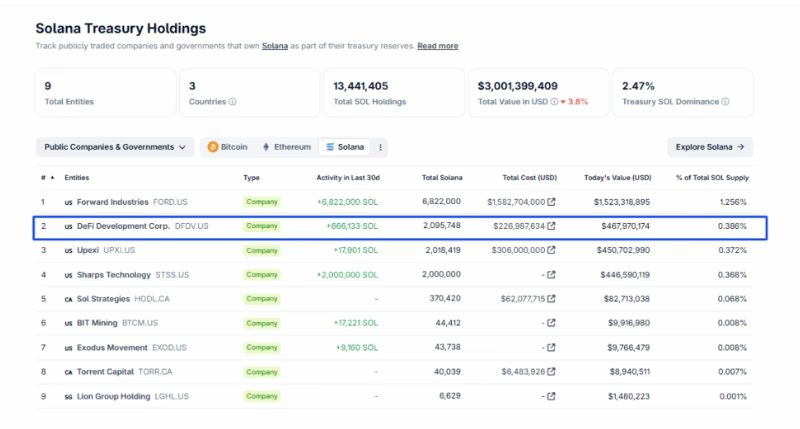
Fragmetric will manage day-to-day operations, while DFDV receives equity and recurring partnership fees.
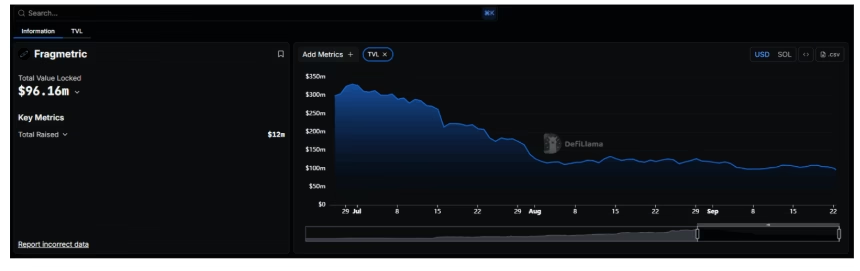
This collaboration combines Solana staking yields with DFDV’s commercial revenue, potentially creating a self-reinforcing cycle to increase SOL demand. South Korea’s clear crypto regulations and active retail market make it an ideal hub for this treasury.
Market Sentiment and Technical Outlook
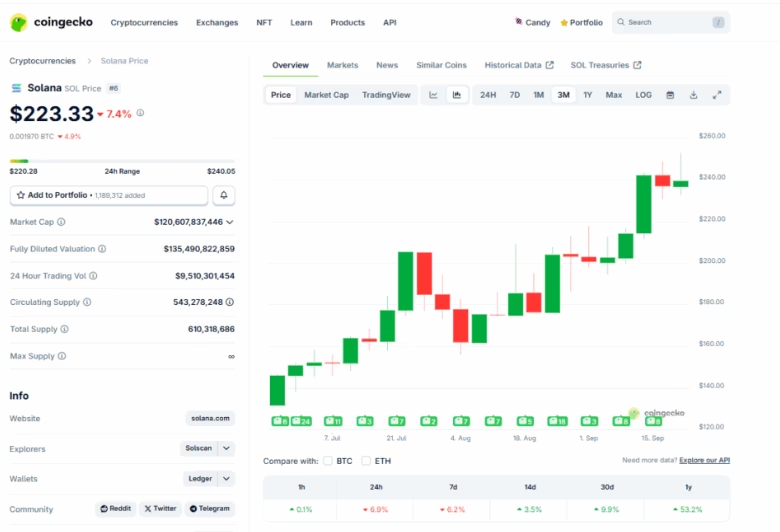
Solana traders remain bullish. Binance reports a long/short ratio above 2.7, showing confidence in SOL USD. Spot market inflows suggest accumulation at lower prices, although it’s uncertain if large holders are buying the dip.
Technically, a close above the September high near $250 is crucial. Analysts suggest that if SOL stays above $185, it could aim for $300 or higher by the end of Q4 2025.
What This Means for Solana
The first South Korea treasury could increase institutional participation and boost SOL USD prices. However, the pace of growth will depend on broader market trends, including Bitcoin’s recovery. If favorable conditions align, Solana could see renewed investor interest and significant gains before year-end.
ALSO READ:How to Stake Solana (SOL) in 2025 – Complete Beginner’s Guide
DISCLAIMER:
The views and opinions expressed herein are solely those of the author and do not necessarily reflect the views of the publisher. The publisher does not endorse or guarantee the accuracy of any information presented in this article. Readers are encouraged to conduct further research and consult additional sources before making any decisions based on the content provided.
About the Author