


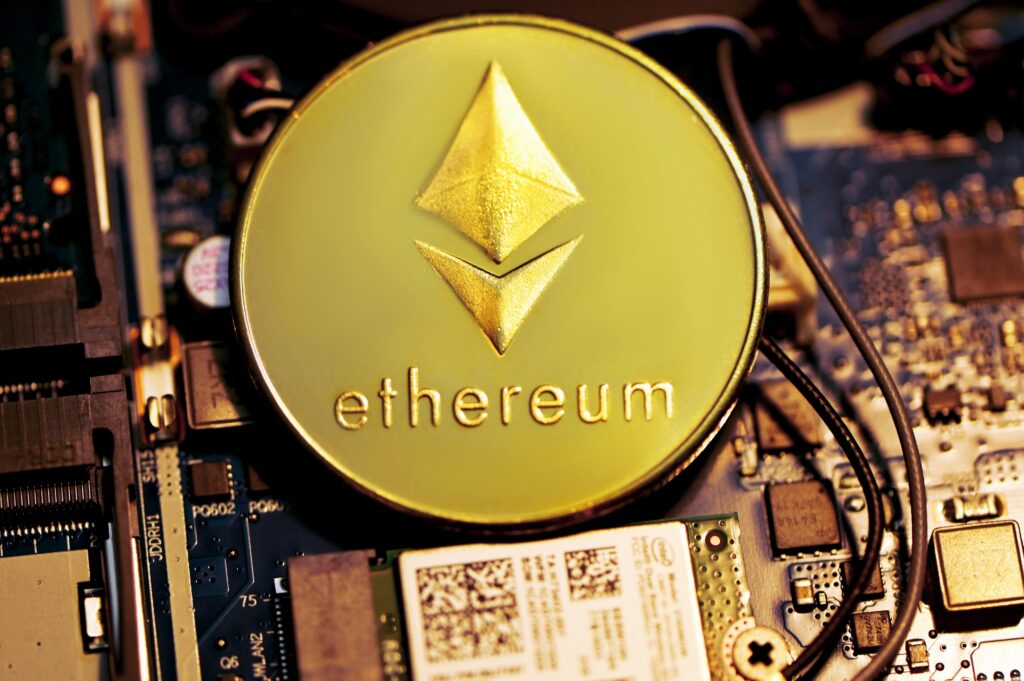
- Ethereum faces growing competition from Tether, Solana, and XRP as rivals expand market share and blockchain capabilities.
- Despite rising pressure, Ethereum still leads stablecoin settlements and financial infrastructure adoption.
Ethereum has held the second spot in crypto for years. It powers decentralized finance, smart contracts, NFTs, and a large share of blockchain-based financial activity. However, rising competition is creating fresh debate about whether Ethereum can maintain that position through 2030.
Networks like Tether, Solana, and XRP continue expanding their influence. Faster transaction speeds, rising capital inflows, and growing tokenization demand are giving investors new reasons to watch the race closely.
Ethereum Still Holds a Strong Lead
Ethereum remains the second-largest cryptocurrency by market capitalization, valued at roughly $254 billion. That keeps it comfortably ahead of several rivals despite growing pressure.
The network also dominates critical blockchain sectors. Ethereum controls around 33% of the global real-world asset tokenization market. Stablecoin settlement remains another major strength.
Across blockchain networks, approximately $320 billion in stablecoins circulate today. Ethereum handles nearly $150 billion of that activity through assets like USDT, USDC, USDS, USDe, and other issuers.
Institutional adoption continues to strengthen Ethereum’s position.
Earlier this year, a major Ethereum exchange-traded fund launched with staking rewards for investors. Major financial firms have also expanded Ethereum access for millions of customers. These developments reinforce Ethereum’s importance beyond cryptocurrency trading.
Tether Growth Creates Market Cap Pressure
One of Ethereum’s biggest challenges may come from an unexpected direction.
Tether has recorded extraordinary market cap expansion over recent years. Over the last five years, its market capitalization surged roughly 622%. Ethereum grew much more slowly during that period.
Market uncertainty often pushes investors toward stable assets. Tether benefits heavily from those trends because traders frequently move capital into stablecoins during periods of volatility.
Prediction markets have started reflecting those concerns. Some market participants now assign increasing odds that Ethereum could lose its number two position much sooner than previously expected.
Solana Pushes Speed Advantage
Solana continues focusing on transaction performance. Its upcoming Alpenglow upgrade aims to significantly improve network speed and block finality times. Community testing has already started, with broader deployment expected later in 2026.
If development stays on schedule, Solana could become one of the fastest major Layer 1 blockchains. Lower transaction costs and higher processing speeds remain attractive advantages for developers and users.
Ethereum still dominates infrastructure adoption, but faster competitors continue narrowing the gap.
XRP Gains Ground Through Payments and Tokenization
XRP is building its position differently. Instead of competing primarily on transaction speed, XRP continues targeting payment infrastructure and tokenized asset markets.
Recent capital flow data showed XRP attracting substantial inflows while Ethereum and Solana recorded outflows over similar periods. Real-world asset tokenization may become one of the largest blockchain opportunities this decade.
Industry estimates suggest tokenized assets could eventually reach trillions of dollars by 2030. If that growth materializes, networks built specifically for payments and tokenization could gain major advantages.
ETF Outflows Raise New Concerns
Ethereum faces challenges beyond competition. Institutional investment flows have become a closely watched metric.
Recent Ethereum exchange-traded fund data showed periods of sustained outflows. Some institutional investors have also reduced exposure during recent quarters.
Layer 2 scaling solutions create another discussion point. Networks built on top of Ethereum improve efficiency and reduce costs. However, some analysts argue that Layer 2 growth also redirects transaction revenue away from Ethereum’s main blockchain.
As Layer 2 adoption expands, investors continue debating how that affects Ethereum’s long-term value.
Three Key Metrics Investors Are Watching
Heading toward 2030, investors appear focused on three major indicators.
ETH-to-Bitcoin Ratio
The ETH-to-Bitcoin ratio remains an important valuation metric for many investors. Analysts believe a long-term recovery in this ratio could help support higher Ethereum price targets over time.
Staking Adoption
Ethereum staking continues to influence investor behavior. Large institutional holders increasingly stake their ETH to generate yield, helping reduce circulating supply while encouraging long-term holding.
Stablecoin Settlement Leadership
Ethereum’s biggest strength may remain its stablecoin infrastructure. More than 60% of global stablecoin activity currently settles on Ethereum, positioning the network to benefit as financial institutions continue bringing assets on-chain.
Ethereum’s Future May Depend Less on Rankings
Ethereum’s long-term importance may extend beyond market cap rankings. Upcoming upgrades aim to improve scalability, lower gas fees, and expand processing capacity significantly.
If Ethereum succeeds in strengthening network efficiency while maintaining leadership in stablecoins and tokenized assets, its role in blockchain finance could remain highly valuable. Competition will likely intensify through 2030.
Tether continues expanding rapidly. Solana keeps improving speed. XRP strengthens its tokenization and payments position. Still, Ethereum remains deeply embedded within blockchain infrastructure today.
Whether it stays number two or not, its role in shaping digital finance may matter far more than the ranking itself.
ALSO READ: Cardano Price Collapse Raises Questions Over Real Value or Value Trap
DISCLAIMER:
The views and opinions expressed herein are solely those of the author and do not necessarily reflect the views of the publisher. The publisher does not endorse or guarantee the accuracy of any information presented in this article. Readers are encouraged to conduct further research and consult additional sources before making any decisions based on the content provided.