- XRP leads in institutional adoption with rising ETFs and tokenized assets.
- Cardano lags in usage despite long-term DeFi plans.
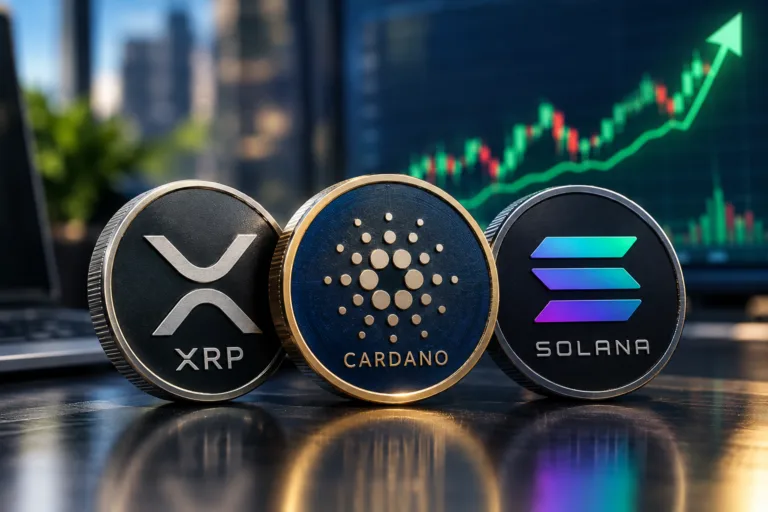
As 2026 unfolds, XRP and Cardano (ADA) remain two of the most discussed digital assets in the cryptocurrency market. While both enjoy dedicated communities, their adoption, market activity, and institutional integration highlight strikingly different trajectories for investors.
The Rise of XRP and Tokenized Assets
XRP has established itself as a blockchain tailored for institutional finance. Its primary audience includes banks, foreign exchange platforms, and investment firms, with the XRP Ledger enabling tokenization of traditional financial instruments like corporate bonds.
Over the past 12 months, XRP’s tokenized asset value surged from less than $80 million to $453 million. This rapid expansion, largely occurring in the latter half of 2025 and early 2026, underscores growing confidence from institutions and broader adoption of XRP as a financial utility.
In addition, XRP ETFs have attracted over $1.1 billion in capital as of March 2026. These investment vehicles allow mainstream investors to gain exposure to XRP without managing cryptocurrency wallets directly, a factor that has significantly increased institutional participation.
Current Market Metrics:
- XRP Price: ~$1.42
- Market Cap: $87 billion
- 12-Month Price Range: $1.14 – $3.65
Analysts forecast that XRP could climb to $3–$8 by year-end 2026, with major banks and ETF adoption driving the potential upside. Some projections, particularly on social media, suggest even higher levels, though these remain speculative.
Cardano’s Strategic Vision and Current Limitations
Cardano follows a research-driven approach, using peer-reviewed code and focusing on long-term growth in DeFi and smart contracts. Its 2030 roadmap includes:
- $3 billion in DeFi assets
- 1 million active monthly wallets
- 324 million annual transactions
However, as of early 2026, Cardano’s network metrics remain modest. Total DeFi value locked is $138 million, daily transaction fees generate roughly $1,900, and active wallet addresses typically number under 17,000. Even recent initiatives to increase stablecoin liquidity have not led to significant adoption gains.
Current Market Metrics:
- ADA Price: $0.27
- Market Cap: $10 billion
- 12-Month Price Range: $0.23 – $1.01
Professional price forecasts remain cautious, generally predicting ADA will reach $0.30–$1 by year-end. Optimistic analysts suggest potential appreciation to $2–$4 if upcoming upgrades, such as the Midnight Network mainnet activation, succeed.
Adoption and Institutional Integration: XRP Leads the Way
The fundamental difference between XRP and Cardano lies in adoption and real-world use. XRP demonstrates:
- Strong institutional integration through ETFs
- Rapid on-chain expansion via tokenized assets
- Prospective catalysts, including stablecoin deployments in Japan with SBI Holdings
Cardano, while technologically ambitious, is still working toward widespread network utilization. Upcoming drivers include privacy-focused features via the Midnight Network and potential approval of ADA spot ETFs.
Investors must note that XRP’s near-term outlook is supported by measurable adoption metrics, whereas Cardano’s growth remains largely contingent on future developments.
Investment Considerations
Both XRP and Cardano are high-risk, speculative assets. Historical performance does not guarantee future results. Key takeaways for investors include:
- XRP: Superior real-world implementation, heightened institutional participation, and accelerated blockchain activity make it appealing for those seeking exposure to mainstream financial adoption.
- Cardano: Ambitious long-term roadmap and technological rigor may offer upside if milestones are met, but current metrics suggest slower adoption.
Before allocating capital, investors should fully understand the volatility inherent in both cryptocurrencies and conduct independent research. For a $1,500 allocation, awareness of potential price swings and adoption trends is critical.
Conclusion
XRP emerges in 2026 as a crypto asset with significant institutional traction and rapid on-chain expansion. Cardano remains a visionary project with strong academic foundations, yet its real-world adoption lags. For investors focused on measurable adoption and ETF exposure, XRP presents a more immediately actionable option, while Cardano may appeal to long-term strategists betting on network upgrades and DeFi growth.
ALSO READ: Ripple Launches $750M Share Buyback, Pushes Company Valuation to $50 Billion
Disclaimer:
This article and accompanying image are for informational purposes only and do not constitute financial advice. Cryptocurrency investments carry high risks, and past performance does not guarantee future results. Always conduct your own research before making any investment decisions.
About the Author