
- Crypto executives argue California’s proposed 5% billionaire wealth tax could drive capital and entrepreneurs out of the state.
- Supporters say the tax would fund public services, but critics doubt the money would be used effectively.
A proposed 5% wealth tax targeting billionaires in California has sparked sharp criticism from leading figures in the crypto industry. While supporters argue the measure could fund vital public services, critics warn it may drive entrepreneurs and capital out of the state, ultimately hurting innovation and economic growth.
The ballot initiative, officially named the 2026 Billionaire Tax Act, seeks to impose a 5% levy on net wealth exceeding $1 billion. Proceeds would be directed toward healthcare funding and state assistance programs. However, the proposal’s structure, which includes taxes on unrealized gains, has become a major point of contention among business leaders.
Why Crypto Executives Are Pushing Back
Several high-profile crypto executives have spoken out against the proposal. Bitwise CEO Hunter Horsley and Kraken co-founder Jesse Powell argue the tax would discourage wealthy founders from staying in California. Powell described the measure as a “final straw,” suggesting billionaires would relocate alongside their investments, philanthropy, and job creation efforts.
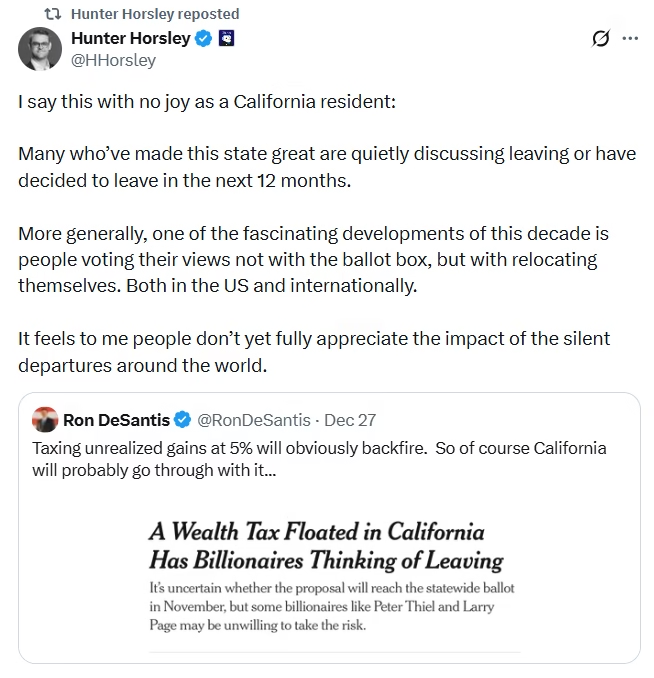
Because the tax may require payments on unrealized gains, affected individuals could be forced to sell shares or portions of their businesses. Critics say this approach could weaken companies that are still growing and reduce long-term economic contributions to the state.
Capital Flight Concerns Take Center Stage
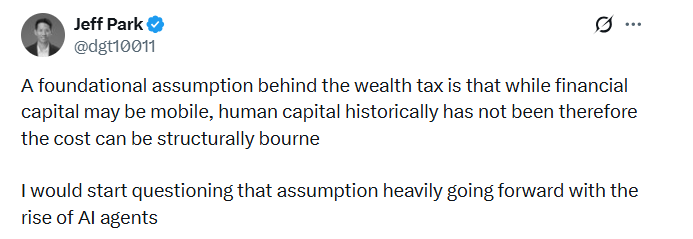
Concerns about capital mobility have been echoed by Castle Island Ventures founding partner Nic Carter and ProCap BTC CIO Jeff Park. Carter questioned whether policymakers had adequately considered how easily wealth can move across borders in today’s global financial system.
He likened one-time wealth taxes to warning signals for investors, suggesting they may create expectations of future taxation. In such cases, relocating assets may appear safer than remaining exposed to unpredictable policy changes.
Lessons From Other Countries
Opponents of the tax often point to international examples. Fredrik Haga, CEO of on-chain data platform Dune, highlighted Norway’s experience with wealth taxes. According to Haga, similar policies led to more than half of the wealth held by Norway’s top taxpayers moving abroad, generating less revenue than anticipated.
This example has fueled arguments that wealth taxes can reduce a tax base rather than expand it, especially when applied to highly mobile capital.
Supporters Say Public Investment Matters
Despite the backlash, the proposal has defenders. Representative Ro Khanna, a crypto-friendly Democrat from California, argues the tax could strengthen childcare, housing, and education systems. He believes these improvements would support long-term innovation and economic resilience.
However, critics counter that existing audits of California’s spending reveal inefficiencies, raising doubts about whether additional funds would reach their intended targets.
As the initiative heads toward the 2026 ballot, the debate highlights a growing tension between progressive taxation goals and concerns over economic competitiveness in innovation-driven industries.
DISCLAIMER:
The views and opinions expressed herein are solely those of the author and do not necessarily reflect the views of the publisher. The publisher does not endorse or guarantee the accuracy of any information presented in this article. Readers are encouraged to conduct further research and consult additional sources before making any decisions based on the content provided.
About the Author