- Ethereum has recorded its strongest buy-side pressure since 2022 in derivatives markets.
- Analysts say the shift is early and not yet a confirmed trend reversal.
Ethereum is showing a rare shift in derivatives market behavior, with buy-side pressure hitting its strongest level since the 2022 bear market. The move suggests a potential change in market structure after months of persistent selling dominance. However, analysts caution that it is still too early to confirm a full trend reversal.
Strong Buy Pressure Returns to Ethereum Derivatives
According to CryptoQuant analyst Darkfost, Ethereum has recently recorded a notable rise in buy-side activity across derivatives markets. This shift marks a break from a long period where sellers consistently dominated trading flows.
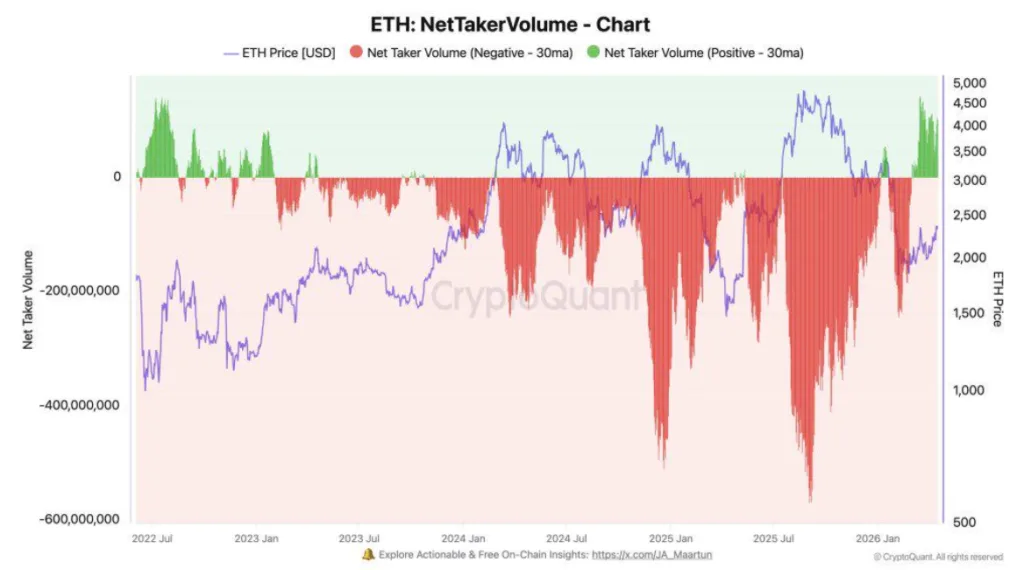
A key metric in this analysis is net taker volume, which tracks the difference between aggressive buy and sell orders. For most of the current cycle, this indicator has remained negative, showing that sellers were in control.
Darkfost noted that even during strong price attempts, selling pressure remained heavy. When Ethereum pushed toward $4,000 in December 2024, net taker volume dropped to -$511 million. Later, when ETH approached its all-time high near $5,000, selling pressure deepened further to -$568 million.
Persistent Selling Pressure Weighed on Ethereum
These conditions help explain why Ethereum struggled to sustain strong upward moves despite positive market sentiment at times. Even when spot demand improved, derivatives markets continued to lean heavily toward sellers.
This imbalance created resistance to price breakouts. Instead of clean rallies, Ethereum faced repeated rejection near key levels as traders in derivatives positions continued to sell into strength.
Such behavior often signals caution among traders, especially in leveraged markets where positioning can amplify price direction.
A Shift Toward Buy-Side Control Since March
The recent data now shows a shift in momentum within derivatives flows. Since March, buy-side volume has started to dominate.
Darkfost reported a recent reading of +$102 million in net taker volume, indicating stronger aggressive buying in the market. This is the first sustained positive reading after a long stretch of negative pressure.
He compared this change to the 2022 bear market period, when Ethereum traded near $1,000. At that time, similar levels of buy-side dominance were last seen.
This comparison highlights how rare the current shift is within the broader market cycle.
What This Means for Ethereum’s Price Structure
The return of positive net taker volume suggests buyers are now more willing to take market prices rather than wait for dips. This can signal improving confidence among traders, especially in derivatives markets.
However, analysts remain cautious. Darkfost emphasized that the trend must continue for any meaningful structural recovery to form.
He explained that sustained buying pressure would be required to absorb ongoing sell-side activity. Without that continuation, the shift could fade quickly.
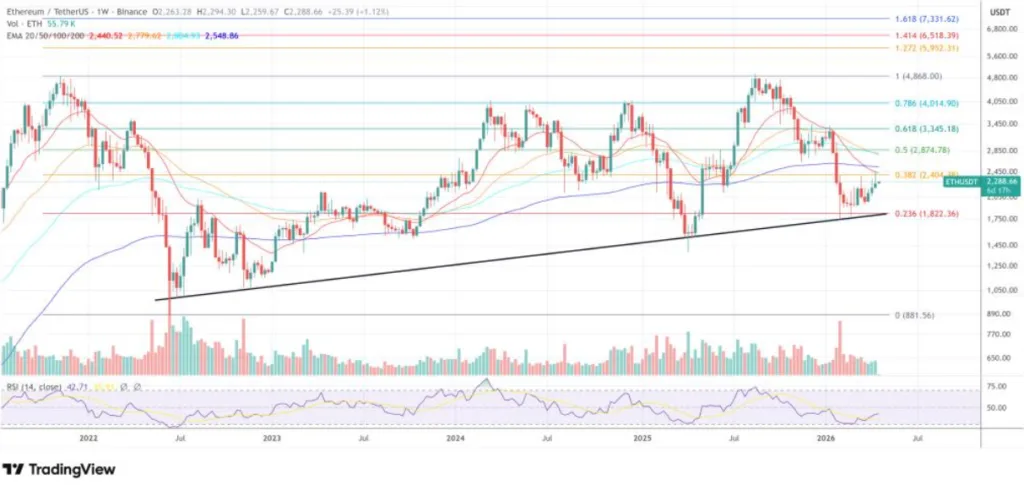
At the time of writing, Ethereum is trading at $2,288, holding above recent support levels but still within a broader recovery phase.
Outlook for Ethereum
Ethereum’s latest derivatives data points to early signs of change in market behavior. The return of buy-side dominance is a notable development after months of consistent selling pressure.
Still, the market has not confirmed a full reversal. The next phase will depend on whether buyers can maintain control and sustain pressure over time.
If the trend continues, Ethereum could enter a stronger structural recovery phase. For now, traders are watching closely to see if this shift develops into something more lasting.
ALSO READ: Bitcoin ETFs See $996M Inflows as Risk Appetite Strengthens in Markets
DISCLAIMER:
The views and opinions expressed herein are solely those of the author and do not necessarily reflect the views of the publisher. The publisher does not endorse or guarantee the accuracy of any information presented in this article. Readers are encouraged to conduct further research and consult additional sources before making any decisions based on the content provided.
About the Author