- Ethereum whales are strongly defending the $2,796 level, which represents a key cost basis for long-term holders.
- However, rising leverage and weak capital rotation leave ETH vulnerable if this support fails.
Ethereum traders and long-term holders are focused on a single price zone that could shape its next major move. Bitcoin continues to dominate flows, leaving Ethereum in a prolonged period of consolidation. Yet beneath the surface, on-chain data suggests this sideways action is far from random.
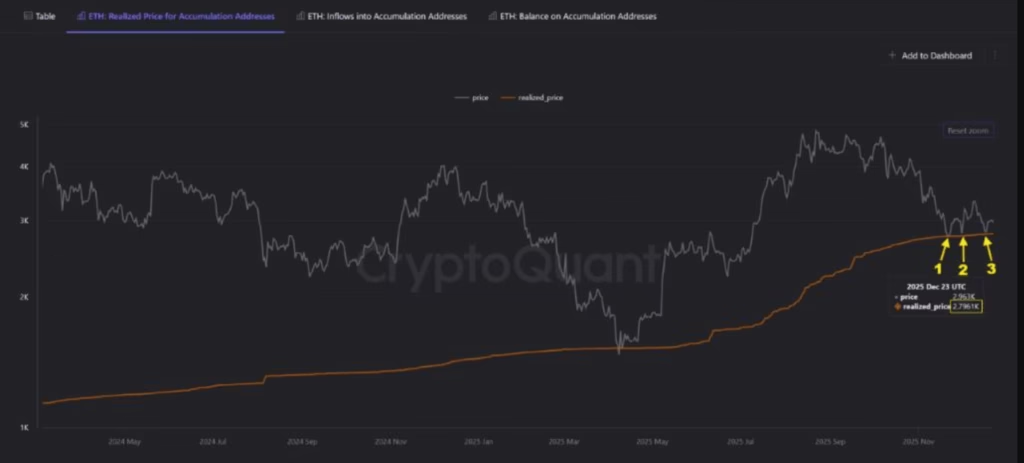
Ethereum’s price behavior around the $3,000 mark has drawn attention, but the real battle is unfolding slightly lower. The $2,796 level has emerged as a decisive threshold, closely tied to whale behavior and long term holder positioning.
Why $2,796 Matters for Ethereum
The $2,796 price level represents the realized price, or cost basis, for Ethereum’s long-term holders. On multiple occasions, ETH has tested this zone and rebounded, signaling strong defense by large investors. This repeated reaction suggests whales view the level as a foundation worth protecting rather than a point of weakness.
At the same time, Ethereum dominance on the daily chart has shown resilience. After dipping to around 11.5% in late November, dominance formed lower highs before stabilizing and bouncing toward 13%. This pattern aligns with ETH trading sideways between $3,000 and $3,500, reinforcing the idea that consolidation is being actively supported rather than driven by indecision alone.
Whale Accumulation Without a Macro Catalyst
Despite the absence of a clear macroeconomic trigger, Ethereum whales have shown conviction. Since November 21, large holders have accumulated approximately 4.8 million ETH, equivalent to about 4% of the circulating supply. Their total holdings increased from 22.4 million ETH to 27.2 million ETH during this period.
This accumulation phase closely matches the defense of the $2,796 cost basis, strengthening its role as a make-or-break level. At current prices, these whales are sitting on an estimated $4.8 billion in unrealized profits, giving them both confidence and optionality in the market.
Rising Leverage Raises the Stakes
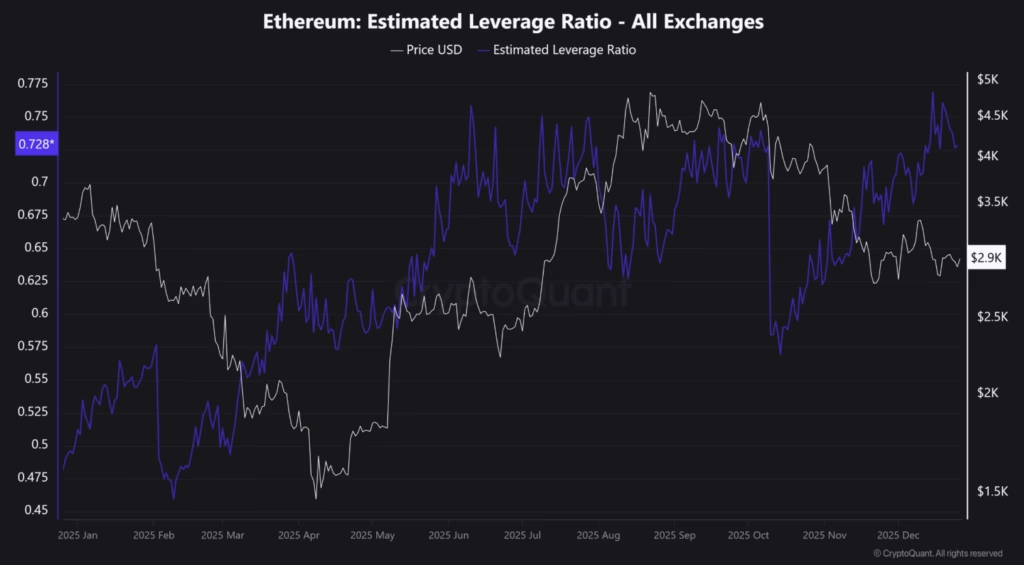
While whale support is clear, risk is building elsewhere. Ethereum’s estimated leverage ratio has climbed to a six-month high of 2.964. In practical terms, this means that for every dollar of unleveraged ETH, nearly three dollars of borrowed exposure exists in the market.
With leverage elevated, volatility still present, and no strong rotational flows into altcoins, Ethereum remains exposed to sharp moves. If whales reduce exposure or sentiment shifts, a rapid deleveraging event could follow.
What Comes Next for Ethereum
Ethereum’s near-term outlook hinges on whether the $2,796 level continues to hold. Sustained defense could keep ETH range-bound while setting the stage for a stronger move later. A decisive break below it, however, may trigger liquidations and increased downside pressure. For now, all eyes remain on this pivotal level.
DISCLAIMER:
The views and opinions expressed herein are solely those of the author and do not necessarily reflect the views of the publisher. The publisher does not endorse or guarantee the accuracy of any information presented in this article. Readers are encouraged to conduct further research and consult additional sources before making any decisions based on the content provided.
About the Author