- Pi Network has 18.1M verified users, but many Pioneers are still facing KYC delays and backlog issues.
- Pi Coin is also under pressure in May despite network growth and upcoming Protocol 23 updates.
Pi Network has released a major update showing strong growth in verified users, but it has also triggered frustration across its community. While the network highlights progress in identity verification and mainnet migration, many users say approval delays are still a major issue.
18.1M Users Verified, but Delays Frustrate Pioneers
Pi Network reported that it has now surpassed 18.1 million fully verified users. It also confirmed more than 16.72 million mainnet migrations.
In April alone, the network recorded over 100,000 KYC approvals and around 30,000 migrations.
Here is last month's Network Update!
Over 100,000 Pioneers have been KYC'd and over 30,000 migrated to Mainnet. pic.twitter.com/vaxgJjfGM2
— Pi Network (@PiCoreTeam) May 11, 2026
Despite these numbers, many users remain stuck in “Tentative” status. Pioneers have continued to complain about long waiting times and unclear timelines for approval.
Some users argue that the process has taken years, with little visible progress for certain accounts.
AI-Driven KYC System Faces Scrutiny
The Pi Core Team explained that its KYC system combines human reviewers with AI-based fraud detection tools.
According to the update, over 1 million participants have helped process about 526 million verification tasks. Each application reportedly goes through around 30 checks before approval.
The system is designed to reduce fake accounts and ensure real identity verification. However, the complexity has also slowed down approvals for some users.
Pi Network Defends Strict Verification Approach
The team defended its strict KYC process, saying a lighter system would create serious risks. They warned that weak verification could allow duplicate accounts to enter the mainnet. This would distort rewards and damage fairness in the ecosystem.
They also emphasized the goal of maintaining a “one-person, one-account” structure. This is meant to protect the integrity of the network. Since a system upgrade in October 2025, more than 3.36 million users have reportedly moved from Tentative status to fully approved KYC.
For users still waiting, the team recommended three steps:
- Complete liveness checks in the app
- Ensure submitted data is accurate
- Continue active mining to trigger system reviews
The team also noted that Tentative status does not mean rejection. It only means extra verification is required.
Pi Coin Faces Weak Price Performance in May
Pi Coin has underperformed in May even as most altcoins post strong gains. The coin continues to lag behind the broader crypto market despite overall sector strength. It is down about 2.6% this month and was trading near $0.17 at the time of reporting.
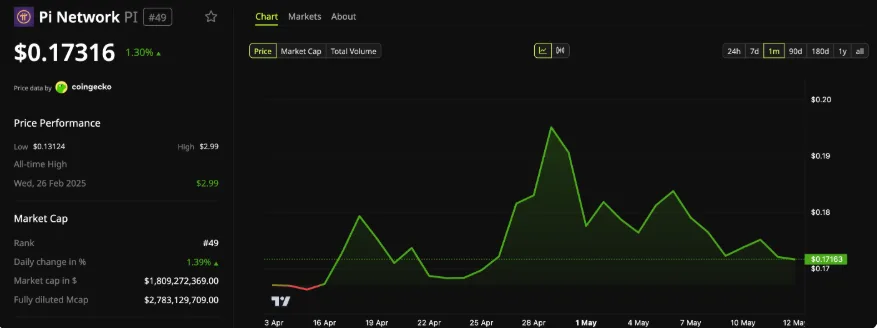
Attention has now shifted to the upcoming Protocol 23 upgrade, with the mainnet node deadline set for May 15. The update is being closely watched as a potential short-term catalyst for price movement.
A previous upgrade under Protocol 22 briefly pushed the token higher by around 9%, but the gains faded soon after.
Supply pressure is also in focus, with about 174.2 million PI tokens expected to enter circulation over the next 30 days. This added supply could weigh on price performance going forward.
Outlook Remains Mixed for Pi Network
Pi Network continues to show strong growth in verified users and infrastructure development. At the same time, user frustration over KYC delays remains high. Market performance is also uncertain. Upcoming upgrades may support short-term activity, but new token supply could limit upside.
For now, Pi Network sits between progress and pressure, with both community trust and price action under close watch.
ALSO READ: Terra Classic LUNC Price Rises 4% as Altcoin Rotation and Burn Narrative Drive Demand
DISCLAIMER:
The views and opinions expressed herein are solely those of the author and do not necessarily reflect the views of the publisher. The publisher does not endorse or guarantee the accuracy of any information presented in this article. Readers are encouraged to conduct further research and consult additional sources before making any decisions based on the content provided.
About the Author