- Pi Network hit a new all-time low after another sharp price decline.
- A 127 million PI token unlock could add more selling pressure despite ongoing ecosystem updates.
Pi Network(PI) has dropped to a fresh all-time low after another sharp sell-off, extending months of heavy losses. While the project continues to introduce new products and ecosystem updates, investors remain focused on a major token unlock that could add more selling pressure in the coming weeks.
PI Drops Below Key Support Levels
PI recorded another steep decline on July 13, falling more than 11% within a day and reaching a new all-time low of around $0.086. The latest drop pushed the coin below the important $0.10 and $0.09 support levels, highlighting the continued weakness in its price.
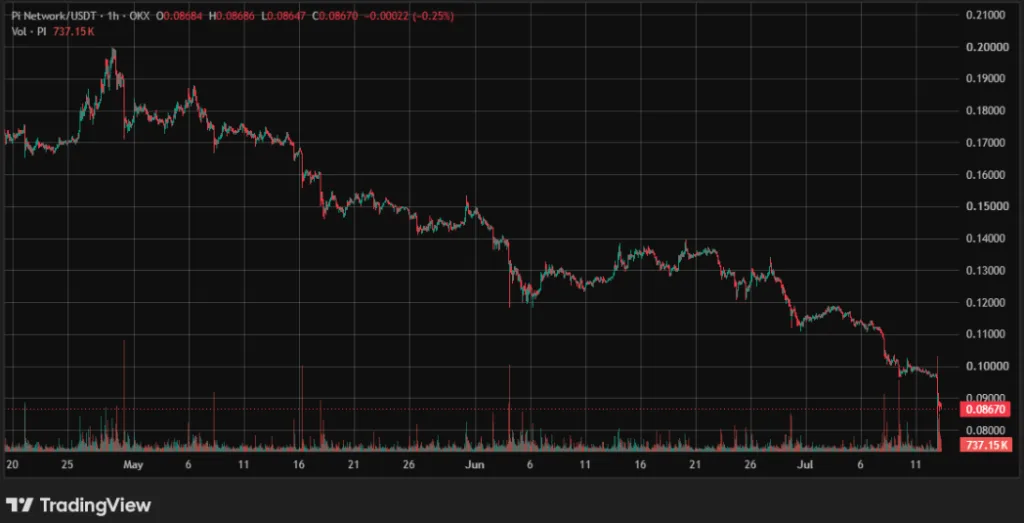
The decline follows a prolonged downtrend that has weighed on PI since its strong performance earlier this year. After climbing to around $0.30 following its major listing on Kraken in March, the token failed to hold its gains and entered a steady slide.
Selling pressure has continued to increase over recent months, leaving PI down more than 22% over the past week and approximately 97% below its all-time high recorded in February 2025.
127 Million PI Tokens Set for Release
Another concern for the market is the upcoming token unlock schedule.
According to PiScan data, more than 127 million PI tokens are expected to enter circulation over the next 30 days. Large token unlocks often increase the available supply, especially when early holders receive access to previously locked coins.
Some investors may choose to sell after receiving their tokens, particularly during periods of weak market sentiment. If demand fails to absorb the additional supply, the extra selling pressure could make it more difficult for PI to recover in the short term.
While token unlocks do not always lead to price declines, they remain an important factor that traders closely monitor.
Pi Network Continues to Expand Its Ecosystem
Despite PI’s falling price, the Pi Network team continues to develop new ecosystem tools. During Pi2Day on June 28, the project launched three products aimed at improving adoption and network growth.
The first product, SoloHost, allows users to host AI applications and support distributed computing. Pi Sign-in enables third-party apps and websites to verify users through Pi accounts. PiVerify provides KYC and identity verification services for external businesses.
These updates show that development is still ongoing. However, the new products have not yet created enough demand to support PI’s price.
Can New Products Support PI’s Recovery?
Although the new infrastructure could strengthen the Pi Network ecosystem over time, the impact on the PI’s price may not be immediate.
Products such as authentication services, AI hosting tools, and identity verification platforms typically require months or even years before they generate meaningful user activity and demand for the native token.
For now, traders appear to be paying more attention to the ongoing price decline and the upcoming token unlock than to the project’s long-term roadmap.
Unless market sentiment improves or demand increases enough to absorb the additional supply, PI could continue facing pressure in the weeks ahead. Even so, continued ecosystem development may provide a stronger foundation if adoption grows over the longer term.
DISCLAIMER:
The views and opinions expressed herein are solely those of the author and do not necessarily reflect the views of the publisher. The publisher does not endorse or guarantee the accuracy of any information presented in this article. Readers are encouraged to conduct further research and consult additional sources before making any decisions based on the content provided.
About the Author