- Uniswap has secured 74% community support for a proposal to introduce a UNI burn mechanism.
- Its long-term impact will depend on protocol adoption and trading activity.
Uniswap could be on the verge of introducing its first long-term UNI burn mechanism after a new governance proposal received strong community backing. The proposal, which has secured 74% support so far, seeks to connect UNI’s value directly to protocol activity instead of relying mainly on governance incentives.
If approved, the changes could make UNI scarcer over time, although the impact will depend largely on user adoption and trading activity across the network.
Uniswap Proposes Fee-Funded UNI Burn
The governance initiative consists of three separate proposals. They include activating protocol fees on Robinhood Chain, expanding Uniswap v4 deployment, and introducing bridge infrastructure across supported blockchains.
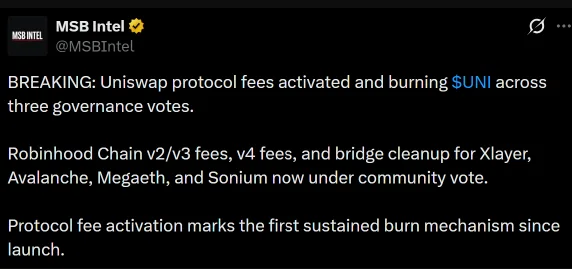
Under the proposal, protocol fees would be deposited into TokenJar accounts. Users would then be able to acquire enough UNI to burn those tokens completely before collecting their UNI from the TokenJar account.
Unlike previous governance models, this system would tie UNI’s circulating supply to actual protocol usage. As trading activity increases, more fees could support additional token burns, creating a direct relationship between network growth and token scarcity.
Growing Revenue Could Support the Burn Mechanism
The proposal arrives as Uniswap continues generating strong protocol revenue.
According to DefiLlama, the decentralized exchange currently produces around $5 million in daily fees, while annual protocol revenue is close to $50 million.
Higher trading volumes from Uniswap v4 and Robinhood Chain could increase fee generation even further. That would create more opportunities to remove UNI from circulation through the proposed mechanism.
Even so, the expected burn rate remains relatively small compared to UNI’s total supply. The proposal is therefore viewed as a gradual, long-term approach rather than a rapid supply reduction.
Robinhood Chain Becomes the Key Test
The success of the proposal will ultimately depend on user activity.
Robinhood Chain has already shown encouraging signs, having recorded more than $1 billion in cumulative swap volume within days of its launch. The rapid growth suggests Uniswap is attracting users beyond its traditional ecosystem.
Growing wallet activity and higher swap volumes also indicate that network participation extends beyond short-term speculation.
However, maintaining that growth will be critical. If trading volume, liquidity, and daily transactions continue increasing, Robinhood Chain could become a major driver of protocol revenue and future UNI burns.
What It Means for UNI
The proposed burn mechanism represents a shift in how Uniswap could support UNI’s long-term value.
Instead of relying primarily on governance participation, the token’s supply would gradually adjust to actual network usage. Increased adoption would generate more fees, allowing more UNI to be removed from circulation over time.
Although the immediate impact on supply may remain limited, continued protocol growth will strengthen the link between Uniswap’s expanding ecosystem and UNI’s long-term value.
ALSO READ: U.S. Senate Returns With Crypto Legislation in Focus as Industry Awaits Regulatory Breakthrough
DISCLAIMER:
The views and opinions expressed herein are solely those of the author and do not necessarily reflect the views of the publisher. The publisher does not endorse or guarantee the accuracy of any information presented in this article. Readers are encouraged to conduct further research and consult additional sources before making any decisions based on the content provided.
About the Author