- Ripple is building XRPL into a unified payments layer linking SWIFT, stablecoins, and blockchain rails.
- This enables faster, more flexible global settlement across traditional and digital finance.
The payments industry is becoming one of the most important gateways for blockchain adoption. As stablecoins gain real-world usage, Ripple is positioning itself to turn the XRP Ledger (XRPL) into a key infrastructure layer for global settlement and liquidity movement.
Payments Are Driving the Next Phase of DeFi Growth
The biggest opportunity for blockchain networks today is not speculation but payments. Stablecoins work best when they are used frequently in fast, low-cost transactions.
Payments naturally create this environment. They involve constant money movement, liquidity adjustments, and real demand for settlement solutions.
Because of this, payments are no longer just another use case for decentralized finance. They are becoming the foundation that supports broader adoption of digital assets in real-world finance.
Ripple’s Strategy to Connect Traditional and Digital Finance
Ripple has been steadily expanding its role in corporate financial infrastructure. A key part of this strategy was its acquisition of GTreasury, a platform used by large companies to manage global cash flows and cross-border payments.
By integrating treasury operations into its ecosystem, Ripple aims to embed blockchain technology directly into corporate financial workflows.
Recently, Ripple also introduced a Treasury Management System that connects multiple payment options, including SWIFT, XRP, and other third-party providers.
This system allows companies to view and manage liquidity in one place while choosing different settlement rails based on cost, speed, and efficiency.
In simple terms, Ripple is not trying to replace existing systems. Instead, it is building a network where traditional and blockchain-based rails work together.
SWIFT, XRP, and Stablecoins Working Side by Side
Even though blockchain adoption is growing, traditional systems like SWIFT still play a major role in global banking. More than 11,500 banks continue to rely on these networks for cross-border payments.
Ripple’s approach acknowledges this reality. Instead of competing directly, it is building tools that connect these systems.
This shows how stablecoins are moving into mainstream financial rails through existing payment infrastructure.
XRPL and the Growing Role of Stablecoin Liquidity
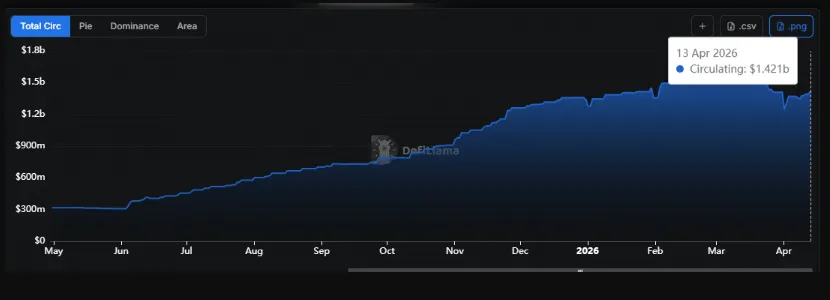
Ripple’s ecosystem is also seeing steady growth in its native stablecoin, RLUSD. According to on-chain data, RLUSD has increased its market value year-to-date and continues to expand its presence within the XRP Ledger ecosystem.
Its share of XRPL’s stablecoin activity highlights rising liquidity within Ripple’s network.
This growth supports Ripple’s broader goal of strengthening on-chain settlement activity and increasing the use of blockchain for real-world payments.
Ripple’s Multi-Rail Vision for Global Payments
The direction Ripple is taking points toward a multi-rail financial system rather than a single dominant network.
In this model, different systems operate together:
- SWIFT for traditional banking connectivity
- Stablecoins like RLUSD for fast digital settlement
- XRPL for blockchain-based liquidity and transfers
Companies can choose the best rail depending on their needs, whether that is speed, cost, or liquidity efficiency.
This positions Ripple as a central hub in the transition from traditional finance to decentralized financial systems.
Conclusion
Payments are becoming the entry point for stablecoin adoption and broader blockchain use. Ripple is aligning its ecosystem around this shift by connecting traditional banking systems, stablecoins, and blockchain networks.
With XRPL, SWIFT integration, and growing stablecoin activity, Ripple is building a multi-rail infrastructure model that could shape the next phase of global settlement systems.
ALSO READ: XRP Price Awaits Breakout as CLARITY Act Timeline Tightens in the Senate
DISCLAIMER:
The views and opinions expressed herein are solely those of the author and do not necessarily reflect the views of the publisher. The publisher does not endorse or guarantee the accuracy of any information presented in this article. Readers are encouraged to conduct further research and consult additional sources before making any decisions based on the content provided.
About the Author