- Ripple is building a full-stack ecosystem using XRP for liquidity and RLUSD for stable, compliant transactions.
- Backed by SBI Group, this strategy aims to bridge digital assets with traditional finance.
Ripple is positioning itself at the forefront of cryptocurrency evolution. It is no longer just a provider of fast cross-border payments, but is also building a ‘full stack ecosystem’ designed to integrate digital assets and traditional finance.
Ripple’s Ecosystem Vision
Yoshitaka Kitao, President of Japan’s SBI Group, recently highlighted Ripple’s shift from isolated solutions to a multi-layered financial infrastructure. According to Kitao, the integration of XRP and Ripple’s stablecoin, RLUSD, across all operational layers is central to this strategy. This approach signals strong institutional confidence in Ripple’s ability to deliver comprehensive, real-world financial services.
The Roles of XRP and RLUSD
XRP remains the backbone of Ripple’s ecosystem, acting as a liquidity provider and settlement asset for institutional transactions. RLUSD complements this by offering stability and regulatory compliance, allowing secure transactions across different networks. Together, they provide a balanced framework: XRP delivers speed and agility, while RLUSD ensures stability and trustworthiness for institutions.
Building a Full Stack Advantage
A “full stack ecosystem” means more than combining products. It represents seamless integration of payments, custody, treasury management, and stablecoin operations. By embedding digital assets into every layer, Ripple moves away from the fragmented nature of crypto projects, offering a cohesive network that can serve both retail and institutional users. This holistic approach also strengthens its position amid rising regulatory scrutiny.
SBI’s Institutional Backing
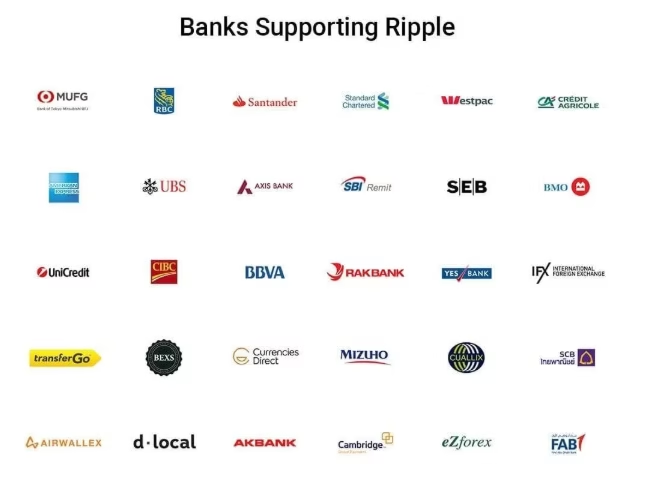
SBI Group is not just an observer but an active participant in Ripple’s expansion. From operating XRP validator nodes to integrating the ledger into services like SBI Remit and MoneyTap, the company is driving institutional adoption. Kitao has openly confirmed Ripple’s strategic importance to SBI’s profitability, highlighting confidence in XRP’s scalability and RLUSD’s compliance.
By the end of 2025, Ripple aims to demonstrate how blockchain can evolve into a fully integrated financial infrastructure. If successful, the combination of XRP and RLUSD could bridge the gap between innovation and traditional finance, setting a new standard for digital asset utilization. Challenges like regulatory uncertainty and competitive pressure remain, but Ripple’s strategic partnerships and layered ecosystem offer a promising path forward.
Ripple’s dual approach signals a future where digital assets are more than tools but foundational elements of a unified, institutional-grade financial system.
ALSO READ: Terra Classic (LUNC) Tests Key Support Ahead of Do Kwon Trial on January 26
DISCLAIMER:
The views and opinions expressed herein are solely those of the author and do not necessarily reflect the views of the publisher. The publisher does not endorse or guarantee the accuracy of any information presented in this article. Readers are encouraged to conduct further research and consult additional sources before making any decisions based on the content provided.
About the Author