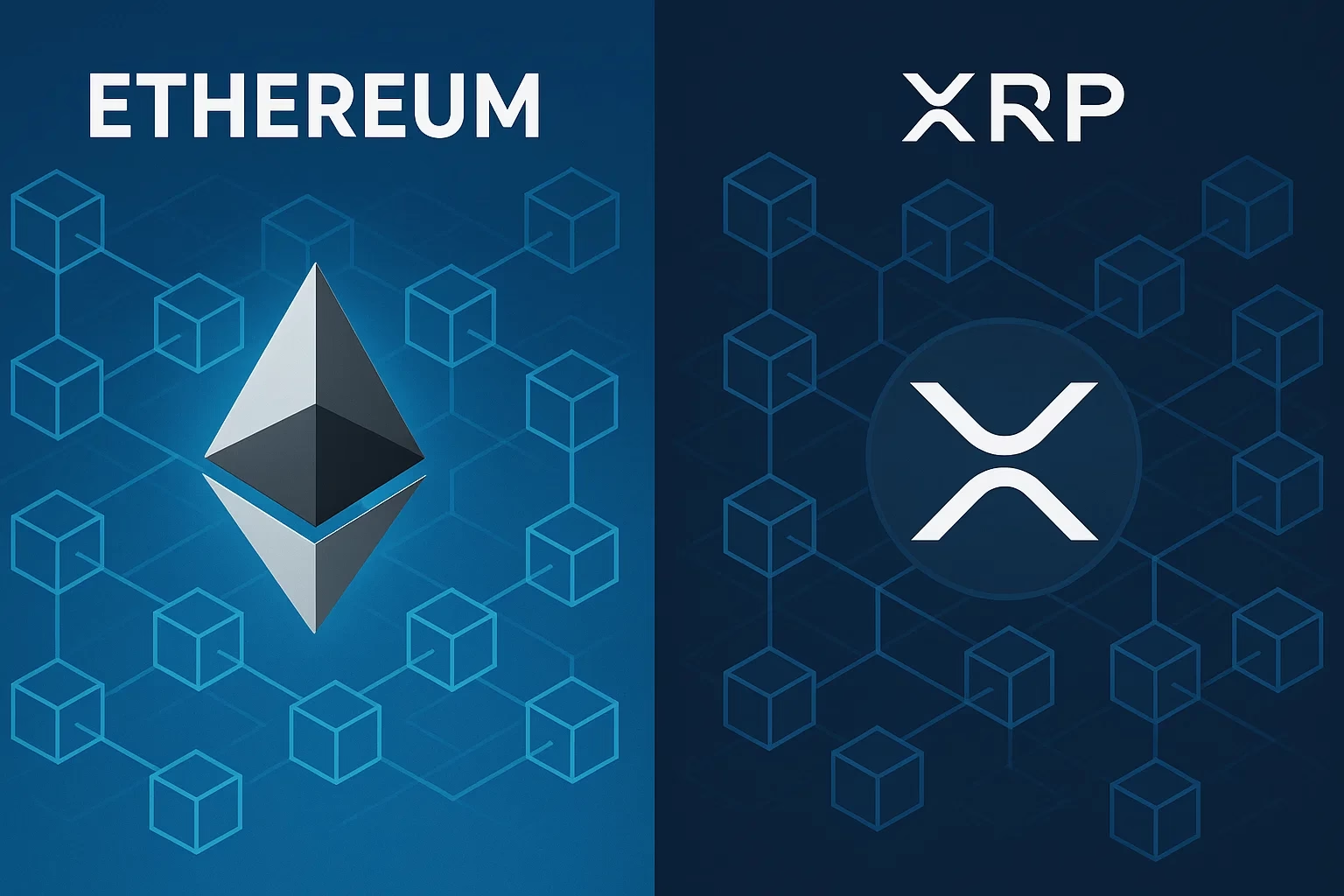
- Ethereum offers a stronger recovery outlook thanks to its active blockchain ecosystem, while XRP depends more on regulatory and ETF-related catalysts. Both cryptocurrencies remain heavily influenced by Bitcoin’s next market move.
The cryptocurrency market has faced another wave of selling pressure, pushing major digital assets lower alongside Bitcoin. Both XRP and Ethereum have dropped by around 20% over the past month as investors reacted to Bitcoin falling below $60,000.
While both cryptocurrencies now trade at lower prices, they present different investment opportunities. Ethereum continues to benefit from strong network activity, while XRP’s future performance largely depends on regulatory developments and renewed investor interest.
Bitcoin’s Decline Has Pressured the Entire Crypto Market
The recent decline in XRP and Ethereum was not caused by problems specific to either project. Instead, the broader cryptocurrency market weakened after Bitcoin experienced a sharp correction below $60,000.
As Bitcoin fell, investors reduced their exposure to digital assets across the board. This led to similar declines in many leading cryptocurrencies, including XRP and Ethereum.
Although both assets have lost roughly the same percentage during the correction, their recovery paths appear very different.
XRP Relies on Catalysts for Its Next Major Move
XRP remains one of the largest cryptocurrencies by market capitalization, but it is still considerably smaller than Ethereum. Because of its smaller size, XRP can often record larger percentage gains when buying activity returns.
Several factors could support a stronger recovery for XRP. These include renewed interest in spot XRP exchange-traded funds (ETFs), regulatory clarity in the United States, and continued expansion of Ripple’s payment ecosystem.
Ripple’s RLUSD stablecoin has also continued to grow, strengthening the company’s presence in digital payments.
However, many of these catalysts have recently slowed. ETF inflows have weakened, while regulatory legislation such as the CLARITY Act continues to face delays. Without fresh positive developments, XRP’s recovery could remain gradual.
As a result, XRP may offer greater upside potential, but it also carries higher investment risk.
Ethereum Continues to Benefit From Strong Network Usage
Ethereum’s investment case remains largely driven by real-world blockchain activity rather than external events.
The Ethereum network continues to dominate decentralized finance (DeFi), with approximately $37.6 billion locked across its applications. It also hosts around $155 billion in stablecoins, representing nearly half of the global stablecoin market.
This ongoing activity creates consistent demand for ETH because users require the token to pay network fees and interact with decentralized applications.
Although Ethereum spot ETFs have also experienced outflows in recent months, the network continues to generate strong utility through lending, trading, tokenization, and stablecoin transactions.
This makes Ethereum’s recovery less dependent on short-term news and more closely tied to continued ecosystem growth.
Risk and Reward Differ Between XRP and Ethereum
Both cryptocurrencies offer attractive opportunities after the recent correction, but they appeal to different types of investors.
Ethereum is generally viewed as the more stable option because demand for the network already exists through widespread usage. Its larger market capitalization may also reduce price volatility compared to smaller digital assets.
XRP, on the other hand, has greater potential for larger price gains if positive regulatory developments or ETF demand return. However, that potential comes with increased uncertainty.
Investors willing to accept higher risk may find XRP attractive, while those seeking a more established blockchain ecosystem may prefer Ethereum.
Bitcoin Remains the Biggest Factor
Despite their differences, both cryptocurrencies still depend heavily on Bitcoin’s overall market direction.
If Bitcoin continues to weaken, XRP and Ethereum could face additional downside regardless of their individual strengths. On the other hand, if Bitcoin stabilizes and investor confidence returns, both assets could benefit from a broader market recovery.
For now, Ethereum appears to offer a stronger foundation because of its active ecosystem and consistent network demand. XRP still presents significant upside potential, but its next major rally may depend on regulatory progress and renewed institutional interest.
ALSO READ: Ripple RLUSD Enters Japan After Regulatory Approval, Expanding Its Reach in Asia
DISCLAIMER:
The views and opinions expressed herein are solely those of the author and do not necessarily reflect the views of the publisher. The publisher does not endorse or guarantee the accuracy of any information presented in this article. Readers are encouraged to conduct further research and consult additional sources before making any decisions based on the content provided.
About the Author